Bush Couplings
Rokee is a manufacturer of bush couplings from china, we can provide non-standard custom bush couplings based on parameters or drawings supplied by customers, with export support available.

In the intricate operating system of modern mechanical transmission, the stability, flexibility and durability of shaft connection components directly determine the overall operational efficiency and service life of equipment. As a classic flexible transmission component, bush coupling has become an indispensable core part of medium and low-speed mechanical transmission systems relying on its unique elastic buffer structure, reliable torque transmission capacity and excellent misalignment compensation performance. Different from rigid coupling components that pursue absolute structural rigidity and precise positioning, bush coupling integrates rigid force-bearing structures and flexible buffer materials, perfectly balancing efficient power transmission and mechanical vibration attenuation, and adapting to complex and changeable industrial operating environments. It is widely used in general machinery, agricultural equipment, mining facilities, marine power systems and other fields, providing stable and safe connection guarantee for various rotating mechanical systems.


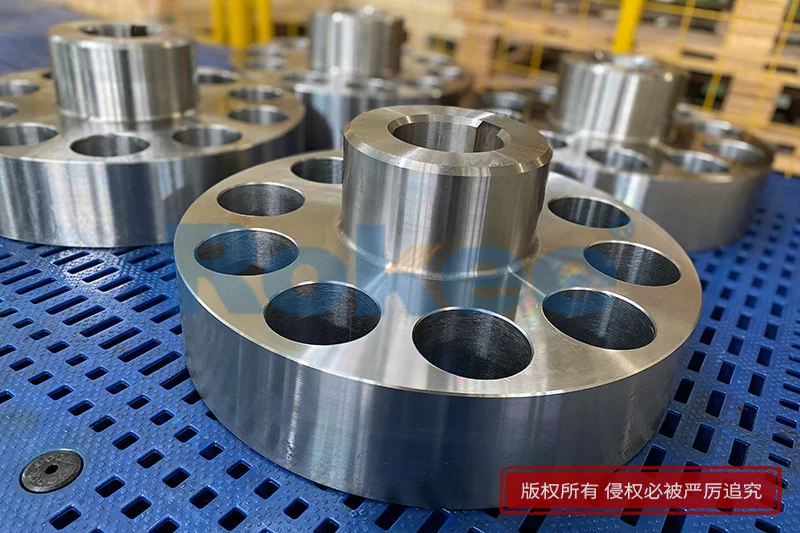
The basic structural composition of bush coupling follows the design logic of combining rigidity and flexibility, with a simple and compact overall layout and strong structural practicability. The main body of the coupling is composed of two symmetrical flange hubs, high-strength transmission pins and elastic bushings, forming a complete flexible torque transmission unit. The two flange hubs are respectively installed and fixed on the driving shaft and driven shaft of the mechanical equipment, undertaking the basic positioning and force-bearing functions of the entire component. The transmission pins made of high-tensile steel are evenly distributed on the flange surface, serving as the core force-transmitting medium between the two hubs. The outer layer of each pin is sleeved with a high-elasticity bushing made of rubber, nylon or synthetic elastomer materials, which is the key flexible component that distinguishes bush coupling from traditional rigid flange coupling. This structural design abandons the direct metal-to-metal hard contact of rigid couplings, and uses the elastic deformation of the bushing to realize buffered power transmission, laying a structural foundation for vibration reduction, shock absorption and misalignment compensation.
The working principle of bush coupling is based on the synergistic action of rigid force transmission and flexible buffer deformation, realizing efficient and stable power transmission between rotating shafts. In the operating state, the driving shaft drives the connected flange hub to rotate synchronously, and the rotational torque is transmitted to the elastic bushing through the fixed transmission pins on the hub. The elastic bushing undergoes slight compressive and shear deformation under the action of torque, and then transmits the power to the pins on the other flange hub, finally driving the driven shaft to rotate and complete the entire power transmission process. In this process, the elastic bushing plays two core functional roles simultaneously. On the one hand, it ensures continuous and stable torque transmission without power loss under normal operating conditions, meeting the basic power transmission requirements of mechanical equipment. On the other hand, it uses its own elastic deformation ability to absorb instantaneous impact load and torsional vibration generated during equipment operation, avoiding rigid collision and force concentration between metal components.
In addition to basic torque transmission, bush coupling has excellent misalignment compensation capability, which is one of its most prominent functional advantages in industrial applications. In the actual installation and operation of mechanical equipment, it is difficult to achieve absolute coaxiality between the driving shaft and the driven shaft due to installation errors, equipment aging, structural deformation and other factors, and small parallel offset, angular deviation and axial displacement are inevitable. Rigid couplings cannot adapt to such misalignment problems, and long-term operation will cause severe shaft wear, component fatigue damage and increased equipment operating noise. In contrast, the elastic bushing structure of bush coupling can rely on its own flexible deformation to adapt to three-dimensional tiny misalignment changes. It can effectively compensate for small parallel misalignment in the radial direction, angular misalignment generated by shaft deflection, and axial displacement caused by equipment thermal expansion and contraction, ensuring that the transmission system can still operate stably under non-ideal installation conditions, greatly reducing the assembly accuracy requirements of equipment and improving the fault tolerance of mechanical operation.
The unique structural design enables bush coupling to possess multiple comprehensive performance advantages that adapt to industrial complex working conditions. First of all, it has outstanding vibration damping and shock absorption performance. The elastomer bushing can effectively isolate the torsional vibration generated by motor startup, load mutation and mechanical operation, and weaken the resonance phenomenon of the transmission system. For mechanical equipment with frequent startup and variable load operation, this vibration damping function can significantly reduce the fatigue loss of transmission components, reduce equipment operating noise, and optimize the operating environment. Secondly, the bush coupling has strong impact resistance. When the equipment is subjected to instantaneous overload or external impact load, the elastic bushing can absorb most of the impact energy through deformation, avoid instantaneous stress concentration on the shaft and key parts, protect the core transmission components from damage, and improve the anti-overload ability of the equipment.
Moreover, the bush coupling has excellent environmental adaptability and low maintenance cost. The elastic bushing materials used in conventional models have good weather resistance, and can maintain stable elastic performance in conventional temperature ranges and dusty, humid working environments, not easily affected by atmospheric environment and medium erosion. Different from gear couplings and diaphragm couplings that require regular lubrication and precision maintenance, bush coupling basically does not need daily lubrication and complex debugging after installation, and the later maintenance process is extremely simple. The wearing parts are only elastic bushings with low replacement cost and convenient disassembly and assembly, which can greatly reduce the daily operation and maintenance cost of mechanical equipment and improve the operational economy of the system. In addition, the overall compact structure of the bush coupling occupies a small installation space, has low requirements for the installation environment of equipment, and is suitable for mechanical systems with limited structural space.
In terms of industrial application scenarios, bush coupling is mainly applicable to medium and low-speed, medium-load mechanical transmission systems, and shows excellent adaptability in multiple industrial fields. In general manufacturing machinery, it is widely used in the connection of conventional transmission equipment such as fans, water pumps, reducers and conveyors. These devices have stable operating load and frequent startup and stop, and the vibration damping and buffer performance of bush coupling can effectively improve the operating stability of the equipment and extend the service life of the transmission system. In agricultural machinery equipment, due to the complex and variable field operating environment, mechanical equipment is often affected by uneven road surfaces and sudden load changes, and the impact resistance and misalignment compensation performance of bush coupling can well adapt to such harsh working conditions, providing reliable power connection for tillage machinery, harvesting equipment and irrigation power devices.
In mining and construction machinery, many medium-load transmission parts need to face dusty environments and frequent impact loads. The high structural strength and environmental adaptability of bush coupling enable it to operate stably for a long time in such harsh working conditions, avoiding frequent component failures caused by environmental factors. In marine and aquatic power systems, mechanical equipment is in a humid and corrosive working environment for a long time. The bushing materials with good corrosion resistance can resist the erosion of humid air and water vapor, ensure the long-term stable operation of the coupling, and reduce the failure rate of marine power transmission systems. At the same time, in light industrial machinery, food processing equipment and other fields that require low noise and stable operation, the excellent vibration damping and noise reduction performance of bush coupling can optimize the equipment operating state and meet the precision operation requirements of light industrial equipment.
Although bush coupling has many application advantages, its performance characteristics also determine its applicable working condition limits, and reasonable type selection and use are the key to giving full play to its structural advantages. Due to the limitation of elastic bushing material performance, bush coupling is not suitable for high-speed, heavy-load and high-precision transmission scenarios. In high-speed rotating equipment, the elastic deformation of the bushing will cause slight torsional deflection, which cannot meet the high-precision transmission requirements; under long-term heavy-load working conditions, the bushing is prone to permanent deformation and fatigue aging, affecting the transmission accuracy and service life. Therefore, in the actual industrial selection, it is necessary to match the coupling model according to the actual operating speed, load range, misalignment degree and environmental conditions of the equipment, to avoid performance mismatch affecting the operating efficiency of the mechanical system.
The daily installation and use specifications also directly affect the operating effect and service life of bush coupling. In the installation process, although the coupling has a certain misalignment compensation ability, excessive installation deviation should still be avoided. Excessive long-term misalignment will cause the bushing to bear excessive eccentric load, accelerate local wear and aging, and lead to early failure of components. During the operation of the equipment, regular visual inspection and status check are required. The main inspection contents include whether the elastic bushing has aging cracking, excessive deformation and wear, whether the transmission pins are loose or deformed, and whether the flange connection is stable. For the aging and failed bushings, they should be replaced in a timely manner to avoid the problem of increased vibration and reduced transmission efficiency caused by the failure of flexible buffer components, ensuring the long-term stable and reliable operation of the transmission system.
With the continuous upgrading of modern industrial machinery towards high efficiency, energy saving and low noise, the technical optimization and performance improvement of bush coupling are also advancing continuously. In terms of material innovation, new high-elasticity, anti-aging and wear-resistant composite materials are gradually applied to bushing manufacturing, which further improves the service life, temperature resistance and load-bearing capacity of the coupling, and expands its applicable working condition range. In terms of structural optimization, the optimized curved bushing structure and uniform pin layout design make the force transmission more uniform, the misalignment compensation range wider, and the vibration damping effect more excellent. At the same time, with the development of lightweight mechanical equipment, the optimized hollow hub structure and high-strength lightweight materials reduce the overall weight of the coupling while ensuring structural strength, reducing the rotational inertia of the transmission system, and improving the operating efficiency of mechanical equipment.
In the field of modern mechanical transmission technology, bush coupling, as a mature and reliable flexible transmission component, has irreplaceable application value in general industrial scenarios by virtue of its simple structure, convenient installation, low maintenance cost and excellent comprehensive performance. It solves many practical problems in the operation of medium and low-speed transmission systems, such as installation deviation, operational vibration, impact load interference and harsh environmental erosion, and provides a stable and efficient connection guarantee for the safe operation of various mechanical equipment. With the continuous progress of industrial manufacturing technology and the continuous optimization of material science, the performance of bush coupling will be further improved, and its application scope will be more extensive, continuing to play an important basic supporting role in the development of modern mechanical transmission industry.
« Bush Couplings » Update Date: 2026/7/15
Contact
If you require custom machined couplings, please contact Rokee via the contact information below for inquiries.
Email: https://www.gshmdpq.com
 WeChat