Flexible Diaphragm Coupling
Rokee is a manufacturer of flexible diaphragm coupling from china, we can provide non-standard custom flexible diaphragm coupling based on parameters or drawings supplied by customers, with export support available.
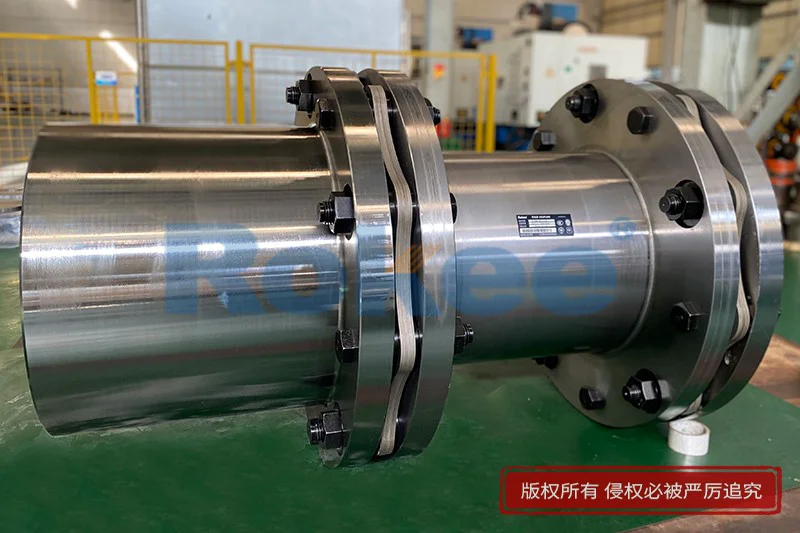
In the field of modern mechanical transmission systems, the stability, accuracy and durability of shaft connection components directly determine the overall operating performance of equipment. Among various flexible transmission components, flexible diaphragm coupling has gradually become a core connecting part for high-speed, high-precision and high-reliability mechanical equipment by virtue of its unique elastic deformation mechanism, zero-backlash transmission characteristics and excellent misalignment compensation capability. Unlike traditional rigid couplings that lack adaptive adjustment ability and common flexible couplings relying on non-metallic elastic elements, flexible diaphragm couplings adopt all-metal structural design, which perfectly balances rigid torque transmission and flexible displacement compensation, and can maintain stable working state in complex and harsh working environments for a long time. With the continuous upgrading of industrial manufacturing towards high precision, high efficiency and long service life, the application scope of flexible diaphragm couplings has covered precision automation equipment, aerospace power systems, new energy power generation equipment, high-speed rotating machinery and many other key industrial fields, becoming an indispensable basic component of modern advanced transmission systems.


The core working mechanism of flexible diaphragm coupling is derived from the controllable and reversible elastic deformation of thin metal diaphragm components. In any mechanical transmission system, it is almost impossible to achieve absolute coaxial alignment between the driving shaft and the driven shaft due to objective factors such as machining errors of parts, assembly deviations, thermal deformation during equipment operation, and slight foundation settlement. Tiny axial, radial and angular misalignments between the two shafts will inevitably occur during long-term operation. If these deviations cannot be effectively compensated, they will generate additional alternating stress on the shaft system, induce mechanical vibration and noise, accelerate wear of bearings and sealing parts, and even cause shaft fatigue fracture and equipment shutdown failure in severe cases. The flexible diaphragm coupling solves this industry pain point fundamentally. When the equipment operates, the torque output by the driving shaft is transmitted to the metal diaphragm group through the connecting fasteners, and then stably transmitted to the driven shaft by the diaphragm group to realize synchronous rotation of the shaft system. When shaft misalignment occurs, the metal diaphragm produces micro elastic deformation adaptively, absorbs and offsets various displacement deviations between the two shafts, avoids the generation of additional transmission stress, and ensures that the torque and rotational speed transmission process remains accurate and stable without interference.
The structural design of flexible diaphragm coupling is simple and efficient, with strong structural scalability and environmental adaptability. The basic composition of the coupling includes metal diaphragm groups, shaft hubs, high-strength connecting bolts and locking accessories, without any non-metallic vulnerable parts or lubrication-dependent structures. The metal diaphragm is usually made of high-strength stainless steel or alloy steel materials with excellent elasticity, fatigue resistance and corrosion resistance. Through precision stamping and heat treatment process, the diaphragm has uniform thickness and stable elastic performance, which can realize repeated elastic deformation without permanent damage. According to different transmission requirements and misalignment compensation ranges, the coupling can adopt single-diaphragm or double-diaphragm structural forms. The single-diaphragm structure is compact and lightweight, suitable for working scenarios with small misalignment deviation and stable load operation, and can meet the basic precision transmission needs of conventional medium and low-speed equipment. The double-diaphragm structure relies on the cooperative deformation of two groups of diaphragms, which greatly improves the compensation ability of angular and radial displacement, and can cope with complex misalignment states generated by high-speed operation and thermal deformation, making it more suitable for high-precision and high-load industrial scenarios. All structural components adopt standardized and integrated design, which effectively reduces the assembly gap of the whole machine and lays a foundation for zero-backlash transmission.
The excellent comprehensive performance of flexible diaphragm coupling makes it distinct from other types of flexible couplings in industrial application. First of all, it has ultra-high transmission accuracy and zero backlash transmission characteristics. There is no relative sliding and gap between the diaphragm and the connecting flange and fasteners. In the whole process of torque forward and reverse transmission, no rotation lag or angle deviation occurs, which can accurately transmit rotational speed, torque and motion signals, and fully meet the ultra-precision transmission requirements of servo control systems and precision processing equipment. Secondly, the all-metal structure gives the coupling outstanding high-speed performance and temperature resistance. It can maintain stable elastic performance and transmission efficiency in high-speed rotating states and high-temperature working environments, and will not produce aging, deformation or failure like rubber and plastic elastic elements, solving the problem of performance attenuation of non-metallic couplings in high-temperature and high-speed scenarios.
In terms of operational stability and maintenance cost, flexible diaphragm couplings have obvious inherent advantages. The whole machine has no wearing parts and does not need regular lubrication, oil replacement and rubber component replacement. It realizes maintenance-free operation in the whole service cycle under normal working conditions, which greatly reduces the daily operation and maintenance cost of equipment and improves the continuous operation rate of mechanical systems. At the same time, the metal diaphragm has excellent fatigue resistance and impact resistance. It can withstand alternating load and instantaneous impact load generated by equipment start-stop and load fluctuation, and will not produce fatigue failure after long-term repeated deformation. The overall service life is far longer than that of traditional flexible couplings, which effectively improves the long-term operation reliability of mechanical equipment.
In addition, the coupling has strong environmental adaptability and chemical corrosion resistance. The high-quality alloy steel diaphragm after special surface treatment can resist the erosion of humid air, industrial dust, weak acid and weak alkali medium, and can work stably in harsh working environments such as outdoor open-air operation, chemical workshop and dust-intensive industrial sites. Its lightweight and compact structural design also helps to reduce the overall weight and rotational inertia of the shaft system, reduce the energy consumption of equipment operation, and achieve energy-saving and efficient transmission effect. Compared with gear couplings, flexible diaphragm couplings have no tooth surface friction and wear, no lubrication pollution, and lower operation noise; compared with spring couplings, they have higher torsional stiffness and transmission stability, and can adapt to more precise and harsh working conditions.
Flexible diaphragm couplings have formed mature and differentiated application scenarios in various industrial fields relying on their diversified performance advantages. In the field of precision automation and intelligent manufacturing equipment, they are widely used in servo motors, precision reducers, CNC machine tools and robotic arm transmission shaft systems. These equipment require extremely high motion accuracy and response sensitivity, and the zero-backlash and high-precision transmission characteristics of diaphragm couplings can ensure that the motion execution error of the equipment is controlled within an ultra-small range, avoiding positioning deviation and processing precision attenuation caused by transmission gap. In the field of new energy power generation, wind power equipment and photovoltaic power generation supporting transmission equipment have high requirements for environmental adaptability and fatigue resistance. The diaphragm coupling can adapt to the random load fluctuation and frequent start-stop working state of new energy equipment, and compensate the shaft misalignment caused by environmental temperature change and equipment vibration, ensuring the long-term stable operation of power generation equipment.
In high-speed rotating machinery and power equipment such as centrifugal compressors, high-speed fans and turbine equipment, the high-speed resistance and structural stability of flexible diaphragm couplings are fully utilized. The all-metal elastic structure can avoid the failure of elastic elements at high speed, suppress the vibration and resonance of the shaft system, and ensure the smooth operation of high-speed equipment. In the field of aerospace and precision military equipment, the lightweight, high-reliability and maintenance-free characteristics of diaphragm couplings meet the strict requirements of aerospace equipment for component weight, volume and long-term stability, and become an important connecting component of airborne power transmission systems. In addition, in petrochemical, metallurgical and heavy-duty industrial equipment, the coupling can cope with harsh working conditions such as high temperature, high pressure and corrosive medium, and maintain stable transmission performance, reducing equipment failure rate and production downtime loss.
In the actual selection and application process of flexible diaphragm couplings, it is necessary to comprehensively match the working conditions and equipment parameters to give full play to its optimal performance. The core selection basis includes the rated transmission torque of the equipment, operating speed range, shaft misalignment deviation, working temperature and load characteristics. For equipment with stable load and continuous operation, a single-diaphragm coupling with compact structure and low cost can be selected; for equipment with large misalignment deviation, frequent load fluctuation and high-precision transmission requirements, a double-diaphragm coupling with strong compensation ability and high torsional stiffness is more suitable. At the same time, the material grade of the diaphragm needs to be optimized according to the working environment. High-corrosion resistant alloy materials are required for chemical and marine environments, and high-temperature resistant special alloy materials are required for high-temperature working scenarios to ensure the adaptability and service life of the coupling.
Standardized and standardized installation and commissioning are key prerequisites to ensure the performance of flexible diaphragm couplings. Although the coupling has excellent misalignment compensation ability, excessive assembly deviation will still cause long-term overload deformation of the diaphragm, accelerate fatigue loss and even cause diaphragm cracking failure. In the assembly process, it is necessary to strictly calibrate the coaxiality of the driving and driven shafts, control the axial, radial and angular deviations within the allowable range of product design, and ensure uniform locking of connecting bolts to avoid uneven stress on the diaphragm group. After the installation is completed, it is necessary to conduct no-load test run and load debugging to check whether the equipment has abnormal vibration and noise, confirm that the coupling works in a stable state, and eliminate potential hidden dangers caused by improper installation.
With the continuous progress of industrial manufacturing technology and the continuous improvement of equipment precision and reliability requirements, the technical iteration and performance upgrading of flexible diaphragm couplings are also advancing continuously. At present, the industry is developing towards ultra-thin high-strength diaphragm materials, integrated lightweight structure design and intelligent fatigue monitoring. Through the optimization of material formula and heat treatment process, the elasticity and fatigue resistance of the diaphragm are further improved, and the compensation range and service life of the coupling are expanded. Through structural optimization, the torsional stiffness and transmission stability of the product are improved on the premise of ensuring flexibility, meeting the transmission needs of ultra-high-speed and ultra-precision equipment. In addition, with the development of intelligent industrial equipment, the combined application of diaphragm couplings and monitoring sensors has gradually become a trend, which can realize real-time monitoring of diaphragm stress, vibration state and service life, and provide data support for equipment predictive maintenance.
As a high-performance flexible transmission component integrating precision, stability and durability, flexible diaphragm coupling has broken through the performance limitations of traditional coupling products, and has irreplaceable application value in modern industrial transmission systems. Its unique elastic deformation compensation mechanism, zero-backlash high-precision transmission performance, maintenance-free operation advantage and strong environmental adaptability make it adapt to the diversified and harsh working conditions of modern industrial equipment. In the future, with the continuous development of high-end manufacturing, intelligent equipment and new energy industries, the market demand for flexible diaphragm couplings will continue to grow, and its technical performance will be further optimized and upgraded, providing more reliable and efficient basic component support for the high-quality development of the mechanical transmission industry.
« Flexible Diaphragm Coupling » Update Date: 2026/7/15
Contact
If you require custom machined couplings, please contact Rokee via the contact information below for inquiries.
Email: https://www.gshmdpq.com
 WeChat