Telescoping Drive Shafts
Rokee is a manufacturer of telescoping drive shafts from china, we can provide non-standard custom telescoping drive shafts based on parameters or drawings supplied by customers, with export support available.
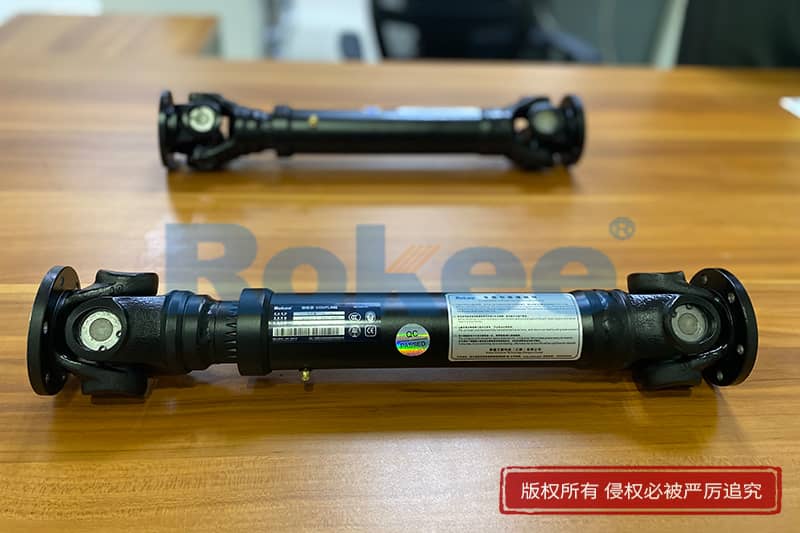
In the intricate ecosystem of mechanical power transmission, the telescoping drive shaft stands out as a versatile and indispensable component that bridges the gap between rigid power delivery and dynamic mechanical adaptation. Unlike conventional fixed-length drive shafts that operate within static spatial parameters, this specialized mechanical element is engineered to synchronize steady torque transmission with adaptive axial length adjustment, enabling mechanical systems to function reliably amid variable operating distances, structural deflections, and dynamic positional changes between connected power components. Integrated seamlessly into countless mobile and industrial mechanical systems, it addresses the inherent limitations of rigid transmission structures, serving as a foundational solution for modern machinery that demands both power stability and environmental adaptability. Its unique functional integration of rotational power transfer and linear displacement compensation has solidified its critical role across diverse industrial, agricultural, construction, and automotive engineering fields, supporting the continuous and efficient operation of complex mechanical equipment under variable working conditions.


The fundamental operational logic of a telescoping drive shaft revolves around the harmonious coordination of torque transmission and axial telescopic adjustment, two core functions that operate synchronously without mutual interference throughout equipment operation. At the heart of its structural design lies a precision-machined splined connection system, composed of an inner splined shaft and an outer matching sleeve. The external splines on the inner shaft interlock tightly with the internal splines of the outer sleeve, forming a meshed interface that serves dual purposes: facilitating stable rotational torque transfer and allowing free linear sliding along the axial direction. When power sources such as internal combustion engines or electric motors output rotational power, the torque is transmitted through the nested shaft structure via the splined meshing mechanism. Meanwhile, the sliding tolerance reserved in the splined interface enables the overall length of the drive shaft to extend or retract within a preset effective range. This adaptive length adjustment effectively compensates for axial distance changes between power input and output ends caused by equipment suspension movement, structural thermal expansion and contraction, load-induced mechanical deflection, and terrain unevenness, eliminating the mechanical binding, transmission stagnation, and structural vibration risks that plague fixed-length drive shaft systems.
Complementing the core splined telescopic mechanism are a series of auxiliary structural components that collectively ensure the comprehensive performance and long-term reliability of the telescoping drive shaft. Universal joints are essential matching parts installed at both ends of the shaft assembly, designed to compensate for angular misalignment between the driving and driven components. In practical mechanical operation, perfect coaxial alignment of transmission components is almost unattainable due to assembly errors, equipment vibration, and dynamic structural changes. Universal joints resolve this challenge by allowing a certain degree of angular deviation during torque transmission, working in tandem with the axial telescopic function to achieve all-dimensional dynamic compensation for transmission errors. High-precision bearing assemblies are configured to reduce friction resistance during shaft rotation and linear sliding, maintaining the smoothness of high-speed operation while bearing radial and axial loads generated during equipment operation. Professional sealing and lubrication systems further optimize operational stability: multi-layer sealing structures block external dust, moisture, and corrosive substances from invading the splined meshing area and bearing parts, preventing abrasive wear and corrosion failure. Dedicated lubrication channels store and deliver high-performance lubricants continuously, reducing metal friction loss between sliding and meshing surfaces, lowering operating temperature rise, and extending the service life of core moving parts.
The structural design of modern telescoping drive shafts focuses on the balance of mechanical strength, lightweight performance, and operational durability, with material selection and processing technology evolving continuously to adapt to increasingly stringent industrial operating conditions. High-strength alloy steel is the primary manufacturing material for core load-bearing components, featuring excellent tensile strength, torsional resistance, and fatigue resistance to withstand long-term high-torque and high-load operating cycles. Precision forging and CNC machining processes are adopted for spline processing, ensuring consistent spline tooth spacing, accurate meshing clearance, and smooth surface finish. These refined processing standards eliminate local stress concentration and uneven friction, guaranteeing uniform torque distribution during rotation and stable sliding flexibility during telescopic adjustment. For equipment operating in extreme environments such as high temperature, low temperature, and strong corrosion, surface strengthening treatments including quenching and tempering, galvanization, and anti-corrosion coating are applied to further enhance structural stability and environmental adaptability. The overall nested tubular structure design optimizes spatial utilization, enabling the drive shaft to maintain a compact volume in the retracted state while obtaining a sufficient length adjustment stroke in the extended state, perfectly adapting to limited installation spaces and dynamic operating stroke requirements of various mechanical equipment.
The comprehensive performance advantages of telescoping drive shafts make them irreplaceable in modern mechanical transmission systems, with functional values reflected in stability, reliability, adaptability, and economic efficiency. First and foremost, the dual compensation capability of axial length and angular deviation fundamentally optimizes the power transmission state. It effectively avoids transmission jitter, power loss, and mechanical impact caused by positional changes of mechanical components, achieving smoother and more continuous torque output. This stable transmission characteristic significantly reduces equipment operating vibration and noise, improving the overall operational comfort and stability of mechanical systems. Secondly, the adaptive adjustment function greatly enhances equipment operational reliability under complex working conditions. In scenarios with frequent structural position changes and variable load impacts, the telescoping structure buffers mechanical stress and disperses concentrated loads, preventing premature fatigue damage and structural failure of transmission components. Compared with fixed-length drive shafts, it drastically reduces equipment downtime and failure rates caused by transmission system mismatch.
In terms of application adaptability, telescoping drive shafts demonstrate outstanding environmental tolerance and scenario compatibility. They can maintain stable working performance in high-temperature operating environments with severe thermal expansion, low-temperature environments prone to material brittleness, and dusty, muddy, and highly fluctuating field operating conditions. Their adjustable length design breaks the dimensional limitation of fixed transmission components, enabling flexible matching with mechanical equipment of different specifications and working strokes. In terms of daily operation and maintenance, the standardized structural design and external lubrication interface simplify routine maintenance work. Regular lubrication replenishment and sealing component inspection can maintain excellent operating performance, avoiding complex disassembly and calibration work required by rigid transmission systems. This low-maintenance characteristic reduces equipment operation and maintenance costs while improving the continuous operation efficiency of mechanical systems, creating significant long-term economic benefits for industrial production and mechanical operation.
Agricultural machinery is one of the most extensive application fields of telescoping drive shafts, where the equipment’s adaptive characteristics perfectly match the complex and variable working environment of agricultural production. Most agricultural equipment such as tractors, harvesters, tillage machines, and fertilizing machinery operates on uneven farmland terrain, with frequent jolts and positional offsets during walking and operation. The power take-off system of agricultural machinery relies heavily on telescoping drive shafts to transmit power to supporting working tools. During field operation, the floating and lifting of farm tools, terrain undulation, and changes in working stroke will cause real-time changes in the distance and angle between the tractor power output end and the farm tool power input end. The telescoping drive shaft dynamically adjusts its length and adapts to angular deviation in real time, ensuring uninterrupted and stable power transmission during equipment operation. It avoids power interruption and mechanical damage caused by transmission shaft tension or compression, enabling agricultural machinery to maintain efficient and continuous operating status in complex field environments, effectively supporting large-scale and mechanized agricultural production operations.
Construction and engineering machinery represent another core application scenario, putting forward ultra-high load resistance and structural stability requirements for telescoping drive shafts. Engineering equipment such as loaders, excavators, bulldozers, and mobile cranes often operates under heavy-load, high-frequency, and high-impact working conditions, with frequent structural stretching, shrinking, and rotating movements of working arms and walking mechanisms. The heavy-duty telescoping drive shaft adopted for this type of equipment is optimized in structural strength and load-bearing performance, capable of withstanding extreme torque impact and variable load pressure. Its reliable telescopic adjustment function compensates for axial displacement and angular misalignment generated during the movement of engineering machinery components, ensuring stable power output of hydraulic systems, walking systems, and working execution systems. In harsh construction environments with dense dust, serious mud erosion, and large temperature differences, the optimized sealing and anti-corrosion structure of the telescoping drive shaft effectively resists external environmental interference, maintaining long-term stable operation of the transmission system and improving the durability and environmental adaptability of engineering machinery.
In the automotive and commercial vehicle industry, telescoping drive shafts are key core components ensuring vehicle driving safety and power transmission efficiency. Special vehicles such as off-road vehicles, light trucks, and engineering service vehicles face complex road conditions and variable suspension travel during driving. The suspension system will compress and stretch in real time according to road fluctuations, causing continuous changes in the distance and angle between the vehicle engine, gearbox, and drive axle. The application of telescoping drive shafts perfectly solves the problem of dynamic matching of vehicle power transmission systems. It can flexibly adjust the overall length with the jolt of the vehicle body and the movement of the suspension system, maintaining stable torque transmission while avoiding additional structural stress on the transmission system. This not only improves the smoothness of vehicle power output and driving comfort but also effectively protects the vehicle transmission system from impact damage caused by road condition changes, enhancing the overall driving safety and service life of the vehicle. In addition, the lightweight optimized design of modern automotive-grade telescoping drive shafts also helps reduce vehicle curb weight, lower energy consumption, and improve vehicle operating economy.
General industrial machinery and special mechanical equipment also widely apply telescoping drive shaft technology, covering intelligent manufacturing equipment, logistics handling machinery, aerospace auxiliary equipment, and automated production lines. In automated industrial production equipment, mechanical execution components often perform repetitive telescopic, rotating, and lifting movements, with constantly changing relative positions of power transmission nodes. Telescoping drive shafts provide stable and flexible power transmission support for these dynamic mechanical movements, ensuring high-precision and high-repeatability operation of automated equipment. For large-span transmission equipment and mobile mechanical devices, the adjustable length characteristic of telescoping drive shafts simplifies equipment structural design, reduces the complexity of transmission system layout, and improves the compactness and integration of mechanical equipment. In special industrial scenarios such as high-speed operation and sterile production environments, the low-vibration, low-noise, and easy-maintenance advantages of telescoping drive shafts also meet the high-standard operation requirements of precision industrial equipment.
Despite its high reliability and stable performance, the long-term operational stability of a telescoping drive shaft depends on standardized use and scientific daily maintenance, as improper operation and neglected maintenance are the main causes of component failure. In daily equipment operation, overloaded operation beyond the rated torque and stroke range should be avoided. Long-term overload will cause irreversible deformation and fatigue wear of the splined meshing structure and universal joint components, reducing transmission accuracy and service life. Frequent extreme telescopic impact should also be prevented, as instantaneous impact load will generate concentrated stress inside the component, easily leading to structural cracking and local damage. Routine maintenance focuses on lubrication management and sealing inspection: regular supplementation and replacement of special lubricants for transmission components ensure sufficient lubrication of spline sliding surfaces and bearing operating surfaces, reducing friction and wear. Timely inspection of sealing ring aging, damage, and failure prevents dust, rainwater, and corrosive media from entering the internal moving structure, avoiding abrasive wear and internal corrosion failure. Regular cleaning of surface dirt and regular detection of rotational smoothness and telescopic flexibility can effectively eliminate potential equipment faults and maintain the long-term optimal performance of the telescoping drive shaft.
With the continuous advancement of mechanical engineering technology and the upgrading of industrial manufacturing standards, the technological development of telescoping drive shafts is moving toward high precision, high durability, lightweight integration, and intelligent adaptation. Modern precision manufacturing technology further optimizes the spline meshing accuracy and structural matching degree of drive shafts, effectively reducing transmission gaps and power loss, improving the precision and efficiency of power transmission. New high-strength, wear-resistant, and lightweight composite materials are gradually applied to product manufacturing, realizing the lightweight upgrade of components while ensuring load-bearing performance, helping mechanical equipment reduce energy consumption and improve operating response speed. In terms of structural optimization, integrated modular design simplifies the assembly and replacement process of components, improves equipment maintenance efficiency, and reduces comprehensive operating costs.
In addition, with the rapid development of intelligent machinery and automated monitoring technology, the intelligent iteration of telescoping drive shafts has become an important development trend. By embedding miniature sensing components, real-time monitoring of operating parameters such as transmission torque, operating temperature, telescopic stroke, and operating vibration can be realized. The operating state data is fed back to the equipment control system in real time, realizing intelligent early warning of abnormal wear, lubrication failure, and structural fatigue faults, and supporting predictive maintenance of equipment. This intelligent upgrading further improves the operational reliability and intelligent management level of mechanical transmission systems, adapting to the development needs of modern intelligent factories, unmanned engineering equipment, and automated agricultural machinery.
As a key adaptive power transmission component in modern mechanical systems, the telescoping drive shaft connects power sources and execution components with flexible and stable transmission capabilities, solving numerous dynamic transmission problems that traditional fixed transmission structures cannot overcome. Its unique structural design integrates torque transmission and displacement compensation, providing reliable technical support for the stable operation of various complex and variable mechanical equipment. From agricultural production and engineering construction to automobile transportation and industrial intelligent manufacturing, its application value runs through all links of modern mechanical industry. With the continuous progress of material technology, processing technology, and intelligent monitoring technology, the performance of telescoping drive shafts will be further optimized, and their application scenarios will be continuously expanded. It will continue to serve as an important basic component of mechanical power transmission, promoting the efficient, stable, and intelligent development of the entire mechanical engineering field.
« Telescoping Drive Shafts » Update Date: 2026/7/15
Contact
If you require custom machined couplings, please contact Rokee via the contact information below for inquiries.
Email: https://www.gshmdpq.com
 WeChat