Sleeve Gear Couplings
Rokee is a manufacturer of sleeve gear couplings from china, we can provide non-standard custom sleeve gear couplings based on parameters or drawings supplied by customers, with export support available.
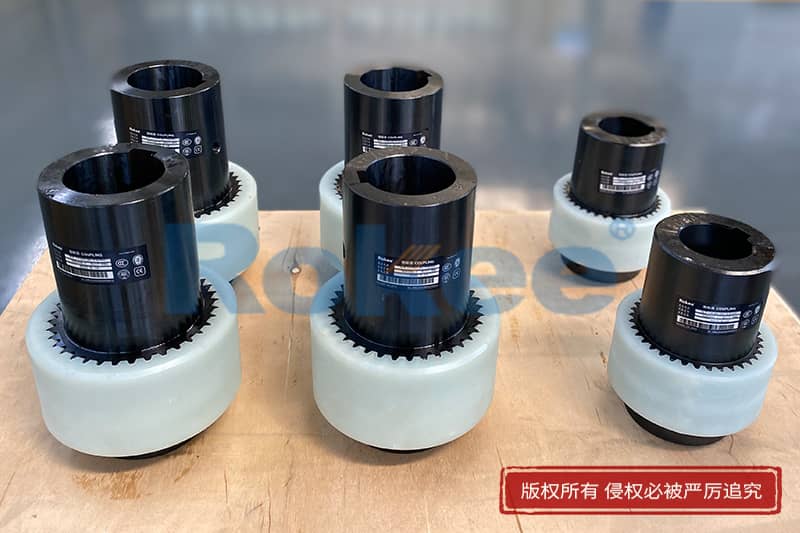
Sleeve gear couplings stand as one of the most robust and versatile mechanical transmission components widely adopted in modern industrial power transmission systems, serving as a critical connecting medium between rotating shafts to deliver torque while accommodating inevitable operational deviations. Unlike flexible couplings that rely on elastic deformation for displacement compensation, this type of coupling adopts a rigid meshing transmission structure with controllable flexible tolerance, perfectly balancing high torque transmission efficiency and moderate misalignment adaptability, which makes it irreplaceable in heavy-duty, high-speed, and continuous operating mechanical scenarios. Its core design logic lies in the precise meshing fit between internal and external gear structures, which converts the rotational power of the driving shaft into stable mechanical motion and transmits it to the driven shaft, ensuring synchronous operation of the entire transmission system while absorbing and buffering various shaft displacements generated during equipment operation.

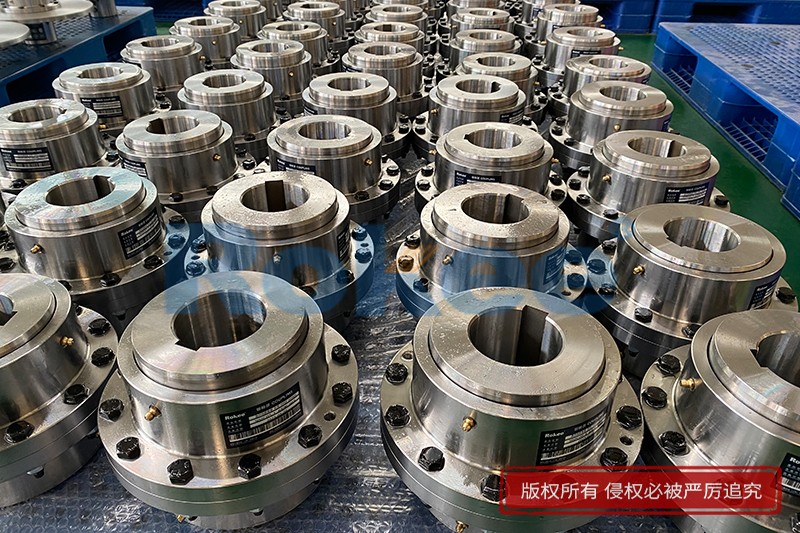
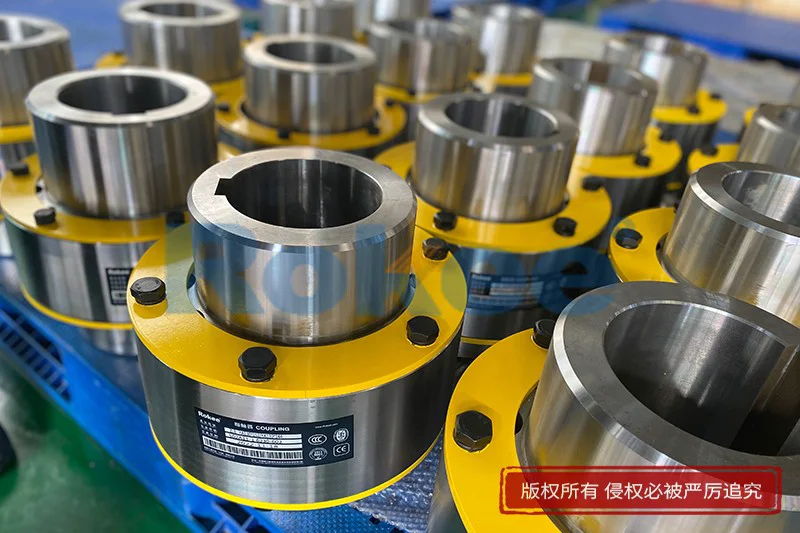
The basic structural composition of a sleeve gear coupling is concise and highly integrated, with every component designed around efficient torque transmission and reliable deviation compensation. The core assembly consists of two external gear hubs fixed on the driving and driven shafts respectively and an integral cylindrical sleeve processed with internal gear teeth on the inner wall. The external gear teeth on the hub are usually machined with a crowned tooth profile, featuring a curved transition along the axial direction of the teeth, while the internal gear teeth inside the sleeve adopt a standard involute profile to form a precise meshing pair with the external teeth. This structural matching design reserves reasonable microscopic gaps between meshing gear teeth without affecting the overall transmission rigidity, creating a movable tolerance space for shaft displacement compensation. In addition, the complete coupling system is equipped with professional sealing structures and lubrication chambers. The sealing components effectively isolate internal gear meshing areas from external dust, moisture, and corrosive media, while the closed lubrication space ensures long-term stable lubrication of gear contact surfaces, laying a solid foundation for continuous and efficient operation of the coupling.
The working mechanism of sleeve gear couplings centers on gear meshing transmission and adaptive misalignment compensation, realizing dual functions of power delivery and operational error correction. During equipment operation, the driving shaft drives the external gear hub to rotate synchronously, and the external gear teeth push the internal gear teeth of the sleeve through meshing contact to drive the entire sleeve assembly to rotate. Subsequently, the sleeve transmits rotational torque to the external gear hub on the driven shaft, thereby completing the power transmission between the two independent shafts. The crowned tooth profile of the external gear hub is the key to its excellent misalignment compensation performance. Different from straight gear teeth that are prone to edge extrusion and local stress concentration under offset conditions, the curved crowned teeth can realize uniform surface contact when the shaft produces angular, radial, or axial displacement. When the driving and driven shafts are not completely parallel or have axial floating, the gear teeth can roll and adapt slightly in the meshing gap, avoiding rigid jamming and excessive partial load, thus eliminating additional mechanical stress caused by shaft misalignment and protecting the entire transmission system.
Sleeve gear couplings exhibit unique performance advantages in mechanical transmission, distinguishing them from other types of coupling products in industrial applications. First and foremost, they boast extremely high torque transmission efficiency and strong load-bearing capacity. The surface contact formed by internal and external gear meshing enables uniform load distribution on each gear tooth, avoiding the defect of local stress concentration in point-contact or line-contact transmission structures. This structural feature allows the coupling to bear large instantaneous impact loads and stable long-term heavy loads, with minimal power loss during the transmission process, meeting the high-efficiency operation requirements of heavy industrial equipment. Secondly, it possesses comprehensive multi-directional misalignment compensation capability, which can adapt to angular deflection, radial offset, and axial displacement generated by equipment installation errors, mechanical vibration, thermal expansion and contraction, and foundation settlement. This all-round adaptability greatly reduces the installation accuracy requirements of shafting systems and effectively avoids equipment operation failures and component wear caused by tiny shaft deviations.
In terms of operational stability and durability, sleeve gear couplings also show outstanding comprehensive performance. The overall rigid structure of the coupling ensures high transmission rigidity, which can maintain accurate synchronous rotation of the driving and driven shafts without obvious rotation angle deviation, meeting the precise transmission requirements of mechanical equipment that requires strict speed synchronization. Meanwhile, the closed structural design and supporting lubrication system greatly reduce the wear degree of gear meshing surfaces. High-quality lubricating oil can form a stable oil film between gear teeth, reducing sliding friction resistance during meshing, dissipating heat generated by contact friction in a timely manner, and preventing dry friction abrasion, tooth surface pitting, and thermal deformation. Moreover, the main body of the coupling is made of high-strength alloy materials through precision forging and heat treatment processes, with high surface hardness and structural toughness, strong resistance to mechanical fatigue and impact damage, and can adapt to long-term uninterrupted operation in harsh industrial environments, significantly extending the service life of the transmission system.
The application scenarios of sleeve gear couplings cover almost all industrial fields that require high-power and high-stability shaft transmission, showing strong environmental adaptability and scenario compatibility. In traditional heavy industry such as metallurgy, mining, and cement manufacturing, large-scale rolling mills, crushers, ball mills, and conveyor equipment often face heavy load impacts and continuous operation conditions. The high load-bearing capacity and anti-fatigue performance of sleeve gear couplings can fully adapt to such harsh working conditions, ensuring stable power output of production equipment and reducing shutdown maintenance frequency. In the field of power equipment, fans, water pumps, and generator sets that run at high speed for a long time put forward strict requirements on transmission stability and misalignment adaptability. The precise meshing structure of the coupling can effectively suppress vibration and noise generated by shaft offset, maintain the smooth operation of high-speed rotating equipment, and improve the overall operational efficiency of the unit.
In addition, sleeve gear couplings also play an irreplaceable role in petrochemical, marine engineering, and mechanical transmission fields. Petrochemical equipment usually operates in complex environments with certain corrosiveness and temperature changes, and the sealed and integrated structure of the coupling can effectively resist the erosion of external media and the structural changes caused by temperature difference deformation, ensuring the reliability of power transmission under variable working conditions. Marine mechanical equipment is prone to shaft displacement and vibration due to hull jitter and water flow impact, and the multi-dimensional misalignment compensation function of the coupling can well absorb these operational deviations, avoiding transmission component damage caused by frequent vibration and offset. At the same time, in some automated mechanical transmission systems that require precise power transmission, the low backlash and high synchronization characteristics of sleeve gear couplings can ensure the accuracy of power transmission, providing stable power support for automated production processes.
Although sleeve gear couplings have excellent inherent performance, standardized daily maintenance and scientific operation management are essential to maintain their long-term stable performance and extend service life. Lubrication management is the core of coupling maintenance, as the operating state of the gear meshing surface completely depends on the quality and adequacy of lubrication. Long-term operation will lead to lubricant aging, deterioration, and impurity precipitation, which will reduce the lubricating effect, increase gear wear, and even cause tooth surface scratch and occlusion failure. Therefore, it is necessary to regularly check the lubricant state inside the coupling, replace the aging lubricant in a timely manner, and ensure that the lubricant filling amount meets the operational requirements to form a complete protective oil film. At the same time, the sealing structure should be inspected regularly to check for aging, deformation, or damage of sealing components, preventing lubricant leakage and external impurities from entering the meshing area to avoid abnormal wear of gear teeth.
Regular operational inspection and shaft alignment calibration are also key links to ensure the efficient operation of sleeve gear couplings. During long-term operation of equipment, factors such as foundation settlement, component aging, and mechanical vibration will cause slight changes in shaft alignment status. Excessive misalignment will make the gear teeth bear eccentric load for a long time, resulting in accelerated local wear, increased transmission vibration, and even fatigue fracture of gear teeth in severe cases. Therefore, periodic shaft alignment detection and correction are required to control the misalignment within the optimal compensation range of the coupling. In addition, it is necessary to monitor the operating vibration, noise, and temperature of the coupling during daily operation. Abnormal vibration and harsh noise often indicate abnormal gear meshing or excessive load, while excessive operating temperature usually reflects poor lubrication or friction overload. Timely discovery and troubleshooting of these potential problems can effectively avoid sudden equipment failures and reduce operational risks and maintenance costs.
Compared with other common coupling types, sleeve gear couplings have formed unique competitive advantages in performance and applicability. Elastic couplings rely on elastic element deformation to compensate for misalignment, but their load-bearing capacity is limited, and elastic elements are prone to aging and fatigue damage, making them unsuitable for heavy-duty and long-term continuous operation. Rigid couplings have high transmission rigidity but cannot adapt to any shaft misalignment, requiring extremely high installation accuracy and being prone to component damage caused by operational deviation. In contrast, sleeve gear couplings combine the advantages of rigid transmission and flexible compensation, achieving high-rigidity and high-efficiency power transmission while possessing reliable multi-directional misalignment adaptability, with lower installation and maintenance costs and wider scenario adaptability. Although their structure is relatively more complex than ordinary couplings and the processing and manufacturing precision requirements are higher, their comprehensive operational economy and stability are far superior to other coupling products in medium and heavy-duty industrial transmission scenarios.
With the continuous upgrading of modern industrial equipment towards high speed, high load, and high precision, the technical optimization and application value of sleeve gear couplings are constantly improving. In recent years, with the progress of material processing and mechanical design technology, the tooth profile precision, surface processing quality, and structural matching degree of sleeve gear couplings have been further optimized. The optimized crowned tooth design makes the gear meshing contact more uniform, the misalignment compensation range more reasonable, and the load-bearing distribution more balanced. The application of high-strength wear-resistant and corrosion-resistant materials further enhances the environmental adaptability and service life of the coupling, enabling it to operate stably in more extreme working conditions. At the same time, the integrated and lightweight structural design reduces the overall volume and weight of the coupling on the premise of ensuring load-bearing performance, which is more conducive to the compact layout of modern mechanical equipment and improves the overall integration degree of the transmission system.
In industrial production practice, the stable operation of sleeve gear couplings is crucial to the continuity and efficiency of the entire production line. As a key connecting component of the power transmission system, its operating state directly affects the working performance of the entire mechanical equipment. A high-quality and well-maintained sleeve gear coupling can not only ensure efficient and stable power transmission but also effectively buffer and absorb operational vibration and impact, reduce the fatigue loss of other transmission components, and extend the overall service life of the equipment. On the contrary, neglecting daily maintenance and allowing the coupling to operate under poor lubrication and excessive misalignment will not only reduce its own service life but also cause abnormal vibration, noise, and load fluctuation of the equipment, affect production accuracy and production efficiency, and even lead to sudden shutdown and equipment damage, bringing unnecessary economic losses to industrial production.
In conclusion, sleeve gear couplings, with their unique gear meshing structure, excellent misalignment compensation performance, high-efficiency torque transmission capability, and strong operational stability, have become an indispensable core component in modern industrial power transmission systems. Their perfect balance of rigidity and flexibility enables them to adapt to complex and changeable industrial working conditions, covering multiple application scenarios from conventional medium-load transmission to heavy-duty high-speed operation. With continuous technological progress and industrial upgrading, the structural design and performance of sleeve gear couplings will continue to be optimized, and their application scope will be further expanded, providing more reliable and efficient technical support for the stable operation and efficient production of various mechanical equipment in the industrial field. Reasonable selection, standardized installation, and scientific maintenance of sleeve gear couplings will always be the key to giving full play to their performance advantages and maximizing the operational value of industrial transmission systems.
« Sleeve Gear Couplings » Update Date: 2026/7/17
Contact
If you require custom machined couplings, please contact Rokee via the contact information below for inquiries.
Email: https://www.gshmdpq.com
 WeChat


