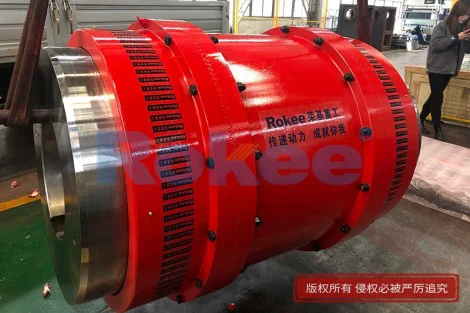
Slider Couplings
Rokee is a manufacturer of slider couplings from china, we can provide non-standard custom slider couplings based on parameters or drawings supplied by customers, with export support available.
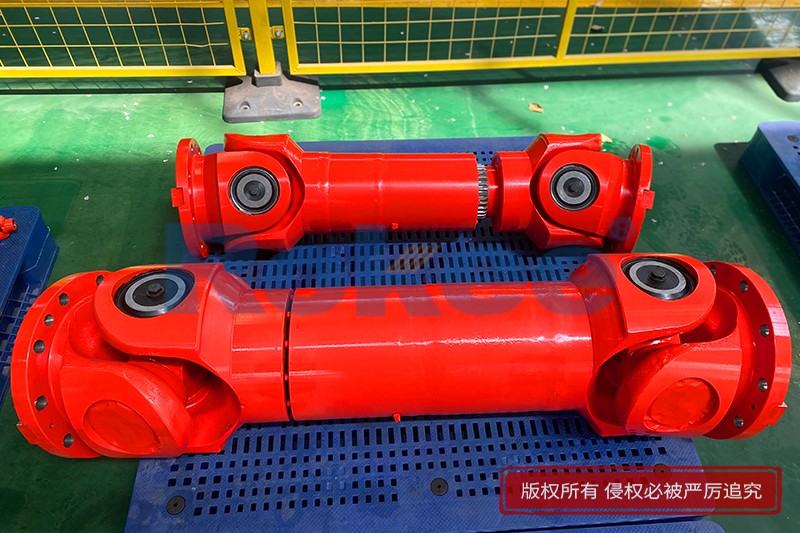
As a core mechanical transmission component, slider coupling serves as a critical connecting medium between rotating shafts in mechanical systems, undertaking the fundamental task of torque transmission while adapting to various operational deviations that inevitably occur during equipment installation and long-term service. Unlike rigid coupling structures that pursue absolute positional fixation and flexible couplings that rely on elastic deformation for compensation, slider coupling adopts a unique sliding contact mechanical structure, achieving dynamic balance between stable power transmission and minor misalignment correction through the relative sliding motion of internal components. This distinctive working mechanism endows it with irreplaceable application value in a large number of conventional and special mechanical equipment, making it one of the most widely used basic transmission parts in industrial mechanical design and equipment transformation.


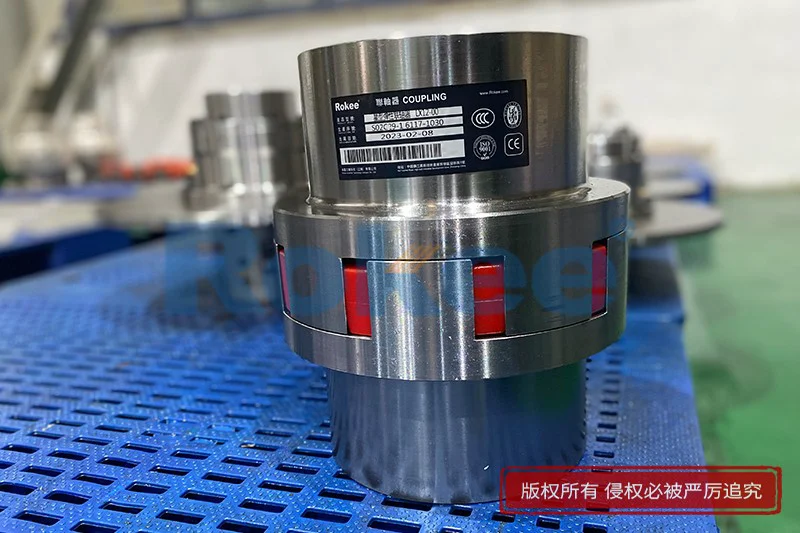
The basic structural composition of slider coupling is concise and practical, mainly consisting of two symmetric half-couplings and a middle sliding block, forming a three-part integrated transmission structure. The end face of each half-coupling is processed with regular radial grooves with smooth inner walls, which provide a stable motion track for the middle slider. The middle slider, as the core force-transmitting and compensating component, is designed with a regular square or special-shaped flat structure, and its two opposite sides are precisely embedded in the grooves of the two half-couplings respectively. This embedded assembly mode enables the slider to freely slide along the radial direction of the grooves within a certain range during the rotation of the equipment. In terms of material selection, the sliding block can be made of wear-resistant polymer composite materials or metal materials according to different working conditions, while the half-couplings are mostly made of high-strength metal materials to ensure overall structural rigidity and torsional resistance. The difference in material collocation directly affects the wear resistance, noise level and service life of the coupling in actual operation, forming diverse performance adaptations for different industrial scenarios.
The working principle of slider coupling is based on the mechanical coordination of rotary motion and linear sliding motion, realizing synchronous rotation and flexible compensation of two connected shafts. When the power equipment drives one half-coupling to rotate, the groove wall of the half-coupling will push the embedded middle slider to generate rotary motion, and the slider will further transmit the torque to the other half-coupling, thereby driving the driven shaft to rotate synchronously and completing the continuous transmission of mechanical power. In the ideal installation state where the two shafts are completely concentric and parallel, the slider only performs synchronous rotary motion without relative sliding in the grooves, and the power transmission process is stable and lossless. However, in actual industrial production, limited by installation accuracy, equipment vibration, thermal deformation of parts during operation and long-term structural fatigue, the connected two shafts often produce different degrees of positional deviation, including radial offset, tiny angular deflection and axial displacement. At this time, the sliding advantage of the middle slider can be fully exerted. Through the free sliding displacement in the radial grooves of the two half-couplings, it can automatically adapt to and compensate for the above minor misalignments, avoiding the transmission jitter, additional mechanical stress and part wear caused by shaft position deviation. This active compensation mechanism effectively solves the common technical pain point of rigid couplings being unable to adapt to installation errors and operational deformation.
In terms of comprehensive performance characteristics, slider coupling has formed obvious structural and functional advantages compared with other types of couplings. First of all, it has excellent misalignment compensation capability, which can simultaneously adapt to radial, angular and axial minor deviations of the shaft system, with strong environmental adaptability for complex installation and operation conditions. Secondly, the overall structural design is compact and lightweight, with small axial and radial occupied space, which is very suitable for mechanical equipment with limited installation space and compact internal structure layout. The simple three-part structure also brings outstanding installation and disassembly convenience. The assembly process does not require complex positioning tools and professional debugging procedures, and the later disassembly and maintenance operations are extremely convenient, which can effectively reduce the equipment assembly cycle and daily maintenance difficulty. In addition, in the process of power transmission, the sliding contact structure can appropriately buffer the tiny vibration and impact load generated by the operation of the equipment, avoid the rigid impact of torque between the driving shaft and the driven shaft, and protect the shaft system, bearings and other precision components from impact damage. It is worth noting that the transmission efficiency of slider coupling is relatively stable in conventional working conditions, with low power loss during operation, which meets the energy-saving and efficient operation requirements of most industrial mechanical equipment.
At the same time, slider coupling also has its inherent performance limitations, which need to be fully considered in mechanical design and model selection to avoid application mismatches. Due to the sliding friction working mode between the slider and the half-coupling grooves, certain friction loss and wear will inevitably occur during long-term continuous operation. With the accumulation of service time, the wear of the slider will gradually increase, which may lead to increased transmission clearance, slight torque loss and increased operational noise. Therefore, it is not suitable for ultra-high-speed rotating equipment and transmission scenarios requiring extremely high precision and zero clearance. In addition, the load-bearing capacity of the conventional slider coupling is limited by the structural strength of the slider and the contact area of the sliding groove, so it is mostly used in medium and light load transmission working conditions, and is not applicable to heavy-duty impact load and ultra-large torque transmission scenarios. These limitation conditions define the applicable boundary of slider coupling, and also provide a clear basis for the targeted selection of mechanical transmission schemes.
The application scenarios of slider coupling cover a wide range of civilian and industrial mechanical fields, showing strong universal applicability. In general motor supporting equipment, it is often used for the connection between ordinary driving motors and transmission components such as gearboxes and reducers, stably transmitting conventional operating torque and adapting to the installation errors of motor and reducer assembly. In automated small and medium-sized mechanical equipment, such as conveying machinery, packaging equipment and light processing machinery, slider coupling plays a stable transmission role. The frequent start-stop and slight vibration of automated equipment will cause minor positional changes of the shaft system, and the flexible compensation performance of slider coupling can effectively eliminate the adverse effects of such changes and ensure the continuous and stable operation of the equipment. In vehicle auxiliary transmission systems and mechanical steering structures, this coupling can balance torque transmission and system vibration, absorb tiny operational deviations generated during vehicle operation, and improve the stability and comfort of mechanical operation. In addition, it also has a wide range of applications in precision instrument transmission, small fan and pump equipment, and various low-speed and medium-speed rotating mechanical systems, becoming a basic matching part to ensure the normal operation of mechanical power transmission.
In terms of daily maintenance and service life management, the use characteristics of slider coupling determine its simple and efficient maintenance mode, which is also one of its important advantages in industrial application. The core factor affecting the service life of the coupling is the wear degree of the middle slider. Compared with the integral structure of other couplings, the slider is an independent replaceable component with low replacement cost and simple operation. In daily equipment inspection, it is only necessary to regularly observe the wear degree of the slider surface and the size of the transmission clearance. When abnormal wear, deformation or excessive clearance is found, the slider can be directly replaced without disassembling the overall shaft system and related matching equipment, which greatly saves maintenance time and cost. In order to reduce friction and wear and prolong the service life, a small amount of lubricating medium can be appropriately added to the sliding groove contact surface during assembly and daily maintenance, which can effectively reduce sliding friction resistance, reduce operational noise and slow down component aging. In addition, regular cleaning of the sliding groove interior to avoid the accumulation of dust, impurities and metal debris can prevent abrasive wear of the slider and ensure the long-term stable transmission performance of the coupling.
From the perspective of mechanical design and industrial application optimization, the structural characteristics of slider coupling make it have high cost-performance and practical value in conventional transmission scenarios. Its simple structure reduces manufacturing and processing costs, and the standardized structural design is convenient for batch production and popularization and application. The flexible compensation capability can effectively reduce the installation accuracy requirements of mechanical equipment, lower the assembly difficulty and error rate of equipment, and improve the overall assembly efficiency of mechanical products. For small and medium-sized mechanical equipment that pursues stable performance, convenient maintenance and cost control, slider coupling is an ideal transmission connecting component. With the continuous upgrading of industrial mechanical equipment and the continuous improvement of lightweight and refined design requirements, the material technology and structural optimization design of slider coupling are also constantly progressing. New wear-resistant composite materials further improve the wear resistance and service life of the slider, and optimized groove structural design further enhances the misalignment compensation accuracy and transmission stability, making the application scope of slider coupling continue to expand and the comprehensive performance continue to improve.
In the whole mechanical transmission system, slider coupling undertakes the important role of connecting power sources and executing components, and its operational stability is directly related to the overall operating efficiency, safety and service life of mechanical equipment. Although it is a small basic mechanical part, it solves the key technical problems of installation deviation adaptation and operational vibration buffering in conventional power transmission, and provides a reliable guarantee for the stable operation of various medium and low-speed, medium and light-load mechanical equipment. Different from the extreme performance orientation of high-precision and heavy-duty couplings, slider coupling focuses on balance and practicability, realizing the organic unity of simple structure, stable performance, convenient maintenance and low cost, which is irreplaceable in the basic transmission field of industrial machinery. In the future, with the continuous development of intelligent manufacturing and automated mechanical equipment, the market demand for high-stability, low-maintenance and cost-effective basic transmission components will continue to grow, and slider coupling will continue to play an important role in various industrial mechanical scenarios through continuous structural optimization and performance upgrading, and provide basic support for the efficient and stable operation of mechanical systems.
« Slider Couplings » Update Date: 2026/7/17
Contact
If you require custom machined couplings, please contact Rokee via the contact information below for inquiries.
Email: https://www.gshmdpq.com
 WeChat