Full Gear Coupling
Rokee is a manufacturer of full gear coupling from china, we can provide non-standard custom full gear coupling based on parameters or drawings supplied by customers, with export support available.

In the intricate ecosystem of mechanical power transmission, couplings serve as indispensable connecting components that bridge driving and driven shafts, ensuring synchronized rotation and stable torque delivery across diverse industrial machinery. Among the wide array of coupling types available, full gear couplings stand out as a robust, high-efficiency flexible transmission solution, widely recognized for their exceptional load-bearing capacity, reliable misalignment compensation, and adaptability to harsh operating conditions. Unlike rigid couplings that lack displacement tolerance or elastic couplings with limited torque transmission limits, full gear couplings integrate mechanical precision and structural flexibility, making them a core component in heavy-duty, high-speed, and continuous-operation mechanical systems across global industrial sectors.

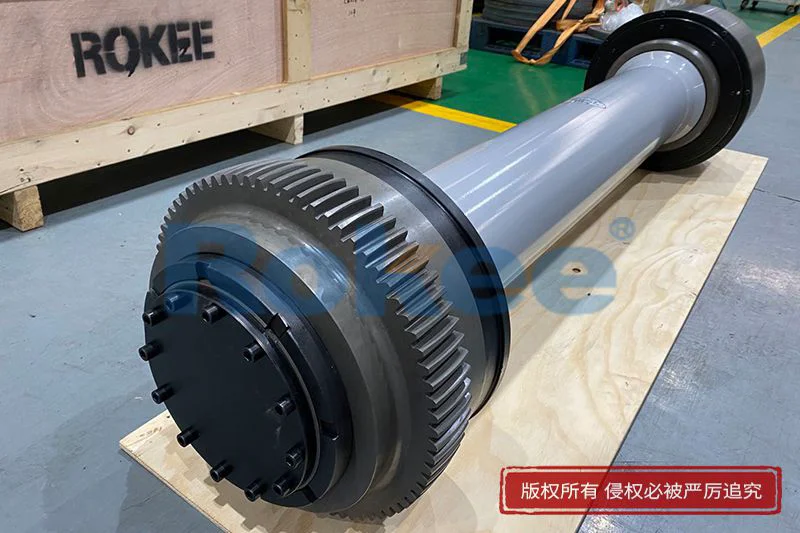
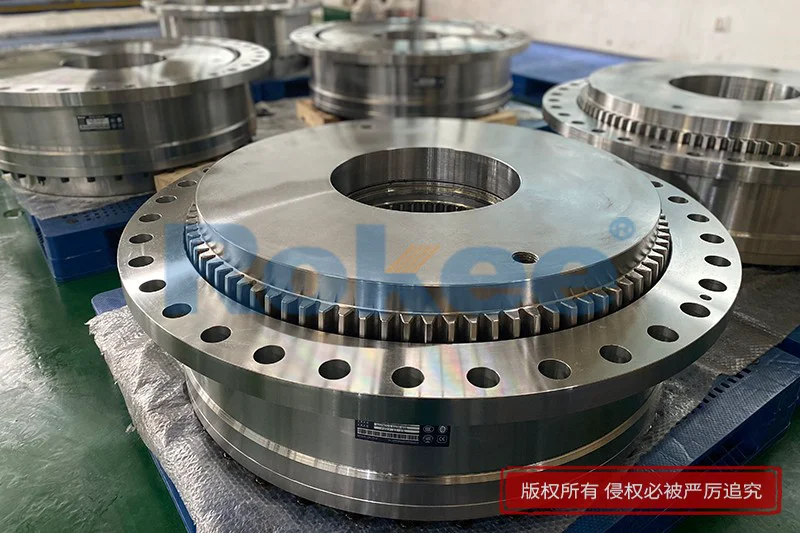
The structural design of full gear couplings is derived from precise gear meshing principles, featuring a compact and highly integrated three-piece mechanical structure. The complete assembly consists of two external gear hubs and a single internal gear sleeve, forming a dual meshing transmission mechanism that distinguishes it from half gear couplings with single-sided meshing structures. The external gear teeth machined on the outer circumference of the two shaft-connected hubs are usually processed into a crowned tooth profile, a refined structural design that lays the foundation for the component’s flexible compensation capability. The internal gear sleeve, matching the external teeth in modulus and pressure angle, envelopes the two external gear hubs from the outside, achieving full-length meshing contact between internal and external gear teeth. This symmetrical double-ended meshing structure eliminates unbalanced stress distribution during operation, enabling uniform torque transmission while reserving reasonable backlash between gear teeth. The reserved backlash and optimized tooth profile design are not manufacturing allowances but core structural settings that allow the coupling to absorb and compensate for various shaft displacements generated during equipment operation.
The working mechanism of full gear couplings centers on gear meshing torque transmission and flexible displacement compensation. During equipment operation, the driving shaft drives one external gear hub to rotate, and torque is transmitted to the internal gear sleeve through the meshing action of external and internal gear teeth. The rotating internal gear sleeve further drives the other external gear hub and the connected driven shaft to operate synchronously, realizing continuous and efficient power transmission between the two shafts. In this process, the crowned tooth profile of the external gears can produce slight sliding and angular deflection relative to the internal gear teeth within the designed tolerance range. This subtle mechanical movement enables the coupling to comprehensively compensate for three common types of shaft misalignment in practical mechanical systems: radial displacement caused by shaft center deviation, angular displacement formed by non-parallel shaft axes, and axial displacement generated by thermal expansion and contraction of components or mechanical vibration. Compared with other flexible couplings, the dual meshing structure of full gear couplings provides a larger compensation range, allowing it to adapt to installation deviations and operational deformation that cannot be accommodated by ordinary coupling products.
The superior comprehensive performance of full gear couplings stems from their unique structural characteristics and precision manufacturing processes, endowing them with irreplaceable advantages in industrial power transmission. First and foremost, they deliver extremely high torque transmission efficiency and load capacity. The full-length surface contact meshing mode between internal and external gear teeth disperses transmission pressure over the entire tooth surface, avoiding local stress concentration caused by point or line contact. This structural advantage enables the coupling to bear heavy radial and axial loads while maintaining stable torque output, with transmission efficiency far exceeding that of many elastic couplings. Even under long-term overload and impact load conditions, the integral metal gear structure can maintain stable mechanical performance without elastic fatigue failure, ensuring the continuity of mechanical operation.
Secondly, full gear couplings feature excellent environmental adaptability and structural durability. Made of high-strength alloy steel through integral forging, precision tooth cutting, and surface hardening treatment, the gear teeth possess high hardness, wear resistance, and anti-fatigue properties. The overall metal structure eliminates aging, deformation, or damage risks caused by temperature changes, oil corrosion, or chemical erosion, enabling stable operation in extreme working environments such as high temperature, low temperature, high dust, and humid conditions. In contrast to couplings relying on elastic rubber or polyurethane components, full gear couplings do not suffer from aging failure of vulnerable parts, greatly extending their service life and reducing frequent replacement costs caused by component wear.
In addition, the compact structural layout is another prominent feature of full gear couplings. The integrated design of the internal gear sleeve and double external gear hubs minimizes the radial and axial occupied space of the coupling assembly. This compact form factor allows flexible installation in mechanical systems with limited assembly space, avoiding the structural redundancy of large-size transmission components. Despite their small spatial footprint, the couplings maintain excellent dynamic balance performance, which is crucial for high-speed rotating equipment. Precision machining ensures low vibration and low noise operation during high-speed rotation, effectively improving the overall operational stability of mechanical equipment and reducing vibration-induced wear of bearings, seals, and other supporting components.
The powerful misalignment compensation capability further expands the application boundaries of full gear couplings. In actual industrial production, absolute coaxiality of driving and driven shafts is almost impossible to achieve. Installation errors, mechanical foundation settlement, thermal deformation during equipment operation, and long-term operational vibration will all cause different degrees of shaft misalignment. These tiny deviations, if not compensated for, will generate additional alternating stress on the transmission shaft system, leading to accelerated component wear, increased equipment vibration, reduced transmission efficiency, and even mechanical failure in severe cases. Full gear couplings can effectively offset these adverse effects through the flexible sliding and deflection of gear meshing pairs. The symmetrical double meshing structure enables synchronous compensation at both ends, ensuring uniform stress on the shaft system and fundamentally improving the operational reliability and service life of the entire mechanical transmission system.
Thanks to the above comprehensive performance advantages, full gear couplings have been widely applied in numerous core industrial fields, becoming a key guarantee for stable operation of heavy-duty mechanical equipment. In the metallurgical industry, they are used in rolling mills, sintering equipment, and smelting transmission systems, adapting to high-load, continuous, and high-temperature working conditions to ensure stable power output of metallurgical production lines. In the mining industry, full gear couplings serve in crushers, conveyors, and mining hoisting equipment, resisting frequent impact loads and harsh dust and humid environments to maintain long-term stable operation of mining machinery.
In the field of power generation, whether it is thermal power, hydropower, or new energy power generation equipment, full gear couplings are applied in generator sets, fan and water pump transmission systems, meeting the high-speed, stable, and low-failure operation requirements of power equipment. In heavy machinery manufacturing, they are widely used in large hoisting equipment, hydraulic machinery, and engineering machinery transmission devices, providing reliable power transmission support for heavy-load mechanical actions. Meanwhile, in petrochemical, cement building materials, port transportation, and other industrial sectors, full gear couplings also occupy an important position, adapting to the continuous and high-intensity operation characteristics of industrial production lines and reducing equipment downtime caused by transmission component failure.
To maintain the long-term stable performance of full gear couplings, standardized installation and scientific daily maintenance are essential. During the installation process, although the product has a certain misalignment tolerance, excessive shaft deviation should still be avoided as much as possible. Controlling the installation misalignment within the optimal design range can effectively reduce the sliding wear of gear teeth and extend the service life of the coupling. The assembly process requires ensuring the coaxiality of the two shaft hubs, standardizing the fastening of connecting bolts, and avoiding loose or uneven fastening force that may cause unbalanced operation of the coupling.
Lubrication maintenance is the core link in the daily operation of full gear couplings. The meshing friction between internal and external gear teeth requires high-quality lubricating grease to reduce wear, dissipate friction heat, and prevent gear tooth corrosion and oxidation. In high-speed and high-load working environments, lubricating grease will gradually age and consume, so regular inspection and replacement of lubricants are required. Timely replenishment and replacement of lubricating grease can avoid dry friction of gear teeth, prevent tooth surface scratching and abrasion failure, and ensure the flexibility of meshing compensation movement. In addition, regular operational inspection is necessary to check for abnormal vibration, noise, and temperature rise during coupling operation, timely eliminate potential faults such as bolt loosening and lubricant failure, and avoid minor problems evolving into major mechanical failures.
It is also necessary to conduct regular disassembly and maintenance of full gear couplings according to equipment operation intensity. Long-term continuous operation will cause slight wear on the gear tooth surface, and regular cleaning and inspection can help grasp the wear status of components. For gear couplings with slight tooth surface wear, timely maintenance and lubrication optimization can restore their working performance; for components with excessive wear or fatigue deformation, replacement should be carried out in time to ensure the safety and stability of the entire transmission system. Scientific maintenance management can not only maximize the service life of full gear couplings but also reduce equipment operation and maintenance costs, improving the overall operational efficiency of industrial equipment.
With the continuous upgrading of modern industrial manufacturing technology and the increasing precision and load requirements of mechanical equipment, the design and manufacturing technology of full gear couplings are also constantly innovating and optimizing. Modern manufacturing processes such as precision CNC machining and vacuum heat treatment have further improved the machining accuracy, surface hardness, and mechanical stability of gear teeth. Optimized tooth profile design and structural parameter adjustment have enhanced the misalignment compensation accuracy and load uniformity of the couplings, enabling them to adapt to higher-speed, heavier-load, and more precise industrial transmission scenarios.
Meanwhile, the application of new high-strength wear-resistant alloy materials has further improved the extreme environmental adaptability of full gear couplings, enabling them to operate stably in ultra-low temperature, high corrosion, and strong vibration working conditions that traditional products cannot adapt to. In addition, with the development of intelligent industrial equipment, the combination of full gear couplings with monitoring technology has become a new development trend. Real-time monitoring of coupling operation status, temperature, vibration, and wear data through sensing technology realizes predictive maintenance, further improving the intelligent operation level of mechanical transmission systems.
In the entire field of mechanical power transmission, full gear couplings have established irreplaceable application value with their high efficiency, high reliability, strong adaptability, and long service life. They solve many pain points in industrial transmission, such as insufficient load capacity of flexible couplings, poor compensation performance of rigid couplings, and easy aging of elastic components. As a key basic mechanical component, full gear couplings not only ensure the stable operation of single equipment but also support the continuous and efficient operation of the entire industrial production line. With the continuous progress of industrial modernization and the continuous improvement of mechanical equipment performance requirements, full gear couplings will continue to iterate and upgrade in structural design, material application, and intelligent matching, providing more reliable and efficient solutions for modern industrial power transmission.
« Full Gear Coupling » Update Date: 2026/7/16
Contact
If you require custom machined couplings, please contact Rokee via the contact information below for inquiries.
Email: https://www.gshmdpq.com
 WeChat


