Universal Joint Shafts
Rokee is a manufacturer of universal joint shafts from china, we can provide non-standard custom universal joint shafts based on parameters or drawings supplied by customers, with export support available.

As an indispensable flexible transmission component in modern mechanical systems, the universal joint shaft serves as a core bridge for power and motion transfer between non-collinear rotating shafts. Widely integrated into industrial machinery, transportation equipment, and engineering devices, it fundamentally solves the transmission limitations of rigid shaft connections, which fail to adapt to angular deviations and spatial position changes between power sources and execution components. Its unique spatial kinematic characteristics enable continuous, stable torque transmission even when the connected shafts produce angular displacement, radial offset, or dynamic position changes during operation, making it a foundational component supporting the flexible operation of various mechanical power systems. Unlike fixed rigid couplings that require precise coaxial alignment, the universal joint shaft tolerates moderate structural misalignment, balancing transmission stability and mechanical flexibility to meet the complex operating conditions of modern equipment.
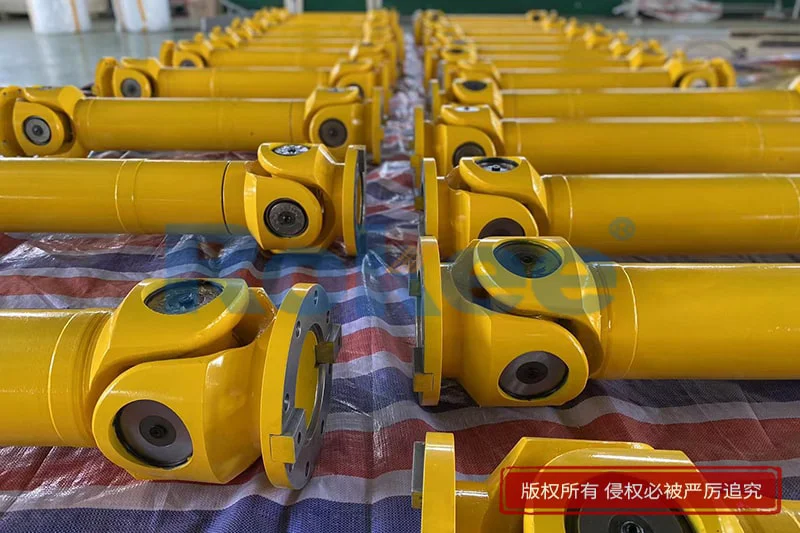
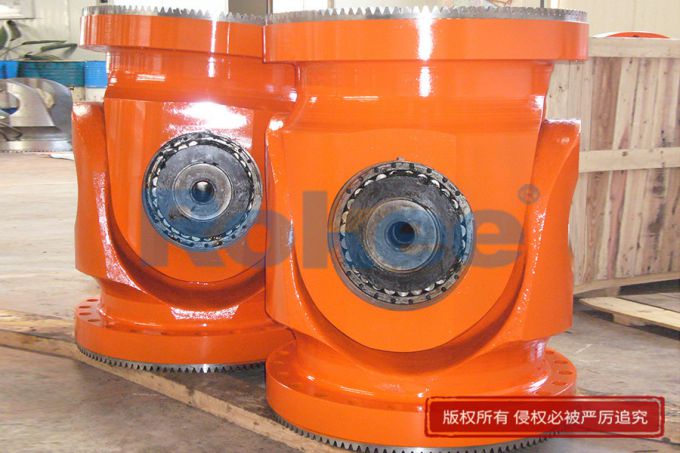
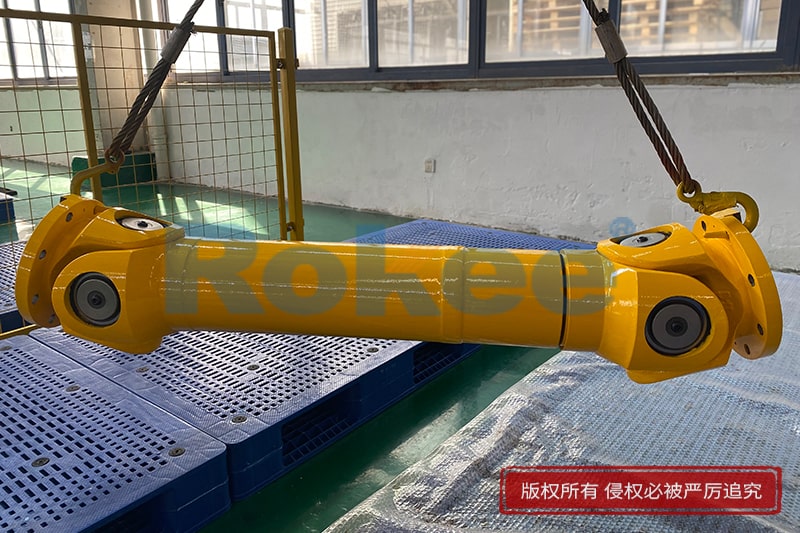
The basic composition of a universal joint shaft follows a mature and optimized mechanical structure, consisting mainly of universal joint assemblies, intermediate transmission shafts, and auxiliary bearing and connection components. The core functional unit is the universal joint, commonly known as the Hooke joint, which relies on a cross shaft structure to connect two mutually perpendicular yoke frames. One yoke is fixed to the driving shaft responsible for power input, while the other is connected to the driven shaft for power output. The cross shaft acts as the central force-transmitting component, with its four shaft heads matched with precision bearings installed inside the yokes. This structural design allows the two yokes to rotate freely around the cross shaft in different spatial planes, realizing flexible angle adjustment between the driving and driven shafts. The intermediate shaft, processed with high-strength alloy materials, undertakes torque conduction and distance connection, effectively expanding the spatial range of power transmission while ensuring overall structural rigidity to avoid deformation and vibration during high-load operation. All components are tightly matched through precision machining, forming a complete transmission system that integrates flexibility and stability.
The operating principle of the universal joint shaft is derived from the spatial multi-linkage kinematic mechanism, presenting unique motion laws during power transmission. When the driving shaft rotates at a constant speed, the driving yoke drives the cross shaft to perform synchronous rotational motion, and the cross shaft further transfers torque and rotational displacement to the driven yoke and the connected driven shaft. A notable kinematic feature of a single universal joint is the non-uniform speed transmission characteristic. When there is an included angle between the driving and driven shafts, the rotational speed of the driven shaft will produce periodic fluctuation within a single rotation cycle, alternately presenting acceleration and deceleration states. The amplitude of this speed fluctuation is positively correlated with the misalignment angle between the two shafts—the larger the angular deviation, the more obvious the speed variation. This inherent characteristic originates from the geometric motion constraint of the single cross shaft structure, which leads to cyclic changes in the force arm of torque transmission. Although a single joint has speed fluctuation defects, this problem can be effectively eliminated by adopting a double universal joint pairing design. By arranging two universal joints symmetrically and keeping their intermediate shaft deflection angles equal, the speed fluctuation generated by the first joint can be completely offset by the second joint, achieving approximate constant-speed torque transmission, which greatly improves the operational stability of the transmission system.
In practical mechanical applications, the universal joint shaft exhibits outstanding comprehensive performance advantages that distinguish it from other transmission components. First, it has excellent angular compensation capability, allowing stable power transmission under continuous dynamic angular deviation, with a single joint adapting to a maximum operating angle of 25 to 30 degrees in heavy-duty working scenarios. This enables mechanical equipment to maintain normal power output even with structural deformation, installation errors, or working posture changes. Second, the overall structural design is simple and compact, with low assembly and disassembly difficulty, facilitating daily inspection and component replacement. The transmission efficiency of the universal joint shaft remains at a high level under rated working conditions, with minimal power loss during torque conduction, which effectively improves the overall energy utilization rate of mechanical equipment. In addition, it has strong load adaptability, capable of bearing alternating torque, impact load, and variable-speed operation, and can work stably in complex working environments such as high dust, low temperature, and mechanical vibration. Compared with constant-velocity joints and other flexible transmission components, the universal joint shaft has higher structural reliability and lower failure rate in conventional industrial and transportation scenarios, with more mature application adaptability.
Despite its numerous advantages, the universal shaft also has inherent performance limitations and usage constraints that need to be reasonably controlled in system design and operation. The most prominent limitation is the speed fluctuation phenomenon of a single joint, which will produce periodic torsional vibration and additional mechanical stress on the transmission system if the working angle is too large or the operating speed is too high. Long-term operation under such conditions will aggravate component fatigue and even cause resonance of the mechanical system, affecting equipment operation accuracy and service life. Meanwhile, the universal joint shaft cannot compensate for axial misalignment, and excessive axial displacement between the driving and driven shafts will cause additional extrusion and friction between components, leading to accelerated wear. In terms of component loss, the bearing and cross shaft friction pairs inside the universal joint are vulnerable parts. Long-term high-load operation without effective lubrication will cause serious wear, increased transmission gaps, reduced motion accuracy, and abnormal noise and vibration. In addition, excessive working angles will significantly reduce the service life of the universal joint shaft, as large-angle operation will increase the contact pressure and friction frequency of internal components, accelerating material fatigue and aging.
Universal joint shafts cover a wide range of application scenarios, penetrating almost all mechanical fields that require flexible power transmission. In the transportation industry, they are core components of vehicle transmission systems, responsible for transmitting engine power to the drive axle, adapting to the up and down jitter and angle changes of the chassis during vehicle driving, and ensuring continuous power output during vehicle acceleration, deceleration, and bumpy road driving. In engineering machinery such as excavators, loaders, and cranes, universal joint shafts connect power output components and working execution components, adapting to the frequent posture adjustment and large-angle displacement of working arms, and providing stable power support for heavy-load operations. In industrial production equipment, they are widely used in conveyor systems, mixing equipment, and precision transmission machinery, solving the power transmission problems between offset and spatially staggered shafts, and meeting the flexible connection needs of automated production lines. In addition, universal joint shafts are also applied in agricultural machinery, aerospace auxiliary mechanisms, and marine mechanical equipment, adapting to the complex and variable working conditions of different industries with their unique flexible transmission performance.
Reasonable maintenance and scientific selection are key prerequisites to ensure the long-term stable operation of universal joint shafts and extend their service life. In terms of model selection, the matching specification should be determined comprehensively according to the actual working torque, operating speed, maximum working angle, and working environment of the mechanical system. For heavy-load and high-frequency operation scenarios, high-strength alloy forged universal joint shafts should be selected to improve structural rigidity and fatigue resistance; for precision transmission equipment, low-fluctuation double-joint structures need to be prioritized to ensure motion accuracy. In daily maintenance, lubrication management is the core link. Regular greasing of the internal bearings and friction pairs can effectively reduce wear and friction resistance, avoid dry friction damage, and maintain high transmission efficiency. Meanwhile, regular inspection of component tightness and structural integrity is required to check for loose connection gaps, component deformation, and abnormal wear. Worn bearings and aging sealing components should be replaced in a timely manner to prevent dust, moisture, and impurities from entering the interior and causing component corrosion and accelerated loss. In equipment operation, overload and excessive-angle operation should be avoided as much as possible to reduce additional mechanical stress and ensure the universal joint shaft works within the rated parameter range.
With the continuous upgrading of modern mechanical equipment towards high precision, high efficiency, and high reliability, the design and manufacturing technology of universal joint shafts is also constantly innovating and optimizing. Traditional universal joint shafts are gradually optimized in structural design, adopting integrated forging technology and precision machining processes to improve overall structural strength and dimensional accuracy, reduce transmission gaps, and weaken vibration and noise during operation. In terms of material application, high-strength wear-resistant alloy materials and surface strengthening treatment processes are widely used to improve the wear resistance, corrosion resistance, and fatigue resistance of components, adapting to more harsh working environments. At the same time, combined with dynamic balance calibration technology, the high-speed operation stability of universal joint shafts is effectively improved, making them more suitable for high-speed and high-precision mechanical transmission scenarios. The optimized double universal joint structure and new constant-velocity universal joint derivatives further make up for the shortcomings of traditional products, expanding the application scope of universal joint shafts in high-end mechanical equipment.
In the entire mechanical transmission system, the universal joint shaft, as a simple and efficient flexible transmission component, undertakes the important task of connecting power and realizing spatial motion transmission. Its unique structural flexibility and reliable transmission performance make it an irreplaceable core component in the mechanical field. Although it has inherent kinematic limitations, these defects can be effectively avoided through reasonable structural matching, scientific model selection, and standardized maintenance. With the continuous progress of manufacturing technology and mechanical design theory, the performance of universal joint shafts will be further improved, with higher transmission accuracy, longer service life, and stronger environmental adaptability. It will continue to play a vital role in the development of modern transportation, industrial manufacturing, engineering machinery, and other fields, providing basic guarantee for the stable and efficient operation of various mechanical systems.
« Universal Joint Shafts » Update Date: 2026/7/15
Contact
If you require custom machined couplings, please contact Rokee via the contact information below for inquiries.
Email: https://www.gshmdpq.com
 WeChat