Turbine Flexible Coupling
Rokee is a manufacturer of turbine flexible coupling from china, we can provide non-standard custom turbine flexible coupling based on parameters or drawings supplied by customers, with export support available.
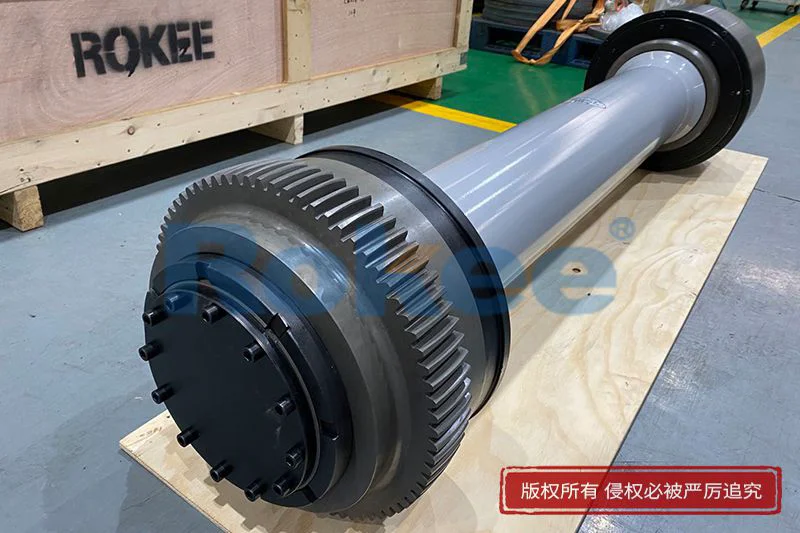
In modern power generation and industrial mechanical transmission systems, the stable operation of turbine units relies heavily on the reliability of auxiliary transmission components, among which turbine flexible couplings stand out as indispensable core connecting parts. Serving as the key link between turbine shafts and driven equipment such as generators, pumps and compressors, these specialized couplings undertake the dual tasks of efficient torque transmission and operational deviation compensation. Unlike rigid coupling structures that pursue absolute shafting rigidity, turbine flexible couplings are ingeniously designed with elastic deformation characteristics, which can adapt to various minor displacements and vibration impacts generated during the long-term operation of turbine equipment. This unique performance not only ensures the continuous and stable output of mechanical power, but also effectively protects the entire shafting system from fatigue damage and structural impact, becoming a vital guarantee for the safe and efficient operation of turbine power systems.
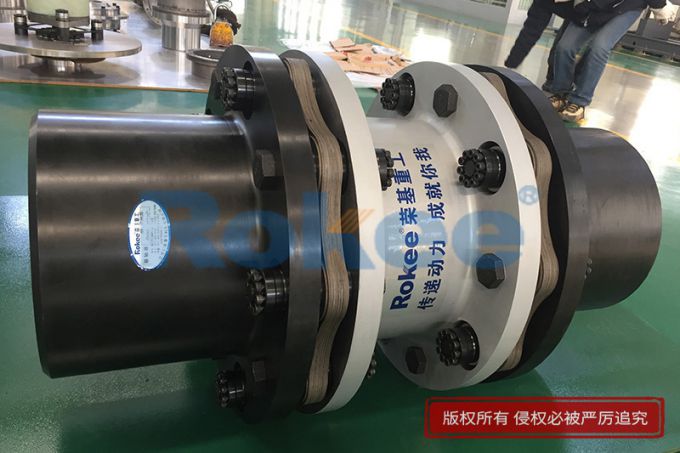
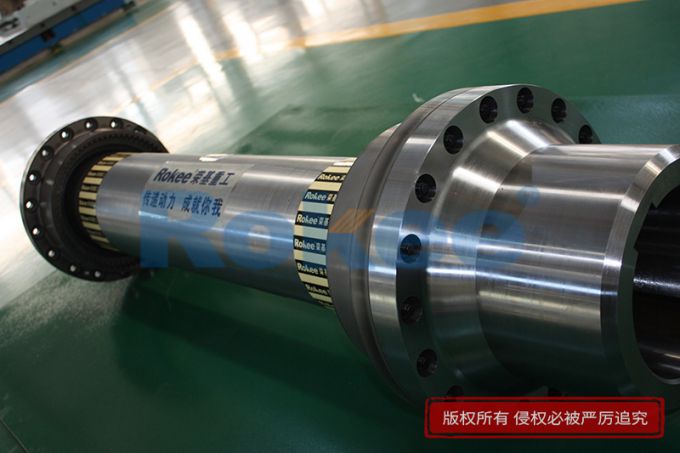
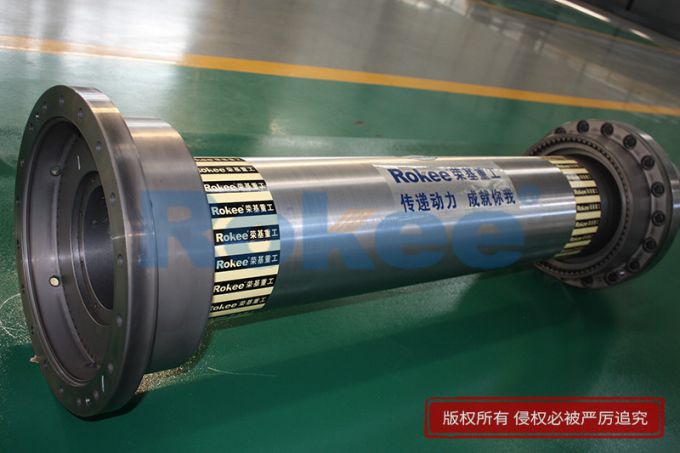
The operational environment of turbine equipment determines the rigorous performance requirements for flexible couplings. Turbine units usually operate under high-speed, high-temperature and high-load working conditions for a long time. During the startup, shutdown and continuous operation of the unit, the shafting system will inevitably produce multiple forms of displacement deviations. Thermal expansion and contraction caused by high-temperature operation will lead to axial displacement of the connecting shafts; installation errors and long-term mechanical wear will trigger radial and angular misalignment between the driving shaft and the driven shaft; periodic mechanical vibration and load fluctuation will further aggravate the relative displacement of the shafting. These subtle deviations are difficult to avoid in mechanical operation, but if they cannot be effectively buffered and compensated, they will produce additional alternating stress on the shafting, bearings and turbine main body, resulting in accelerated component wear, increased operational noise, reduced transmission efficiency, and even serious failures such as shaft bending and component fracture in severe cases. Turbine flexible couplings are precisely developed to solve these industrial pain points, realizing flexible connection while maintaining stable torque transmission, and balancing the rigidity required for power transmission and the flexibility required for adaptive deviation.
The working mechanism of turbine flexible couplings is based on the elastic deformation of core flexible components, forming a highly coordinated mechanical operation mode of torque transmission and deviation compensation. In the working process, the rotational torque generated by the turbine is stably transmitted to the flexible components through the connecting flanges and high-strength fasteners, and then uniformly transferred to the driven equipment shaft through the elastic structure. In this process, when relative displacement occurs between the two connected shafts, the internal flexible components will produce controllable elastic deformation including bending, stretching and torsion. This microscopic deformation does not affect the overall torque transmission efficiency, but can effectively absorb and offset axial, radial and angular misalignment deviations. Metallic membrane flexible couplings, the most widely used type in turbine systems, rely on stacked thin metal diaphragms as the core force-bearing and flexible components. These laminated metal plates with precise thickness specifications are assembled in a symmetrical circumferential arrangement. When bearing torque and displacement load, the diaphragms undergo uniform elastic deformation, avoiding local stress concentration, and achieving accurate compensation for multi-dimensional shafting deviations without lubrication. This working principle fundamentally solves the defect of traditional gear couplings that rely on meshing transmission and lubrication maintenance, and greatly improves the operational stability of high-speed turbine systems.
The structural design of turbine flexible couplings fully adapts to the extreme working conditions of turbine equipment, with outstanding structural rationality and mechanical stability. The overall structure is composed of symmetrically arranged flanges, high-strength bolt groups, flexible elastic components and connecting hubs. All structural parts are made of high-strength, fatigue-resistant and high-temperature-resistant alloy materials, which can maintain stable mechanical properties in high-temperature and high-speed operating environments for a long time. The flexible components adopt integral or linkage structural designs according to different application scenarios. The integral flexible structure features high torsional stiffness and good overall stability, suitable for high-power and high-precision turbine transmission scenarios; the linkage flexible structure has stronger deformation flexibility and larger deviation compensation range, which can adapt to complex working conditions with frequent load fluctuations and large shafting offset. The ingenious structural symmetry design enables the coupling to bear uniform load during high-speed rotation, effectively reducing centrifugal force and rotational vibration, and ensuring the dynamic balance of the entire transmission system. In addition, the optimized bolt connection structure can firmly fix the flexible components and flanges, avoiding loose connection during long-term operation, while ensuring the free and flexible deformation of the elastic components without structural constraints.
Compared with ordinary industrial couplings, turbine flexible couplings have more superior comprehensive performance indicators, which are tailored for the high-standard operation requirements of turbine units. In terms of torque transmission performance, they have high torsional rigidity and stable load-bearing capacity, which can efficiently transmit large torque generated by turbine operation without power loss, ensuring the consistent and synchronous rotation speed of the driving and driven shafts. In terms of deviation compensation performance, they can simultaneously adapt to axial stretching displacement, radial offset displacement and angular deflection displacement, with a far larger compensation range than traditional coupling products. Especially in angular displacement compensation, the performance advantage is particularly prominent, which can effectively cope with the shafting offset caused by thermal deformation and equipment aging of turbine units. In terms of vibration damping and noise reduction, the elastic deformation of flexible components can absorb most of the periodic vibration and impact load generated during turbine operation, suppress vibration resonance of the shafting system, reduce mechanical operation noise, and optimize the overall operating environment of the unit. More importantly, this type of coupling has excellent fatigue resistance and aging resistance. It can withstand millions of times of alternating load impacts in long-term continuous operation, and will not produce structural fatigue failure or performance attenuation, meeting the long-cycle and high-reliability operation requirements of power generation turbine equipment.
The application value of turbine flexible couplings is fully reflected in the full-cycle operation protection of turbine mechanical systems. In the equipment startup stage, the turbine unit will produce instantaneous load impact and shafting slight jitter. The flexible structure of the coupling can buffer the instantaneous impact force, avoid rigid collision between the driving and driven shafts, and protect the precision components such as turbine bearings and rotors from startup impact damage. In the stable operation stage, it continuously compensates for subtle shafting deviations caused by thermal expansion and mechanical vibration, eliminates additional stress of the shafting, reduces the friction and wear of bearings and sealing components, and effectively prolongs the service life of the entire turbine unit. In the equipment shutdown stage, it can buffer the reverse impact force generated by load disappearance, avoid shafting rebound and structural vibration, and ensure the safe and stable shutdown of the unit. In addition, the excellent vibration damping performance of flexible couplings can effectively avoid the resonance phenomenon of the shafting system. By adjusting the overall vibration frequency of the transmission system, it shifts the resonance frequency to a non-critical speed range, preventing equipment failure and performance attenuation caused by mechanical resonance.
In terms of operation and maintenance, turbine flexible couplings have significant economic and practical advantages, which greatly reduce the daily operation cost and maintenance difficulty of turbine equipment. Different from traditional gear couplings and elastic sleeve couplings that require regular lubrication, oil replacement and wear part replacement, metal diaphragm turbine flexible couplings adopt fully dry operation design, requiring no lubrication maintenance in the whole service cycle. This maintenance-free feature avoids equipment failures caused by lubricant deterioration, oil leakage and insufficient lubrication, and eliminates the daily maintenance workload of lubrication management. The structural design is simple and compact, with few vulnerable parts and stable overall performance. Under normal operating conditions, the service life can be synchronized with the main turbine equipment, avoiding frequent replacement and disassembly maintenance. Even in extreme working conditions with accidental load impact, individual flexible components can be replaced separately without integral disassembly of the coupling, which greatly improves maintenance efficiency and reduces equipment downtime loss. In addition, the reliable structural strength ensures that the coupling can maintain basic torque transmission capacity even if individual elastic components are slightly damaged, supporting the emergency operation of turbine equipment and avoiding sudden shutdown accidents of the unit.
With the continuous upgrading of modern power generation technology and the continuous improvement of industrial energy efficiency standards, the performance requirements for turbine flexible couplings are also constantly improving, and the industry is moving towards high precision, high reliability and intelligent adaptation. Modern turbine flexible coupling design pays more attention to the optimization of material performance and structural details. New high-temperature resistant, high-strength and anti-fatigue alloy materials are widely used to further improve the adaptability of couplings to extreme working conditions. Through finite element simulation and dynamic mechanical analysis, the structural deformation law and stress distribution of couplings under different load conditions are accurately optimized, realizing more precise deviation compensation and more efficient torque transmission. At the same time, with the development of intelligent operation and maintenance technology, flexible couplings are gradually combined with state monitoring technology, which can realize real-time perception of structural deformation, load status and operating fatigue, providing data support for predictive maintenance of turbine equipment.
As a key basic component of turbine power transmission system, flexible couplings play an irreplaceable role in ensuring the safe operation, improving transmission efficiency and reducing equipment loss. Its unique flexible connection mode perfectly solves the mechanical adaptation problems such as shafting deviation, vibration impact and alternating stress in the operation of turbine units, and provides a solid guarantee for the long-term stable operation of power generation and industrial turbine equipment. In the future, with the continuous progress of mechanical manufacturing technology and material engineering, turbine flexible couplings will achieve further breakthroughs in performance optimization, structural innovation and intelligent application, and continue to empower the high-efficiency and safe operation of modern energy power systems.
« Turbine Flexible Coupling » Update Date: 2026/7/15
Contact
If you require custom machined couplings, please contact Rokee via the contact information below for inquiries.
Email: https://www.gshmdpq.com
 WeChat