Tooth Couplings
Rokee is a manufacturer of tooth couplings from china, we can provide non-standard custom tooth couplings based on parameters or drawings supplied by customers, with export support available.
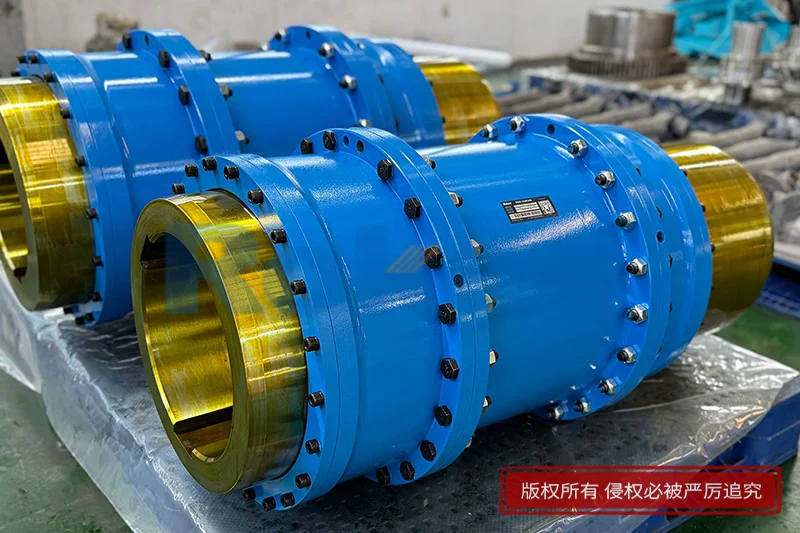
As a core mechanical transmission component in modern industrial systems, tooth couplings have long occupied an irreplaceable position in power transmission machinery. With the continuous upgrading of industrial manufacturing towards high precision, high load and high stability, the requirements for transmission components in mechanical equipment are becoming increasingly stringent. Traditional connecting parts often struggle to adapt to complex working conditions such as shaft deviation, variable load operation and long-term continuous work, while tooth couplings, relying on their unique meshing structure and excellent adaptive performance, perfectly solve many pain points in mechanical power transmission. They are widely used in heavy machinery, industrial production lines, energy power equipment and other core industrial fields, becoming a key guarantee for the stable operation of mechanical transmission systems.


The basic working logic of tooth couplings originates from the involute gear meshing transmission principle, which is a mature and efficient mechanical transmission method verified by long-term industrial practice. The overall structure of the coupling is composed of two outer gear hubs fixed on the driving shaft and driven shaft respectively, and an integral inner gear sleeve sleeved outside the two hubs. The power transmission process is completed through the precise meshing between the outer teeth of the hubs and the inner teeth of the sleeve. When the driving equipment operates and drives the driving shaft to rotate synchronously, the outer gear hub on the driving shaft converts rotational power into meshing thrust through tooth surface contact, and transmits the torque and rotational motion to the inner gear sleeve. Subsequently, the inner gear sleeve drives the outer gear hub on the driven shaft to rotate synchronously, realizing the seamless transmission of power between the two shafts. Compared with ordinary rigid couplings that rely on simple fastening connection for power transmission, the gear meshing structure of tooth couplings realizes flexible contact transmission, which lays a structural foundation for their excellent adaptive compensation performance.
One of the most prominent core performances of tooth couplings is their multi-dimensional deviation compensation capability. In the actual installation and operation of mechanical equipment, it is difficult to achieve absolute coaxiality between the driving shaft and the driven shaft due to machining errors, installation deviations, equipment vibration and thermal deformation during operation. Tiny deviations in axial, radial and angular directions are inevitable in almost all transmission shaft systems. These subtle misalignments will produce additional alternating stress and friction loss on the transmission parts during high-speed operation, which will accelerate component wear, cause equipment vibration and noise, and even lead to transmission failure and equipment shutdown in severe cases. The tooth surface matching gap and structural flexibility of tooth couplings can effectively compensate for these three types of common shaft deviations. The relative sliding of the inner and outer tooth surfaces during operation can adapt to radial and angular deflection, while the reserved assembly gap in the axial direction can absorb the axial displacement generated by equipment thermal expansion and mechanical vibration. This excellent compensation performance eliminates the additional load caused by shaft misalignment, protects the main transmission structure of the equipment, and greatly improves the stability and service life of the entire mechanical system.
In terms of load transmission capacity, tooth couplings show obvious advantages over other types of flexible couplings. The tooth meshing transmission mode realizes multi-tooth simultaneous contact force bearing, which disperses the transmission load on multiple tooth surfaces, avoiding the problem of local stress concentration caused by single-point or few-point force bearing of traditional couplings. The involute tooth profile design enables the tooth surfaces to bear uniform pressure during meshing, with reasonable stress distribution and no sharp stress mutation in the transmission process. This structural feature makes tooth couplings capable of transmitting large torque in a compact structural space. Different from elastic couplings that rely on elastic deformation for buffering and have limited load-bearing range, rigid meshing transmission enables tooth couplings to maintain stable and efficient power output under heavy load and overload conditions. Even in the working state of frequent start-stop and variable load impact, the gear meshing structure can still maintain reliable transmission accuracy, without obvious deformation and failure, which is very suitable for heavy-duty mechanical equipment that requires long-term high-load operation.
Compact structural design is another important feature that makes tooth couplings widely popular in industrial applications. The internal and external gear meshing structure integrates the transmission connection function in a small space, so the overall volume and occupied space of the coupling are far smaller than those of flange couplings and sleeve couplings with the same load-bearing capacity. This compact layout enables tooth couplings to be applied to mechanical equipment with limited internal installation space and compact structural layout. In modern precision machinery and integrated industrial equipment, the internal structural space is highly compressed, and oversized transmission components will restrict the miniaturization and integration development of equipment. The small-size and high-load characteristics of tooth couplings perfectly adapt to this development trend, realizing efficient power transmission while saving equipment space, and optimizing the overall structural layout of mechanical equipment.
Lubrication and sealing are key factors that determine the operating efficiency and service life of tooth couplings. Since the internal and outer tooth surfaces rely on sliding meshing to complete power transmission, there will be inevitable micro-friction between the tooth surfaces during operation. Good lubrication can form a uniform oil film on the meshing tooth surfaces, isolate direct metal contact, reduce friction and wear, and at the same time reduce transmission friction loss and improve power transmission efficiency. In addition, the lubricating oil can also play a role in heat dissipation, taking away the friction heat generated by high-speed meshing, avoiding tooth surface deformation and performance degradation caused by high-temperature accumulation. A complete sealing structure is matched with the lubrication system to prevent external dust, metal debris, moisture and other impurities from entering the meshing area. Impurities entering the tooth gap will cause abrasive wear on the tooth surface, scratch the precision machined tooth profile, and seriously affect the transmission accuracy and service life. Therefore, standardized lubrication maintenance and intact sealing protection are essential prerequisites for the long-term stable operation of tooth couplings. Reasonable lubrication cycle and sealing inspection can effectively extend the service cycle of the coupling and reduce equipment failure rates.
Tooth couplings have excellent environmental adaptability and can maintain stable working performance in various complex industrial working conditions. Different from elastic couplings that are easily affected by temperature, humidity and chemical corrosion, the main body of tooth couplings is made of high-strength alloy materials through precision forging and machining, with high structural rigidity, good wear resistance and strong corrosion resistance. In high-temperature working environments such as thermal power equipment and metallurgical machinery, the metal structure of tooth couplings will not undergo obvious deformation and performance attenuation, and can maintain accurate meshing transmission. In low-temperature, humid and dusty working environments such as mining machinery and construction equipment, the reliable sealing structure can isolate external adverse factors, ensuring that the transmission performance is not affected. At the same time, the rigid meshing structure has strong anti-fatigue ability, and can adapt to long-term continuous operation and frequent impact load working conditions, which is incomparable to many flexible couplings with limited fatigue resistance.
In terms of industrial application scenarios, tooth couplings cover almost all fields involving mechanical power transmission. In the heavy machinery industry, they are applied to large-scale hoisting equipment, crushing machinery and conveyor equipment, providing stable heavy-load power transmission for heavy-duty operation equipment. In the energy and power industry, they serve wind power generation equipment, water conservancy power machinery and power transmission equipment, ensuring the efficient and stable operation of energy conversion and transmission systems. In the field of industrial manufacturing, they are widely used in automated production lines, precision processing machinery and transmission equipment, meeting the high-precision and high-stability transmission requirements of modern industrial production. In addition, in metallurgy, chemical industry, mining, transportation and other industrial fields, tooth couplings have become standard matching transmission components, providing basic guarantee for the normal operation of various mechanical equipment.
Although tooth couplings have excellent comprehensive performance, their operating state is still affected by installation accuracy and daily maintenance quality. In the installation process, excessive shaft deviation will cause abnormal wear of the tooth surface even within the compensation range, and long-term eccentric operation will shorten the service life of the coupling. Therefore, standardized installation and accurate calibration of coaxiality are very important. In daily maintenance, regular inspection of sealing performance, timely supplement and replacement of lubricating oil, and regular cleaning of internal impurities can effectively avoid common faults such as tooth surface wear, meshing jamming and transmission noise. Compared with other mechanical components, the failure rate of tooth couplings is low under standardized use and maintenance, and their comprehensive service life is longer, which can effectively reduce the equipment maintenance cost and downtime loss for industrial production.
With the continuous progress of mechanical manufacturing technology, the processing accuracy and structural design of tooth couplings are also constantly optimized and upgraded. Modern precision machining technology makes the tooth profile meshing more precise, the tooth surface roughness lower, and the transmission friction loss further reduced. The optimized curved tooth profile design further improves the deviation compensation ability and load uniformity of the coupling, making the operation more stable and the noise lower. At the same time, the application of new high-strength wear-resistant materials further enhances the structural rigidity and environmental adaptability of tooth couplings, enabling them to adapt to more extreme industrial working conditions. As an indispensable basic mechanical component, tooth couplings will continue to iterate with the development of industrial technology, providing more reliable and efficient support for the upgrading of modern mechanical transmission systems.
In conclusion, tooth couplings rely on their unique gear meshing structure, multi-dimensional deviation compensation performance, high load transmission capacity, compact structural advantages and strong environmental adaptability to occupy a pivotal position in the field of mechanical transmission. They solve many technical bottlenecks in traditional coupling transmission, effectively improve the operating stability and service life of mechanical equipment, and reduce industrial production and maintenance costs. In the context of the continuous development of modern industrialization towards high efficiency, precision and intelligence, the application value of tooth couplings will be further highlighted. As a basic core component of industrial machinery, it will continue to support the stable operation and innovative development of various industrial mechanical systems, and become an important cornerstone of modern industrial power transmission technology.
« Tooth Couplings » Update Date: 2026/7/15
Contact
If you require custom machined couplings, please contact Rokee via the contact information below for inquiries.
Email: https://www.gshmdpq.com
 WeChat