Curved Tooth Couplings
Rokee is a manufacturer of curved tooth couplings from china, we can provide non-standard custom curved tooth couplings based on parameters or drawings supplied by customers, with export support available.

In the intricate ecosystem of mechanical transmission systems, the seamless transfer of torque and rotational motion serves as the foundational guarantee for the stable operation of all industrial equipment. Among numerous mechanical components responsible for shaft connection and power transmission, curved tooth couplings have emerged as a core transmission element favored in heavy-duty, high-precision, and long-cycle industrial scenarios by virtue of their unique tooth profile design, excellent load-bearing performance and reliable misalignment compensation capability. Unlike traditional rigid couplings that lack deformation tolerance and ordinary flexible couplings with limited torque transmission capacity, curved tooth couplings perfectly balance structural rigidity and operational flexibility, solving multiple pain points in mechanical operation such as shaft displacement deviation, concentrated stress, and easy wear of transmission parts. This article comprehensively elaborates on the structural characteristics, working principles, core performance advantages, application scenarios, installation and maintenance essentials, and industrial application value of curved tooth couplings, revealing their irreplaceable status in modern mechanical transmission systems.
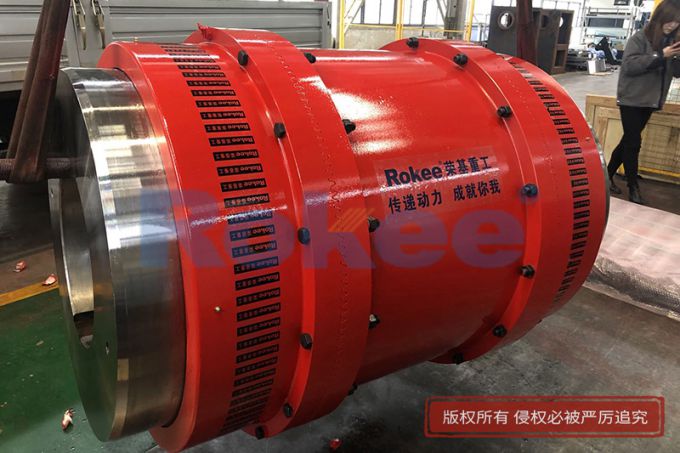
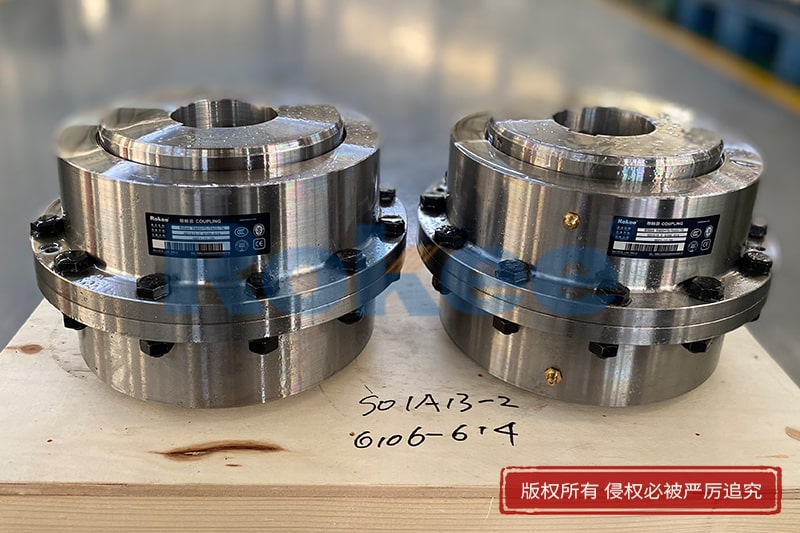

The unique functional advantages of curved tooth couplings stem from their sophisticated and optimized structural design. The overall structure of this type of coupling is composed of two toothed hubs and an outer sleeve with internal teeth, forming a modular assembly structure with high integration and strong structural stability. The core structural feature lies in the special curved tooth profile of the external teeth on the hub, which is usually designed with arc-shaped drum teeth, differing completely from the straight tooth structure of conventional gear couplings. The curved tooth surface forms a smooth and continuous contact curve when meshing with the internal teeth of the outer sleeve, rather than the linear contact of traditional straight teeth. This subtle structural innovation fundamentally changes the stress distribution and motion state during power transmission. The modular design enables each component of the coupling to be independently processed, manufactured and replaced, effectively reducing the difficulty of later equipment maintenance and parts replacement, and improving the overall operational convenience of mechanical systems.
The working principle of curved tooth couplings is based on positive locking mechanical meshing transmission and flexible displacement compensation. In the actual operating state of the equipment, the driving shaft drives the toothed hub to rotate synchronously, and the curved external teeth on the hub transmit torque and rotational power to the internal teeth of the outer sleeve through full-surface contact, and then drive the driven hub and the connected driven shaft to operate synchronously, realizing the efficient transmission of mechanical power between different shaft sections. In the ideal installation state where the two shafts are completely coaxial, the curved teeth maintain uniform and stable full-circle meshing contact, with balanced stress on each tooth surface and no relative sliding friction. However, in actual industrial operation, affected by equipment installation errors, mechanical vibration, thermal deformation of parts after long-term operation, and foundation settlement, the connected two shafts inevitably produce axial, radial and angular misalignment deviations. At this time, the excellent flexible compensation performance of the curved tooth profile is fully exerted.
The arc-shaped curved tooth surface can produce micro sliding and adaptive fitting during meshing, which can automatically compensate for various displacement deviations between the shafts. When angular misalignment occurs between the two shafts, the curved tooth profile avoids the edge contact and stress concentration that are common in straight tooth couplings, and always maintains uniform surface contact between the meshing teeth, ensuring the continuity and stability of power transmission. When axial or radial displacement occurs, the smooth curved structure allows relative micro displacement between the internal and external teeth without generating additional restrictive stress, effectively releasing the assembly and operation stress of the shaft system. This adaptive meshing mechanism enables the curved tooth coupling to maintain efficient and stable power transmission under non-ideal working conditions, which is the core reason why it is superior to traditional transmission couplings in complex working environments.
Curved tooth couplings possess multiple core performance advantages that make them adaptable to harsh and high-standard industrial working conditions, and their comprehensive performance far exceeds that of ordinary flexible couplings and rigid couplings. First of all, they have ultra-high torque transmission efficiency and heavy load-bearing capacity. The curved tooth meshing method forms a large-area surface contact state, which increases the force-bearing area of a single tooth by more than twice compared with straight tooth structures. The uniform stress distribution avoids local overloading and tooth surface wear, enabling the coupling to stably bear large torque and impact loads. Even in the state of fluctuating loads and intermittent impact operation, it can maintain stable transmission efficiency without slippage or power loss, meeting the power transmission needs of heavy machinery and large industrial equipment.
Secondly, the curved tooth coupling has excellent wear resistance and long service life. The smooth arc tooth profile eliminates sharp corners and edge structures, avoiding friction and wear caused by edge extrusion during meshing operation. The relative sliding between tooth surfaces is gentle and uniform, with low friction coefficient and small wear loss. At the same time, the uniform stress distribution prevents fatigue cracks and tooth surface peeling caused by long-term alternating stress, greatly delaying the fatigue aging speed of parts. Under standardized installation and maintenance conditions, the service life of curved tooth couplings is far longer than that of ordinary gear couplings, effectively reducing the frequency of equipment parts replacement and downtime loss.
In addition, this type of coupling has outstanding vibration damping and noise reduction performance. In the process of high-speed operation and load impact, the flexible meshing state of the curved tooth surface can absorb and buffer part of the mechanical vibration and impact energy generated by the shaft system. It avoids the rigid collision and violent vibration of traditional rigid couplings during power transmission, effectively reducing the vibration amplitude of the equipment shaft system and lowering the operating noise of mechanical equipment. This vibration damping characteristic not only optimizes the operating environment of the equipment, but also protects the precision parts inside the mechanical system from vibration damage, improving the overall operational stability of the equipment.
Moreover, curved tooth couplings feature compact structure, high positioning accuracy and low rotational inertia. The integrated modular structure saves installation space and is suitable for equipment with compact structural layout. The self-centering ability of the curved tooth profile ensures high coaxiality accuracy during shaft system operation, realizing precise motion transmission and positioning. The low moment of inertia design enables the coupling to respond quickly during equipment start-up, stop and speed regulation, meeting the high-precision and high-response operation requirements of precision machinery and automated equipment. Meanwhile, it has strong adaptability to high-speed operating conditions, and will not produce excessive centrifugal force and operational vibration during high-speed rotation, maintaining stable high-speed transmission performance.
With its superior comprehensive performance, curved tooth couplings are widely used in multiple industrial fields involving mechanical power transmission, covering heavy industry, precision manufacturing, transportation, aerospace and other key industries. In the field of heavy industrial machinery such as metallurgy, mining and cement manufacturing, large-scale equipment such as rolling mills, crushers, ball mills and conveyor systems need to operate stably under heavy load, high impact and long-term continuous working conditions. Curved tooth couplings can withstand the strong impact load and large torque generated during equipment operation, compensate for shaft displacement deviation caused by long-term vibration and thermal deformation, and ensure the continuous and efficient operation of heavy-duty production equipment, reducing production failures caused by transmission system problems.
In the field of precision machinery and automated equipment including industrial robots, precision machine tools and automated production lines, the high positioning accuracy and low vibration characteristics of curved tooth couplings are fully utilized. Robotic arm joints, precision actuator transmission components and machine tool spindle transmission systems require extremely high motion accuracy and stability. The curved tooth coupling realizes zero-clearance stable transmission, avoids motion jitter and positioning deviation caused by transmission gaps, and ensures the precise execution of equipment actions. Its low inertia characteristic also supports the frequent start-stop and high-speed reciprocating operation of automated equipment, improving production efficiency and processing accuracy.
In engineering machinery and transportation equipment such as excavators, loaders and off-road vehicles, the working environment is complex and harsh, with frequent load changes and severe equipment vibration. The strong misalignment compensation ability and impact resistance of curved tooth couplings can adapt to the complex shaft displacement changes in the operation of engineering machinery, avoid transmission system failure caused by bumpy vibration and load fluctuation, and improve the operational reliability and environmental adaptability of engineering equipment. In addition, in the field of aerospace and high-end precision equipment, the high stability, low wear and high-precision transmission characteristics of curved tooth couplings meet the strict performance requirements of high-end equipment for transmission components, providing reliable guarantee for the safe operation of precision equipment.
Scientific and standardized installation, commissioning and daily maintenance are key factors to give full play to the performance of curved tooth couplings and extend their service life. In the installation stage, the coaxiality of the two connected shafts must be strictly calibrated to reduce excessive installation deviation. Although the coupling has misalignment compensation capability, excessive initial deviation will increase the operating load of the tooth surface and accelerate wear. The assembly of each component should ensure tight fitting and accurate positioning, and the fastening parts should be locked firmly to avoid component loosening caused by vibration during operation. After installation, it is necessary to conduct no-load trial operation and load debugging to check for abnormal vibration, noise and jamming, ensuring that the coupling is in a good meshing state.
Daily maintenance mainly includes regular lubrication, inspection of component status and timely adjustment of deviation. Lubrication is crucial for the operation of curved tooth couplings. Good lubrication oil film can reduce tooth surface friction and wear, buffer impact load, and dissipate operating heat. It is necessary to select suitable lubricating media according to different working conditions, and regularly replace lubricating oil and clean internal dirt to avoid dry friction and tooth surface corrosion caused by lubricant failure. In the regular inspection process, attention should be paid to checking the wear degree of the tooth surface, the tightness of the connecting parts, and the vibration and temperature changes during operation. Once abnormal tooth surface wear, equipment vibration or noise increase is found, the equipment should be shut down in time for inspection and maintenance to avoid minor faults evolving into major equipment failures.
In addition, in different working environments, targeted maintenance strategies need to be formulated. For high-temperature, high-humidity and dusty harsh working environments, the sealing performance of the coupling should be checked regularly to prevent dust, moisture and impurities from entering the meshing area and causing tooth surface abrasion and corrosion. For high-speed and heavy-load long-term continuous operating equipment, the inspection cycle should be shortened, and the aging and wear of parts should be monitored in real time to ensure the long-term stable operation of the transmission system. Standardized maintenance management can not only maintain the excellent performance of curved tooth couplings, but also effectively reduce the operating cost of equipment and improve the overall operational efficiency of industrial production.
From the perspective of industrial development, curved tooth couplings, as a key basic transmission component, play an important supporting role in the upgrading of modern mechanical equipment and the development of high-end manufacturing industry. With the continuous progress of industrial technology, mechanical equipment is developing towards high speed, high precision, heavy load and intelligent operation, which puts forward higher requirements on the performance stability, wear resistance, precision retention and service life of transmission components. Traditional coupling products have been unable to adapt to the iterative upgrading of high-end equipment due to their structural defects and performance limitations. The structural advantages and comprehensive performance of curved tooth couplings just meet the development needs of modern mechanical transmission systems, and have become an indispensable core component in high-end mechanical equipment.
At the same time, the modular design of curved tooth couplings conforms to the development trend of industrial standardization and modularization. The standardized component structure is convenient for batch production, standardized matching and rapid maintenance of equipment, which helps to improve the generalization rate of mechanical parts and reduce the comprehensive manufacturing and maintenance costs of industrial equipment. With the continuous optimization of material technology and processing technology, the performance of curved tooth couplings is also constantly improved. The application of high-strength wear-resistant materials and precision processing technology further enhances the load-bearing capacity, wear resistance and precision stability of the product, making its application scope continue to expand to more high-end and sophisticated industrial fields.
In conclusion, curved tooth couplings rely on their unique curved tooth profile structure, efficient power transmission capability, excellent misalignment compensation performance and durable operational stability to solve many technical bottlenecks in the field of mechanical transmission. It has irreplaceable application value whether in heavy industrial production scenarios that pursue high load resistance and stability, or in precision manufacturing scenarios that pursue high precision and low vibration. With the continuous development of modern industry and the continuous upgrading of mechanical equipment, curved tooth couplings will further exert their performance advantages, continuously adapt to more complex and stringent working conditions, and provide more solid basic support for the stable operation and technological innovation of various mechanical equipment systems. As a mature and excellent transmission component, it will always occupy an important position in the field of mechanical transmission and continuously empower the high-quality development of the industrial manufacturing industry.
« Curved Tooth Couplings » Update Date: 2026/7/15
Contact
If you require custom machined couplings, please contact Rokee via the contact information below for inquiries.
Email: https://www.gshmdpq.com
 WeChat