Universal Shafts
Rokee is a manufacturer of universal shafts from china, we can provide non-standard custom universal shafts based on parameters or drawings supplied by customers, with export support available.

In the complex and interconnected system of modern mechanical transmission technology, the universal shaft stands out as a foundational and versatile component that underpins the stable operation of countless mechanical devices across diverse industries. Also widely known as the Cardan shaft in professional engineering contexts, this mechanical element is ingeniously designed to break through the limitations of traditional rigid transmission structures, enabling efficient and reliable torque and rotational motion transmission between two shafts that fail to maintain perfect coaxial alignment. Whether in dynamic mechanical operation scenarios with fixed angular deviation or real-time variable shaft displacement, the universal shaft can achieve continuous and stable power transmission, making it an indispensable core part of mechanical power connection systems from civil transportation equipment to heavy industrial machinery and high-precision intelligent devices.
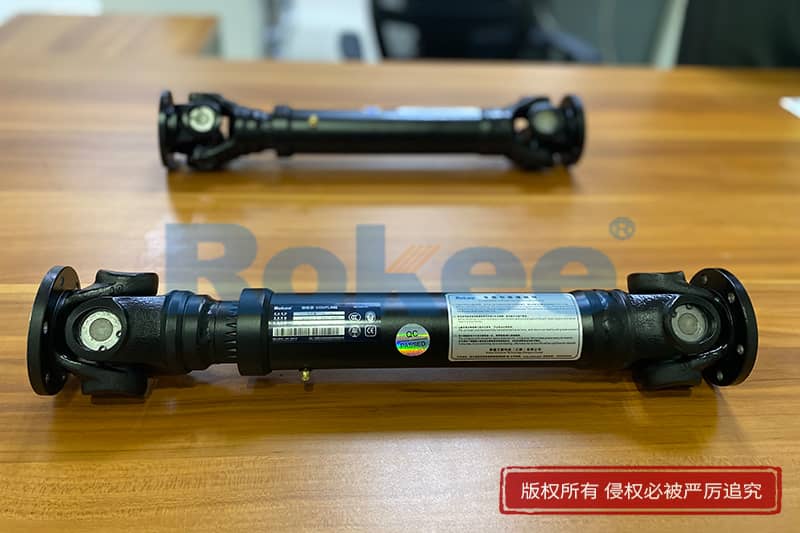
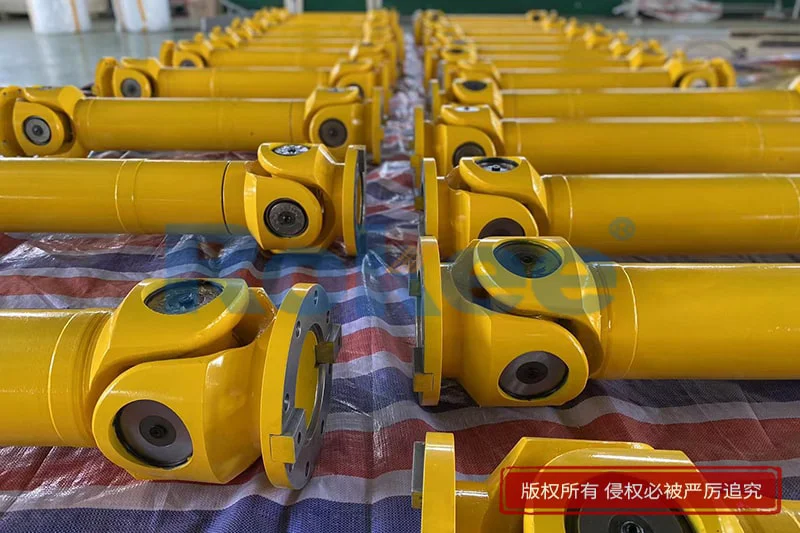
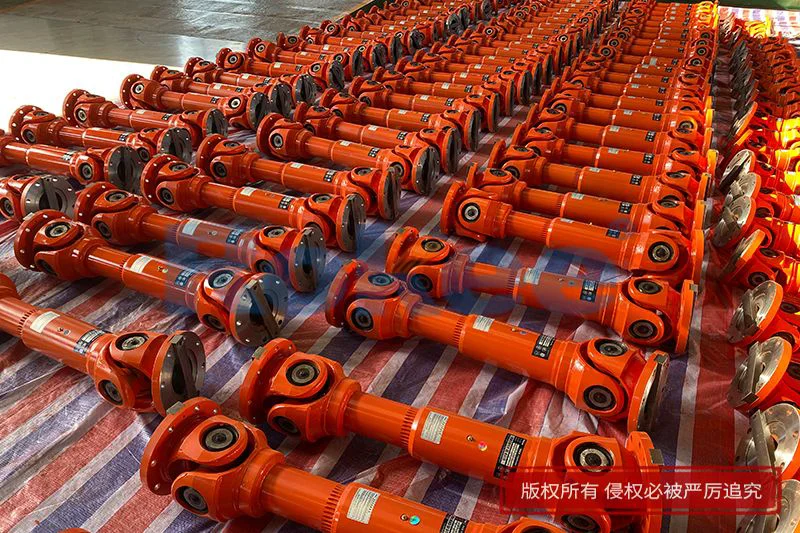
The core value of the universal shaft originates from its unique mechanical motion principle, which is built on the spatial multi-linkage kinematic mechanism and torsional mechanics theory, distinguishing it fundamentally from rigid couplings that rely on precise coaxial positioning for operation. Traditional rigid transmission shafts can only work normally when the connected driving shaft and driven shaft remain completely collinear; any slight angular offset, axial displacement or radial deviation will cause severe transmission vibration, component wear, power loss, and even structural damage to the entire mechanical system. In contrast, the universal shaft adopts a flexible connection structure centered on universal joints, which can adapt to multi-dimensional misalignment changes during mechanical operation. Its adaptive angle compensation capability usually covers a wide range, fully meeting the misalignment requirements of most industrial and civil mechanical working conditions.
The basic working process of the universal shaft follows a rigorous spatial motion law. When the power input driving shaft starts to rotate, it drives the yoke structure at the input end of the universal joint to perform synchronous rotational motion. The cross-shaped intermediate component inside the universal joint acts as a motion conversion core, transmitting the rotational torque and angular velocity from the driving end to the yoke structure at the driven end, and further driving the operation of the connected driven shaft. During this process, the flexible deflection of the cross structure and the rotating fit of the internal bearing components can effectively offset the transmission instability caused by the angular difference between the two shafts. Although a single universal joint has the inherent mechanical characteristic of non-constant velocity transmission under a certain deflection angle, the optimized structural combination of double universal joints or multi-stage universal joints can perfectly compensate for this defect, realizing approximate constant-velocity transmission and ensuring uniform and stable power output throughout the operation process.
The overall structural design of the universal shaft follows the dual concepts of compactness and high efficiency, with the main body composed of core functional components such as universal joints, segmented transmission shafts, precision bearing assemblies and telescopic spline structures. Each component undertakes independent and coordinated functional responsibilities to jointly build a high-stability transmission system. The universal joint is the most critical functional unit, undertaking the core task of angle adaptation and motion transmission. Built-in high-precision needle bearings and roller bearings greatly reduce the friction resistance between moving parts, effectively lower mechanical wear during high-speed operation, and significantly extend the service life of the entire component. The telescopic spline structure installed on the transmission shaft can freely adjust the overall length of the universal shaft according to the axial displacement of the equipment during operation, compensating for the distance change between the driving end and the driven end caused by mechanical vibration, component deformation or working position adjustment, and avoiding transmission jamming or structural tension damage.
Compared with other traditional transmission components, the universal shaft possesses unparalleled comprehensive performance advantages in adaptive capacity, transmission efficiency and environmental adaptability. First of all, it has excellent multi-dimensional displacement compensation capability, which can simultaneously adapt to angular misalignment, axial displacement and radial offset, solving various connection problems that rigid transmission structures cannot handle. Secondly, the overall structure of the universal shaft is compact and lightweight, which can save installation space while ensuring high load-bearing capacity and high torque transmission performance, and will not cause excessive structural burden on the main equipment. In terms of transmission efficiency, the optimized mechanical structure and low-friction bearing design enable the universal shaft to maintain extremely low power loss during long-term high-speed operation, with stable transmission efficiency that can meet the continuous operation requirements of industrial equipment. In addition, the component has strong environmental adaptability, can maintain stable working performance in complex working conditions such as high temperature, low temperature, dust and slight vibration, and is suitable for diversified and harsh industrial operation scenarios.
The superior structural performance and adaptive characteristics make the universal shaft widely applied in almost all fields involving mechanical power transmission, covering civil transportation, industrial manufacturing, precision machinery, aerospace and emerging intelligent equipment industries. In the field of transportation machinery, the universal shaft is a key transmission component of rear-wheel drive and four-wheel drive vehicles, responsible for connecting the gearbox and the differential, stably transmitting power to the driving wheels. During the driving process of vehicles, the jolt of the body and the deformation of the suspension structure will cause real-time changes in the relative position and angle of the transmission system components, and the universal shaft’s flexible compensation capability can perfectly adapt to these dynamic changes, ensuring smooth power output and stable vehicle driving. It is also widely used in the power transmission systems of locomotives and ships, providing reliable power connection guarantees for large transportation equipment under complex operating conditions.
In the field of industrial manufacturing and machine tools, the universal shaft plays an irreplaceable role in precision processing equipment and heavy industrial machinery. Precision processing equipment such as milling machines and drilling machines often need to adjust the angle and position of the spindle according to processing requirements, and the universal shaft can realize stable rotational power transmission for inclined and offset spindles, ensuring the accuracy and consistency of mechanical processing. In large-scale industrial production lines, including textile machinery, printing equipment and packaging machinery, a large number of non-coaxial power connection structures are required between transmission components, and the universal shaft’s stable transmission performance ensures the continuous and efficient operation of the production line. In heavy industrial equipment such as metallurgical machinery, mining machinery and engineering machinery, the universal shaft needs to bear high torque and heavy load, and its high-strength structural design and reliable transmission performance can fully adapt to the high-intensity operation requirements of heavy equipment, avoiding equipment failure caused by unstable power transmission.
With the rapid development of modern high-end manufacturing and intelligent technology, the application scope of the universal shaft has been further expanded to high-precision and high-tech fields such as aerospace equipment and industrial robots. Aerospace equipment has extremely strict requirements on the accuracy, stability, durability and volume weight of mechanical components. The optimized lightweight and high-precision universal shaft can meet the extreme working condition requirements of aerospace power transmission systems, providing accurate and reliable power connection for aircraft operating mechanisms. In industrial robot systems, multiple joints and moving axes require flexible rotational power transmission, and the universal shaft’s small-size, high-precision and high-flexibility characteristics make it an ideal transmission component for robot joint motion, ensuring the flexibility and accuracy of robot operation.
In practical engineering applications, the service performance and service life of the universal shaft are closely related to material selection, processing technology and daily maintenance. High-quality universal shaft components are mostly made of high-strength alloy steel materials, which undergo precision forging, heat treatment and surface strengthening processes to obtain excellent mechanical properties such as high tensile strength, high torsional resistance and wear resistance, effectively resisting fatigue damage and structural deformation caused by long-term high-load and high-speed operation. The precision machining process ensures the assembly accuracy of each component of the universal shaft, reduces assembly gaps and running friction, and further improves transmission stability and component durability. Meanwhile, standardized daily maintenance is crucial to maintain the working performance of the universal shaft. Regular lubrication of bearing and spline parts, regular inspection of component wear and connection tightness, and timely replacement of aging and damaged parts can effectively avoid abnormal vibration, noise and power attenuation during operation, and maximize the service life of the component.
With the continuous upgrading of modern mechanical equipment towards high speed, high precision, high load and intelligent operation, the technical iteration and performance optimization of universal shafts are also constantly advancing. Traditional universal shaft products are gradually optimized in structural design, material application and processing technology to adapt to higher-end working condition requirements. On the one hand, lightweight design has become an important development direction. By optimizing the structural layout and applying new high-strength and lightweight alloy materials, the overall weight of the universal shaft is reduced while ensuring load-bearing performance, which helps reduce the operating energy consumption of mechanical equipment and improve equipment operation efficiency. On the other hand, high-precision and low-noise optimization is continuously promoted. Through more precise machining and assembly technology and optimized bearing matching design, the vibration and noise generated during the operation of the universal shaft are reduced, meeting the high-precision and low-noise operation requirements of precision machinery and intelligent equipment.
In addition, the durability and environmental adaptability of universal shafts are also being continuously improved. Through surface anti-corrosion, anti-oxidation and wear-resistant coating treatment, the component can maintain stable working performance in more harsh working environments such as humid, corrosive and high-dust conditions, expanding its application scope in special industrial fields. At the same time, with the development of intelligent monitoring technology, the intelligent iteration of universal shafts has become a new trend. By matching with miniature sensing components, the operating state parameters such as operating temperature, vibration amplitude and torque load of the universal shaft can be monitored in real time, realizing early warning of abnormal faults, which helps equipment maintenance personnel to carry out predictive maintenance, avoid sudden equipment failures, and greatly improve the safety and stability of the entire mechanical system operation.
As a classic and continuously evolving mechanical transmission component, the universal shaft has gone through long-term engineering verification and technical iteration, and has always maintained irreplaceable core status in the field of mechanical transmission. Its unique flexible transmission principle, excellent multi-dimensional displacement compensation capability, compact structural form and efficient transmission performance perfectly solve the various connection and transmission pain points existing in traditional rigid transmission structures, and provide a reliable basic guarantee for the normal operation of various mechanical equipment. From basic civil machinery to high-end industrial equipment and aerospace precision devices, the universal shaft silently undertakes the important task of power transmission, supporting the stable operation of the entire modern mechanical system.
Looking forward to the future, with the continuous progress of material science, precision machining technology and intelligent sensing technology, the performance of universal shafts will be further improved, and their application fields will be more extensive. The integration of lightweight, high precision, high durability and intelligent monitoring functions will become the main development direction of universal shaft technology. As an indispensable basic component of the mechanical industry, the universal shaft will continue to empower the upgrading and development of modern manufacturing industry, and provide more reliable and efficient technical support for the innovation and iteration of various mechanical equipment.
« Universal Shafts » Update Date: 2026/7/15
Contact
If you require custom machined couplings, please contact Rokee via the contact information below for inquiries.
Email: https://www.gshmdpq.com
 WeChat