Jaw Coupling Spiders
Rokee is a manufacturer of jaw coupling spiders from china, we can provide non-standard custom jaw coupling spiders based on parameters or drawings supplied by customers, with export support available.

In modern industrial power transmission systems, the stability, durability and operational flexibility of mechanical transmission components determine the overall efficiency of equipment operation. Among various flexible coupling structures, the jaw coupling stands out for its compact structure, excellent vibration damping performance and zero-lubrication operation, and it has been widely applied in mechanical transmission scenarios such as automated production equipment, fluid delivery systems, precision machine tools and general industrial machinery. As the core elastic component of the jaw coupling, the jaw coupling spider is not merely a simple auxiliary spacer part, but a key functional unit that undertakes torque transmission, vibration absorption, misalignment compensation and equipment protection. Its structural design, material characteristics and operating state directly affect the load capacity, service life and operational safety of the entire coupling system, and even determine the long-term operating stability of the connected power equipment and load equipment.

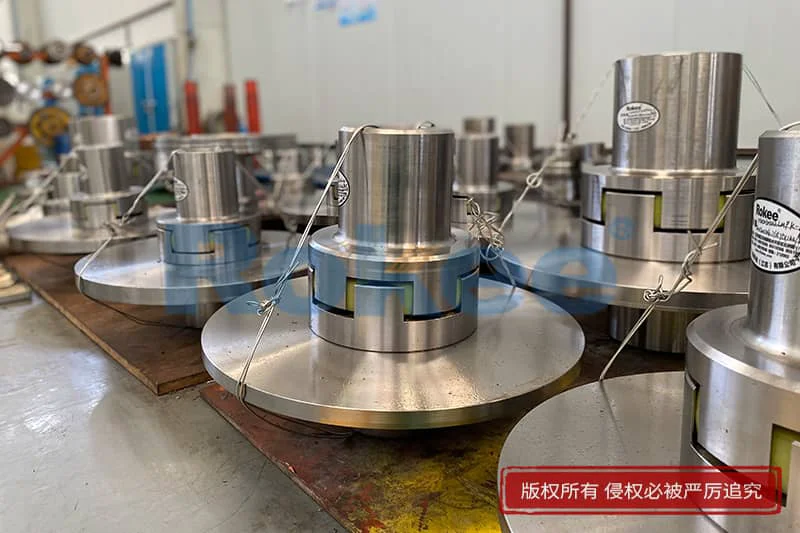
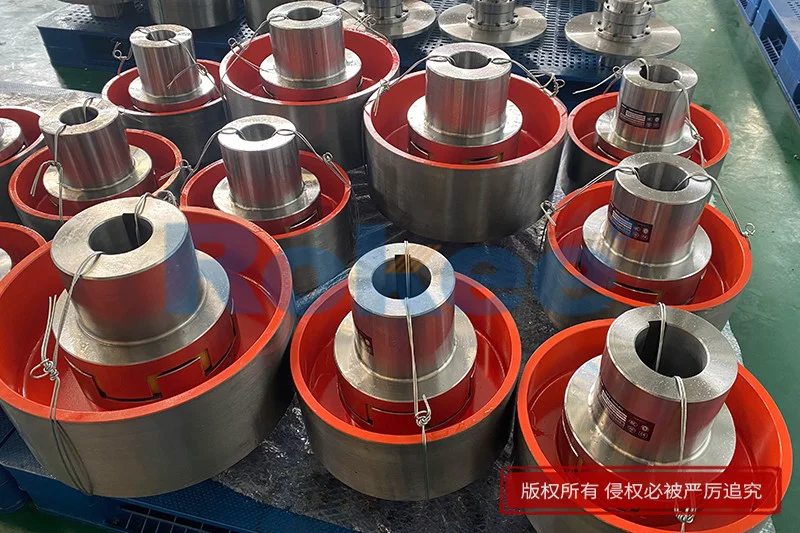
A typical jaw coupling is composed of two symmetrical metal jaw hubs and an intermediate elastomeric spider. The star-shaped elastic spider is embedded between the jaw structures of the two driving and driven hubs, forming a flexible connection structure without direct metal-to-metal contact. This unique structural layout completely changes the transmission mode of rigid couplings, endowing the system with excellent elastic buffering performance. In the working process, the rotational torque output by the driving shaft acts on the spider’s lobe structures through the jaws of the driving hub. The spider generates controllable elastic compression and slight torsional deformation under load, and then transmits the torque evenly to the driven hub and the connected driven shaft, realizing synchronous rotation and power transmission of the two shafts. This elastic transmission process not only completes the efficient transfer of mechanical energy, but also solves many pain points of rigid transmission structures in industrial operation.
The most prominent functional advantage of the jaw coupling spider is its multi-dimensional misalignment compensation capability, which can adapt to the assembly errors and operational deviations inevitably existing in shaft connection systems. In actual industrial installation and long-term operation, it is difficult to achieve absolute perfect alignment between the driving shaft and the driven shaft. Tiny axial displacement, radial offset and angular deflection will occur due to processing errors, assembly deviations, equipment vibration and thermal expansion and contraction during operation. These subtle misalignment problems will cause additional shear force and extrusion stress on the transmission system, leading to accelerated wear of shaft parts, bearing damage and increased equipment operation noise if solved by rigid connection. The elastomeric spider can rely on its own elastic deformation to effectively absorb and compensate for three types of conventional shaft misalignments. It adapts to small axial telescopic displacement caused by equipment thermal deformation, offsets radial offset generated by long-term operation vibration, and buffers angular deflection formed by assembly errors, ensuring that the transmission system maintains a stable operating state under non-ideal alignment conditions and avoiding additional mechanical loss caused by misalignment.
Vibration damping and impact buffering are another core value of the jaw coupling spider in industrial applications. Most industrial mechanical equipment will generate instantaneous impact load and periodic vibration during start-up, shutdown, load mutation and continuous operation. These dynamic loads will form alternating impact force on the transmission shaft system, which will easily cause fatigue damage to precision parts, reduce equipment operation accuracy, and even trigger equipment failure in severe cases. The elastic material of the spider has excellent viscoelastic characteristics. When the system generates impact vibration, the spider can convert the instantaneous impact kinetic energy into elastic potential energy through self-deformation, and slowly release the energy in the form of mild elastic recovery, thereby attenuating vibration amplitude and eliminating impact peaks. This dynamic buffering effect effectively isolates the vibration transmission between the driving end and the driven end, protects precision components such as motors, gearboxes and bearings from vibration fatigue damage, and greatly reduces the overall operation noise of the equipment. Especially in frequent start-stop and variable-load working conditions, the spider’s vibration damping performance can significantly improve the running smoothness of the entire mechanical system.
Material selection is the fundamental factor that determines the performance level and application scope of the jaw coupling spider. Different elastomeric materials have significant differences in hardness, temperature resistance, wear resistance, chemical stability and torque bearing capacity, which correspond to different industrial working conditions and load requirements. Nitrile rubber is one of the most commonly used spider materials, with balanced comprehensive performance, good wear resistance and oil resistance, stable mechanical properties in conventional temperature environments, and excellent cost performance, making it suitable for most general industrial transmission scenarios including conventional pumps, fans and general automation equipment. Polyurethane material is widely used in high-load and high-precision working conditions due to its high hardness, high tensile strength and superior wear resistance. Polyurethane spiders have stronger torque bearing capacity and smaller deformation under load, which can meet the high-precision transmission requirements of precision machine tools, servo equipment and high-speed operating equipment, while maintaining excellent anti-aging performance and longer service life.
In addition to conventional rubber and polyurethane materials, special elastomer materials are used for spiders in extreme working condition scenarios. High-temperature resistant elastomer materials can maintain stable elastic performance and structural integrity in high-temperature operating environments, avoiding material softening, deformation and failure caused by high temperature; special chemical-resistant materials can resist the corrosion of lubricating oil, chemical solvents and acidic and alkaline substances, and are suitable for chemical industry, pharmaceutical and food processing equipment with complex medium environments. The hardness of the spider material also has a decisive impact on the system performance. Soft-textured spiders provide stronger vibration damping and impact buffering effects, which are suitable for equipment with severe vibration and frequent load changes; hard-textured spiders have higher structural rigidity and torque transmission efficiency, which can meet the high-speed and high-precision transmission needs of high-load equipment. Users can adjust the overall performance of the jaw coupling only by replacing the spider material and hardness, realizing flexible adaptation to different working conditions, which is an important reason for the wide popularity of this coupling structure.
The structural design of the spider also optimizes the operating performance of the jaw coupling in multiple dimensions. The mainstream star-shaped integral structure adopts an integrated molding process, with uniform stress distribution of each lobe, no local stress concentration, and stable force transmission effect in all directions. Compared with the split elastic block structure used in some traditional couplings, the integral spider has better overall rigidity and deformation uniformity, can avoid unilateral excessive wear and local failure caused by uneven stress, and effectively extend the overall service life. The smooth arc transition design of the spider lobe reduces friction and shear stress during extrusion deformation, avoids structural damage caused by sharp stress concentration during frequent deformation, and improves the fatigue resistance of the part in long-term cyclic operation. At the same time, the compact structural size of the spider enables the jaw coupling to have the advantages of small volume and light weight, which can reduce the overall load of the equipment spindle and improve the dynamic response speed of the equipment, especially suitable for precision processing equipment and lightweight automated production lines with strict space constraints.
The excellent maintainability of the jaw coupling system is also closely related to the structural characteristics of the spider. Different from gear couplings, diaphragm couplings and other complex transmission structures that require regular lubrication and precision maintenance, the jaw coupling realizes flexible transmission through the elastic spider, and there is no direct friction and wear between metal hubs. The entire transmission system does not need lubricating oil or grease for auxiliary protection, realizing maintenance-free operation in the conventional service cycle. This feature greatly reduces the daily maintenance workload and operating cost of industrial equipment, avoids equipment downtime and performance attenuation caused by lubricant deterioration, leakage and replacement, and improves the continuous operation efficiency of automated production lines. When the spider reaches the service life or suffers accidental damage, the replacement operation is extremely simple and efficient. It is only necessary to separate the two hubs and replace the intermediate elastic spider without disassembling the overall shaft connection structure, which can complete the maintenance work in a short time and minimize the production downtime loss caused by equipment maintenance.
In actual industrial operation, the failure of the jaw coupling system is mostly caused by the damage of the spider, which also reflects the key bearing position of the spider in the transmission system. Common spider failure forms include fatigue cracking, elastic attenuation, local abrasion and structural crushing. Long-term cyclic load operation will lead to fatigue aging of the elastomer material, gradual attenuation of elastic performance, reduced vibration damping capacity, and even fine cracks on the surface of the spider. Severe shaft misalignment and overload operation will cause excessive extrusion and shear deformation of the spider, resulting in local structural crushing and failure, losing the torque transmission and buffering function. In addition, extreme temperature environments and chemical corrosion will accelerate the aging and damage of the spider material, shorten its service life, and affect the stable operation of the entire transmission system. Therefore, regular inspection and timely replacement of the spider are the core links in the daily maintenance of jaw couplings, which can effectively avoid equipment failure caused by elastic component failure.
Reasonable selection and correct use of the jaw coupling spider are crucial to giving full play to the performance advantages of the coupling system. In the selection process, it is necessary to comprehensively evaluate multiple factors such as equipment load level, operating speed, working environment, vibration intensity and misalignment range. For high-speed and high-precision transmission equipment, high-hardness polyurethane spiders with high torque resistance and small deformation should be preferred to ensure transmission accuracy and operational stability; for equipment with severe vibration and frequent start-stop, medium and low-hardness elastic spiders with excellent vibration damping performance should be selected to reduce impact load and protect equipment components; for special working conditions such as high temperature, low temperature and chemical corrosion, targeted special material spiders should be matched to adapt to the extreme environment.
In terms of installation and use, standardized operation can effectively extend the service life of the spider. It is necessary to ensure that the two hubs are installed coaxially as much as possible to reduce excessive misalignment load on the spider; avoid long-term overload operation of the equipment to prevent irreversible plastic deformation and structural damage of the elastic spider; regularly check the surface integrity and elastic state of the spider during daily operation, and replace the aging and damaged parts in time. Scientific selection and standardized use can maximize the functional advantages of the spider, make the jaw coupling maintain efficient, stable and long-term operating performance, and create higher operational value for industrial mechanical equipment.
With the continuous upgrading of modern industrial manufacturing technology, the performance requirements for mechanical transmission components are becoming increasingly stringent, and the jaw coupling spider is also constantly optimized and upgraded in material formula and structural design. New composite elastomer materials have better comprehensive performance, with stronger temperature resistance, corrosion resistance and fatigue resistance, adapting to more complex industrial working conditions; optimized lobe structure design makes the stress distribution more uniform, further improving the load capacity and service life of the spider; personalized material hardness matching scheme can realize customized performance adjustment according to the differentiated needs of different equipment. As an indispensable core component of flexible power transmission systems, the jaw coupling spider will continue to play an irreplaceable role in industrial production, providing stable and reliable basic guarantee for the efficient and safe operation of various mechanical equipment.
« Jaw Coupling Spiders » Update Date: 2026/7/16
Contact
If you require custom machined couplings, please contact Rokee via the contact information below for inquiries.
Email: https://www.gshmdpq.com
 WeChat