Spline Gear Coupling
Rokee is a manufacturer of spline gear coupling from china, we can provide non-standard custom spline gear coupling based on parameters or drawings supplied by customers, with export support available.
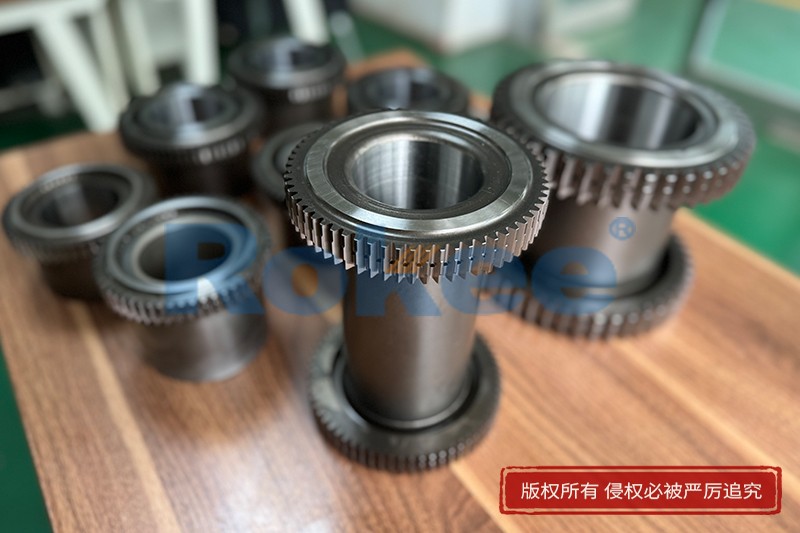
As a core mechanical transmission component in modern industrial systems, spline gear coupling occupies an irreplaceable position in high-precision, high-load and dynamic operating mechanical equipment. Different from traditional key-type couplings and ordinary gear couplings, it integrates the dual structural advantages of spline connection and gear meshing transmission, realizing efficient torque transmission, reliable misalignment compensation and flexible axial adaptive movement in one integrated design. With the continuous upgrading of industrial manufacturing towards high speed, high precision and heavy load, the performance requirements for mechanical transmission components are increasingly stringent, and spline gear coupling has gradually become the preferred connecting part for medium and high-end transmission equipment by virtue of its superior comprehensive mechanical properties, stable operating stability and long service life. It is widely applied in mechanical transmission scenarios such as industrial manufacturing equipment, engineering machinery, automotive transmission systems and precision automation equipment, providing a solid guarantee for the stable operation of mechanical systems.
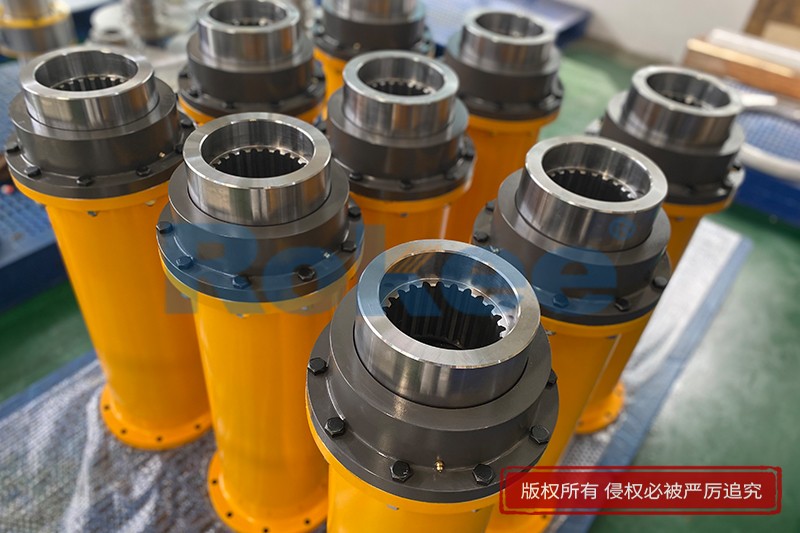
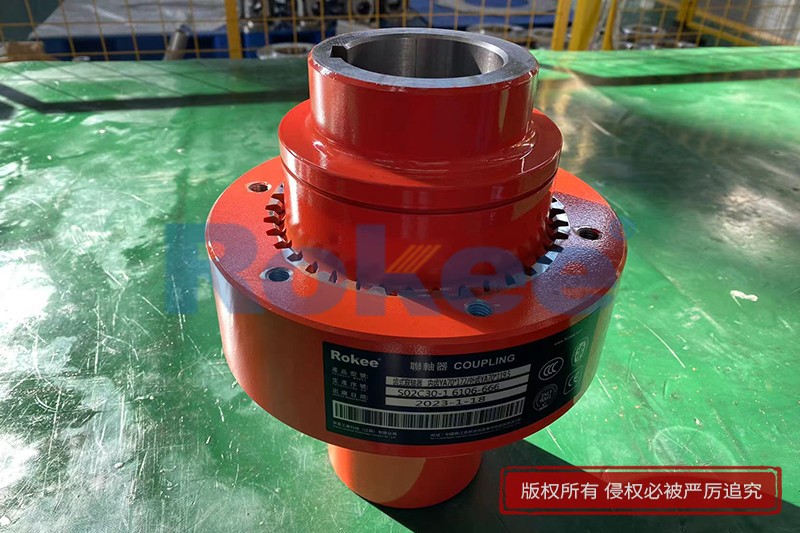

The unique structural design of spline gear coupling is the fundamental source of its excellent performance, which abandons the single force transmission mode of traditional couplings and adopts a scientific double meshing structure. The internal gear ring of the coupling is designed with a splined inner hole instead of a smooth ordinary inner hole, and the matching shaft end is processed with a corresponding external spline structure to form a precise interlocking fit. This special structural design divides the transmission and adaptive functions of the coupling into two independent and coordinated working parts. The spline structure is mainly responsible for realizing torque transmission between the shaft body and the coupling hub, and allowing free axial sliding displacement between the matched shafts during operation. The gear pair meshing structure undertakes the core function of compensating radial deviation and angular misalignment generated by shaft operation, realizing organic integration of rigid torque transmission and flexible deviation adaptation.
In terms of tooth profile design, most spline gear couplings adopt spherical outer tooth structure, with the spherical center located on the gear axis, and reserve reasonable tooth gap space compared with ordinary gear couplings. This optimized tooth profile design effectively improves the contact state between gear teeth during meshing operation, reduces contact stress concentration at local positions, and greatly enhances the bearing capacity and misalignment tolerance of the coupling. Different from the traditional single keyway torque transmission mode which relies on a single structural part to bear all loads, the spline structure is composed of multiple evenly distributed tooth grooves and tooth ridges on the shaft and hub hole. The uniform circumferential arrangement of multiple teeth can evenly disperse the transmission torque and operating load on the entire contact surface, avoiding the problem of local overload and excessive shear stress caused by single-point force bearing. This uniform force distribution mechanism fundamentally optimizes the mechanical stress state of the coupling during operation and greatly reduces the probability of structural fatigue damage.
The working principle of spline gear coupling follows the positive mechanical engagement transmission mechanism. In the actual operating process, the external spline teeth on the driving shaft are tightly embedded with the internal spline grooves of the coupling hub, and the precise form-fit connection completely eliminates relative rotational displacement between the shaft and the coupling. When the equipment runs, the rotational torque of the driving end is stably transmitted to the driven end through the meshing of spline teeth and gear pairs, realizing synchronous rotation of the two sections of shafts. In this process, the multi-tooth contact structure of the spline expands the force-bearing area of torque transmission, effectively reducing the unit shear stress and friction loss of the contact surface, ensuring no slippage during high-torque operation, and maintaining the consistency and stability of power transmission. At the same time, the reserved matching gap between spline pairs and gear pairs can adapt to tiny axial displacement, radial deflection and angular offset generated by shaft thermal expansion, mechanical vibration and load deformation during long-term operation, avoiding additional bending stress and friction wear caused by rigid connection.
Compared with traditional transmission couplings, spline gear coupling has outstanding comprehensive performance advantages in mechanical transmission. First of all, it has ultra-high load-bearing capacity and torque transmission efficiency. The multi-tooth uniform force-bearing structure can bear larger instantaneous impact load and continuous heavy load, and the power transmission efficiency is always maintained at a high level under various working conditions, which is far superior to key-type couplings and ordinary sleeve couplings. Even in the working state of frequent load changes and intermittent start-stop operation, it can still maintain stable torque output without power fluctuation, effectively ensuring the operating precision of mechanical equipment.
Secondly, the coupling has excellent misalignment compensation performance and dynamic adaptability. The spherical gear tooth profile and reasonable meshing gap enable it to tolerate larger angular displacement and radial misalignment, which can effectively absorb the position deviation of the shaft system caused by equipment installation errors, component wear and mechanical vibration. This flexible compensation capability avoids the problems of increased transmission resistance, aggravated component wear and reduced operating precision caused by shaft misalignment, and greatly improves the operation stability of the entire transmission system. In addition, the spline sliding structure can freely adapt to the axial dimensional change of the shaft system caused by temperature difference expansion and mechanical stretching, eliminating the internal stress generated by rigid limit connection and protecting the shaft and matching components from structural damage.
In terms of operating stability and service life, spline gear coupling also shows obvious advantages. The uniform stress distribution structure avoids local stress concentration and fatigue crack growth, reduces the wear rate of key transmission parts, and effectively prolongs the overall service life of the coupling. The involute spline tooth profile adopted by most high-precision products has good self-centering performance, which can ensure high coaxiality of the shaft system during operation, reduce mechanical vibration and torsional oscillation, and make the equipment run more smoothly and quietly. Moreover, the structural rigidity of the spline gear coupling is moderate, which can not only meet the rigid transmission requirements of high-precision power output, but also play a certain buffering and damping effect on instantaneous impact load, protecting gears, bearings and other precision components in the transmission system from impact damage.
Spline gear coupling has extremely wide industrial application scenarios due to its excellent performance, and it can adapt to various complex working conditions such as high speed, heavy load, frequent movement and variable load. In the field of heavy engineering machinery, it is widely used in the transmission systems of excavators, cranes, loaders and other equipment. These devices often work in harsh environments with unstable load and frequent impact, and the high load-bearing capacity and impact resistance of spline gear couplings can fully meet the harsh operating requirements and ensure the continuous and stable operation of engineering equipment.
In the field of industrial manufacturing and precision automation equipment, spline gear couplings are applied to precision machine tools, automated production lines, servo transmission systems and other equipment. The high-precision self-centering performance and stable torque transmission capability can effectively guarantee the processing precision and operation consistency of precision equipment, avoid product processing errors caused by transmission vibration and torque fluctuation, and improve the production quality and qualification rate of industrial products. In automotive mechanical systems, it is used in automotive transmission and power output structures. Its axial sliding adaptive function can adapt to the position change of the transmission shaft during driving, ensure smooth power output during vehicle acceleration, deceleration and driving on complex road conditions, and improve the driving stability of the vehicle.
In addition, in the fields of wind power generation, hydraulic transmission equipment and large-scale industrial pump sets, spline gear couplings also play an important role. Wind power equipment needs to operate stably for a long time in variable wind speed and random load environment, and the coupling's good dynamic adaptability and fatigue resistance can adapt to long-term variable load operation. Large-scale pump sets and hydraulic equipment have high requirements for transmission stability and sealing performance, and the tight meshing structure of spline gear couplings can avoid power loss caused by transmission slippage and improve the overall operating efficiency of the equipment.
Although spline gear coupling has superior performance, its long-term stable operation is inseparable from scientific selection, standardized installation and regular maintenance. In the selection process, it is necessary to comprehensively consider key factors such as equipment operating speed, rated transmission torque, working environment and misalignment range of the shaft system. It is required to match the coupling specifications and structural form according to the actual working conditions, avoiding performance failure and accelerated wear caused by improper selection. For high-speed and high-precision equipment, priority should be given to products with high-precision tooth profile and strict dimensional tolerance to ensure the coaxiality and transmission precision of the shaft system; for heavy-load and impact working conditions, products with enhanced tooth strength and optimized stress structure should be selected to improve the impact resistance and load-bearing capacity.
Installation accuracy is a key factor affecting the service performance of spline gear couplings. During installation, the coaxiality and flatness of the driving and driven shafts must be strictly calibrated to minimize installation misalignment. Excessive initial misalignment will increase the operating load of the coupling, lead to accelerated wear of gear teeth and spline structures, and even cause vibration and noise of the equipment in severe cases. At the same time, attention should be paid to the matching clearance between spline pairs and gear pairs. Too small a clearance will cause poor axial sliding and increased friction resistance, while too large a clearance will affect the transmission precision and cause impact vibration during operation. In addition, good lubrication is essential for the operation of spline gear couplings. Regular filling of high-quality lubricating grease can reduce the friction and wear of meshing parts, dissipate the heat generated by operation, avoid tooth surface oxidation and corrosion, and effectively extend the service life of components.
In the daily maintenance process, regular inspection of the operating state of the coupling is required, including checking for abnormal vibration, noise and temperature rise during equipment operation, observing whether there is wear, deformation and looseness of spline teeth and gear teeth. For equipment operating in harsh environments such as high temperature, high humidity and dust, the inspection frequency should be appropriately increased, and dust and dirt on the coupling surface should be cleaned in time to prevent foreign matter from entering the meshing gap and causing abrasive wear. Once local wear, tooth surface peeling or structural deformation is found, the components should be replaced in time to avoid further expansion of faults and affect the overall operating safety of the mechanical system.
With the continuous development of industrial technology, the manufacturing process and structural design of spline gear couplings are also constantly optimized and upgraded. Modern precision machining technology effectively improves the machining accuracy of spline teeth and gear teeth, reduces assembly errors and operating friction, and further improves transmission efficiency and operating stability. The application of new high-strength wear-resistant materials enhances the structural strength, fatigue resistance and corrosion resistance of the coupling, enabling it to adapt to more harsh industrial working conditions. At the same time, the lightweight and integrated design trend makes the structure of spline gear coupling more compact, which can save installation space while ensuring performance, and meet the lightweight and high-efficiency development requirements of modern mechanical equipment.
In the entire mechanical transmission system, spline gear coupling acts as a key connecting and force-transmitting component, and its performance directly determines the operating efficiency, stability and service life of the entire equipment. Its unique double meshing structure perfectly balances rigid high-efficiency torque transmission and flexible misalignment adaptation, making up for the performance defects of traditional couplings in load-bearing capacity, compensation performance and dynamic stability. In the context of the continuous development of modern industrialization towards high precision, high efficiency and high reliability, spline gear coupling will continue to rely on its superior comprehensive performance, continuously expand its application scope in various industrial fields, and provide more reliable basic component support for the intelligent and high-end upgrading of mechanical equipment manufacturing industry.
« Spline Gear Coupling » Update Date: 2026/7/16
Contact
If you require custom machined couplings, please contact Rokee via the contact information below for inquiries.
Email: https://www.gshmdpq.com
 WeChat


