Propeller Shaft
Rokee is a manufacturer of propeller shaft from china, we can provide non-standard custom propeller shaft based on parameters or drawings supplied by customers, with export support available.
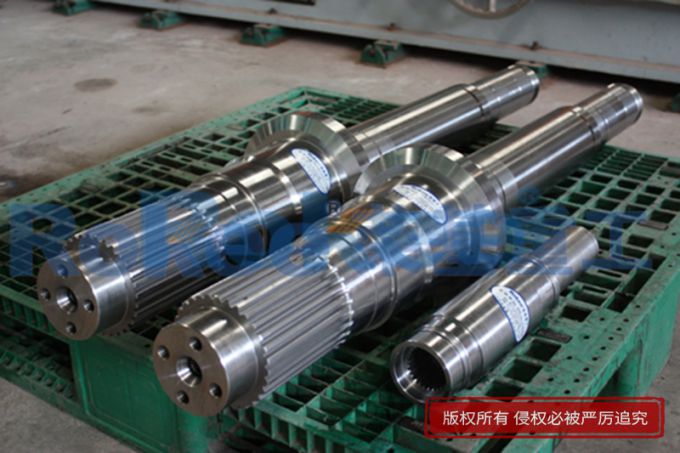
As an indispensable mechanical transmission component in modern mobile machinery and power propulsion systems, the propeller shaft serves as a critical power bridge that connects power output units and execution terminals. Widely applied in rear-wheel drive, four-wheel drive, and partial all-wheel drive vehicles, as well as marine propulsion equipment and industrial mobile devices, this component undertakes the core task of transmitting rotational torque and mechanical energy. Unlike fixed transmission structures in stationary mechanical equipment, the propeller shaft is designed to adapt to dynamic changes in working conditions, constantly adjusting to variable angles and distances between power sources and drive components during operation. Its operational stability, structural durability, and power transmission efficiency directly determine the overall dynamic performance, driving smoothness, and service reliability of the entire equipment system, making it a key research and optimization object in mechanical design and vehicle engineering.

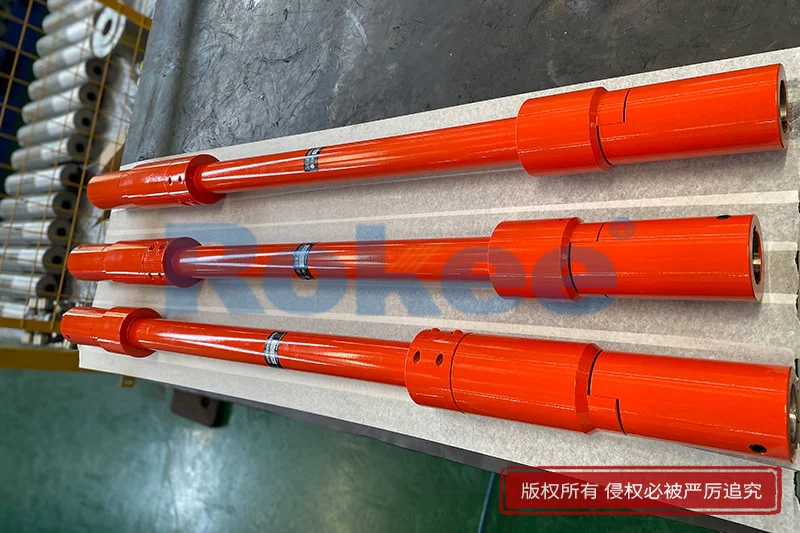
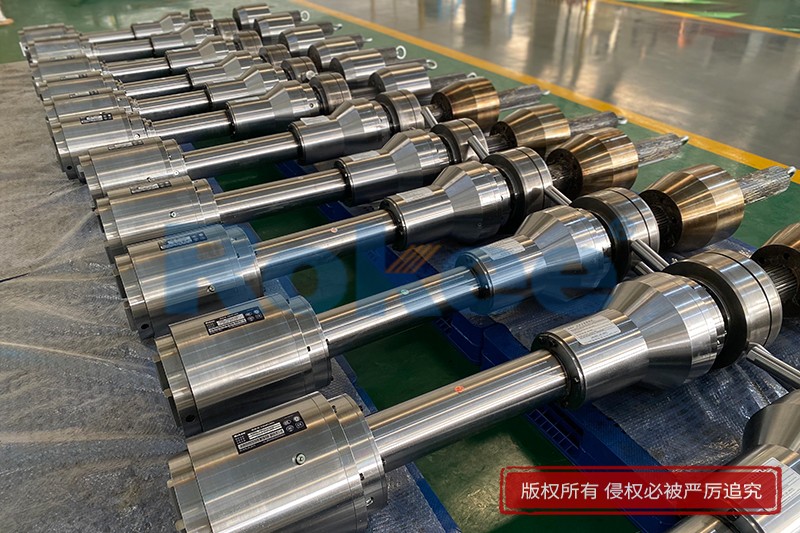
The core functional logic of the propeller shaft revolves around efficient and stable torque transmission. In conventional land vehicle systems, engine power is first adjusted in speed and torque through the transmission or transfer case, and the converted rotational power is then transmitted to the rear differential via the propeller shaft. The differential further distributes power to the drive wheels, converting rotational mechanical energy into forward driving thrust. In marine equipment, the propeller shaft connects the main engine crankshaft and the stern propeller, transmitting high-power rotational motion to the propeller blades to generate water pressure difference and form navigation thrust. Regardless of the application scenario, the fundamental value of the propeller shaft lies in breaking the spatial limitation of fixed power transmission, enabling flexible power output between relatively moving mechanical structures, and ensuring continuous and effective energy transmission under complex working conditions.
Structurally, the propeller shaft is an integrated assembly composed of multiple precision components, with each part coordinating and restricting each other to jointly complete power transmission and dynamic adaptation. The main body of the shaft is mostly a hollow tubular structure, a mature optimized design formed after repeated mechanical verification. Compared with solid shafts of the same specification, the hollow tubular structure greatly reduces the overall weight of the component, effectively lowers rotational inertia during high-speed operation, and reduces additional energy consumption and vibration noise. Meanwhile, this structure retains excellent torsional resistance and structural rigidity, which can withstand the instantaneous torque impact and long-term cyclic load generated during equipment start-up, acceleration, and load changes. The wall thickness and tubular diameter of the shaft body are designed according to the maximum torque demand and operating speed of the equipment, achieving a balanced state between lightweight performance and load-bearing capacity.
Flexible connection components are essential auxiliary structures for the normal operation of the propeller shaft, mainly including universal joints and telescopic slip joints. In the actual operation of vehicles and mobile equipment, the relative position and angle between the transmission end and the drive axle will change in real time due to road bumps, suspension jitter, load shaking and other factors. Rigid fixed shafts cannot adapt to such dynamic changes, which will easily cause structural deformation, torque transmission blockage or even component damage. Universal joints adopt a cross-shaped movable structure, which can realize multi-angle rotational compensation, ensuring stable torque transmission even when the shaft axis produces angular deflection. The telescopic slip joint can freely adjust the effective length of the propeller shaft according to the change of spatial distance, compensating the linear displacement between the power end and the drive end. The matching use of the two structures enables the propeller shaft to maintain efficient and stable working status under complex and variable operating environments.
Material selection is the core foundation that determines the service performance and service life of the propeller shaft. Traditional propeller shafts are mostly made of high-strength alloy steel, which has excellent tensile strength, torsional resistance and fatigue resistance. After precision forging, heat treatment and surface strengthening processes, the alloy steel shaft can resist long-term high-speed rotation, alternating load impact and environmental erosion, and is suitable for most heavy-load and high-frequency working scenarios. With the continuous upgrading of lightweight and energy-saving requirements in modern mechanical design, new material applications have been gradually promoted. High-performance aluminum alloy materials are widely used in light-duty equipment and passenger vehicle propeller shafts. While ensuring basic structural strength, they significantly reduce the self-weight of the component, reduce vehicle driving energy consumption, and improve power response sensitivity. Carbon fiber composite materials, as emerging high-end structural materials, have the advantages of ultra-light weight, high strength and strong vibration damping performance. They can effectively suppress high-speed resonance and reduce operating noise, and are increasingly used in high-end vehicles and precision propulsion equipment, becoming an important direction for propeller shaft material iteration.
In terms of structural form, propeller shafts can be divided into single-section and multi-section structures according to equipment layout and power transmission distance. The single-section propeller shaft has a simple structure, fewer connecting parts, low operational friction loss and high transmission efficiency, and is mostly used in equipment with short transmission distance and compact spatial layout. When the power transmission distance is long, the single-section shaft will have excessive length, which is prone to bending deformation and high-speed resonance during rotation, affecting driving stability. The multi-section propeller shaft adopts a segmented connection design, which effectively shortens the length of a single shaft body, improves the overall structural rigidity, and suppresses vibration and resonance phenomena. The multi-section structure is usually equipped with intermediate support bearings, which can fix the intermediate position of the shaft body, reduce the amplitude of high-speed operation, and further improve the stability of the transmission system. Although the multi-section design increases the number of components and assembly complexity, it solves the technical pain points of long-distance power transmission and is widely used in large vehicles and long-span mechanical propulsion systems.
The operating performance of the propeller shaft is affected by multiple working condition factors, among which dynamic balance and installation accuracy are the most critical indicators. In the production and processing process, tiny dimensional errors, material density differences and assembly deviations will cause the center of mass of the shaft body to deviate from the rotational center. When the shaft rotates at high speed, this unbalanced state will generate periodic centrifugal force, causing mechanical vibration and noise. Long-term unbalanced operation will not only reduce power transmission efficiency, but also accelerate the wear of universal joints, bearings and other matching parts, and even lead to fatigue deformation and fracture of the shaft body. Therefore, all finished propeller shafts need to undergo strict dynamic balance testing and correction to control the unbalanced error within the precision allowable range and ensure smooth operation under high-speed working conditions.
Installation alignment accuracy is also crucial to the service life of the propeller shaft. The coaxiality deviation between the power output end and the drive end will cause the shaft body to bear additional bending stress and torsional shear stress during operation, resulting in accelerated local wear and early fatigue damage. In the assembly process, it is necessary to strictly calibrate the installation angle and spatial position of the shaft body to ensure that the propeller shaft is in the optimal stress state during operation. For multi-section propeller shafts, the parallelism and coaxiality between each section of the shaft body need to be accurately matched to avoid local stress concentration caused by dislocation deflection, so as to maintain the long-term stable operation of the entire transmission system.
In actual operation, the propeller shaft will face various complex load conditions and environmental tests. During equipment start-up and sudden acceleration, the shaft body needs to bear instantaneous peak torque impact; during climbing, heavy load driving or low-speed high-torque operation, it will bear long-term high-load torsional stress; in bumpy working environments, it will face frequent alternating displacement and angle changes. In addition, outdoor working equipment will also be affected by temperature changes, humid air, dust and corrosive media, which will cause surface oxidation, rust and lubrication failure of components. These complex working conditions put forward high requirements on the structural strength, fatigue resistance, corrosion resistance and environmental adaptability of the propeller shaft, and also determine the necessity of regular maintenance and inspection.
Daily maintenance and condition monitoring are key measures to extend the service life of the propeller shaft and ensure operational safety. The core of maintenance work lies in the protection of flexible connecting parts and lubrication systems. The universal joints and telescopic slip joints are movable friction pairs, and good lubrication can reduce friction and wear, avoid jamming and abnormal noise, and ensure flexible angle and length compensation. Long-term lack of lubrication will lead to dry friction of moving parts, resulting in increased wear, clearance enlargement and reduced compensation accuracy, which will affect the stability of power transmission. At the same time, it is necessary to regularly check the fastening state of each connecting bolt to prevent bolt loosening caused by long-term vibration, which leads to shaft body displacement and transmission failure.
Regular appearance inspection and performance testing are also indispensable maintenance links. It is necessary to observe whether there are surface cracks, deformation, corrosion and wear on the shaft body, and check whether the dust cover of the connecting parts is damaged to prevent dust, sediment and impurities from entering the friction pair and causing abrasive wear. For equipment with high operating frequency and heavy load, regular dynamic balance detection and alignment calibration should be carried out to eliminate unbalanced deviation and installation errors generated by long-term operation, and avoid vibration and noise problems caused by performance degradation. Timely maintenance and minor fault repair can effectively avoid the expansion of faults, reduce the failure rate of the transmission system, and reduce the overall operation and maintenance cost of the equipment.
With the continuous development of mechanical engineering technology, the optimization and upgrading of propeller shaft design and manufacturing technology have never stopped. Modern design concepts pay more attention to the integration of lightweight, high efficiency, low noise and long life. Through finite element simulation analysis, designers can accurately predict the stress distribution, vibration frequency and fatigue life of the propeller shaft under different working conditions, optimize the shaft body structure and component matching scheme, and eliminate structural defects in the design stage. The popularization of precision manufacturing technology and intelligent processing equipment has greatly improved the machining accuracy and assembly consistency of the propeller shaft, making the product performance more stable and reliable.
In terms of performance optimization, the industry is committed to solving the problems of high-speed resonance, low-speed torque loss and abnormal noise of the propeller shaft. By optimizing the structural parameters of universal joints and slip joints, improving the lubrication system design, and adopting new vibration-damping and noise-reducing materials, the dynamic response performance of the transmission system is effectively improved. At the same time, the application of intelligent monitoring technology has realized the real-time collection and analysis of operating parameters such as shaft body vibration, temperature and torque, which can early warn of potential faults such as component wear, unbalance and abnormal stress, and realize predictive maintenance of the propeller shaft, greatly improving the operational safety and intelligence level of the equipment.
As a basic transmission component, the propeller shaft may seem structurally simple, but it involves comprehensive technical accumulation in material science, mechanical structure design, dynamic mechanics and precision manufacturing. Its performance improvement plays an important role in promoting the overall performance upgrade of vehicles, marine equipment and mobile machinery. With the continuous progress of new energy equipment and intelligent transportation technology, the operating conditions of power transmission systems are becoming more diversified and stringent, and higher requirements are put forward for the efficiency, stability, lightweight and intelligence of propeller shafts. In the future, with the continuous innovation of new materials, new structures and new technologies, propeller shafts will develop towards higher transmission efficiency, longer service life, lower energy consumption and more intelligent monitoring, and continue to provide stable and reliable power transmission guarantee for various mobile mechanical equipment.
« Propeller Shaft » Update Date: 2026/7/16
Contact
If you require custom machined couplings, please contact Rokee via the contact information below for inquiries.
Email: https://www.gshmdpq.com
 WeChat


