Internal Gear Coupling
Rokee is a manufacturer of internal gear coupling from china, we can provide non-standard custom internal gear coupling based on parameters or drawings supplied by customers, with export support available.

As a core mechanical transmission component widely adopted in modern industrial systems, internal gear coupling serves as a critical connecting unit between rotating shafts, undertaking the essential task of transmitting torque and rotational power while adapting to complex and dynamic operating conditions. Classified as a movable rigid coupling, it differs fundamentally from conventional fixed couplings and flexible couplings with elastic elements, integrating high structural rigidity, powerful load-bearing capacity and flexible misalignment compensation performance. Its unique internal and external gear meshing structure enables stable and efficient power transmission in heavy-duty, high-speed and harsh industrial scenarios, making it an indispensable component in mechanical transmission systems across multiple industrial fields. With the continuous upgrading of industrial equipment toward high power, high precision and high stability, the technical advantages and application value of internal gear couplings have been further highlighted, becoming a key guarantee for the long-term reliable operation of mechanical transmission systems.

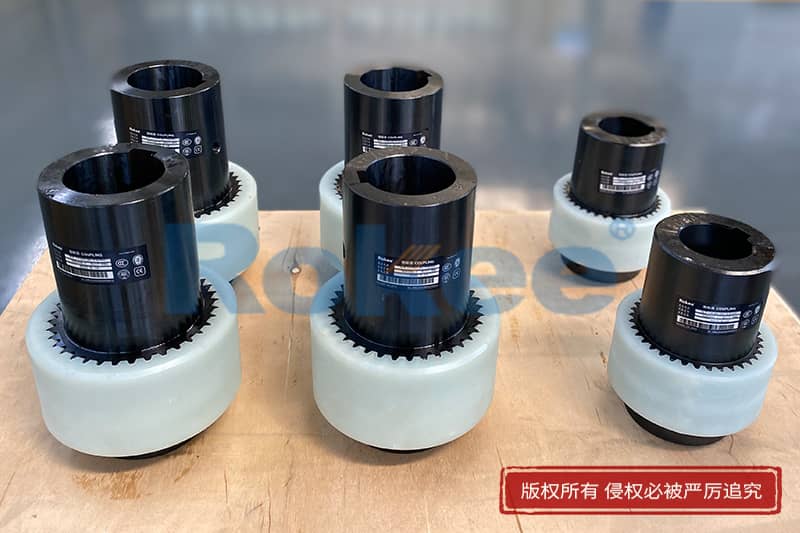
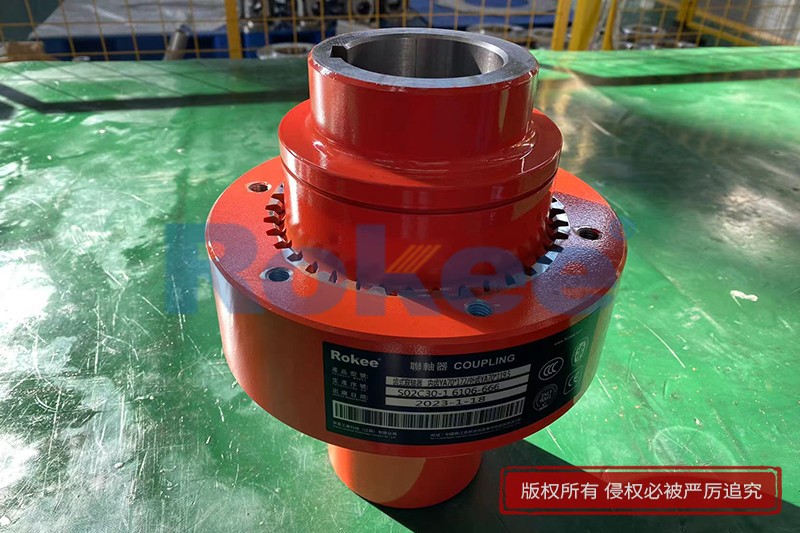
The basic structural composition of internal gear coupling follows a rigorous and streamlined mechanical design logic, with no redundant auxiliary structures, which lays a solid foundation for its stable mechanical performance and convenient assembly and maintenance. The core structure consists of two external gear hubs and one or two matching internal gear sleeves, forming a closed gear meshing transmission system. The external gear hubs are installed and fixed on the driving shaft and driven shaft respectively, operating synchronously with the rotating shafts during equipment operation. The internal gear sleeve is equipped with precision-processed internal gear teeth that mesh tightly with the external gear teeth on the hub, realizing the synchronous rotation of the two shafts and completing the transmission of torque and rotational motion. In order to optimize the operational adaptability of the coupling, most modern internal gear couplings adopt a crowned tooth profile design for external gear teeth. This optimized tooth structure effectively improves the contact state between meshing gear teeth, avoids stress concentration at the tooth edge during operation, and significantly enhances the coupling’s tolerance for various shaft misalignments. Auxiliary components such as sealing end covers and fastening bolts are configured on the outer side of the internal gear sleeve, which not only fix the overall structural stability but also form a closed protective space inside the coupling to isolate external dust, moisture and corrosive media.
The working principle of internal gear coupling is based on the basic mechanical law of gear meshing transmission, realizing efficient and stable power transmission between non-coaxial rotating shafts. When industrial mechanical equipment starts to operate, the power source drives the driving shaft to rotate, and the external gear hub fixed on the driving shaft rotates synchronously with it. Through the continuous meshing contact between external gear teeth and internal gear teeth of the outer sleeve, the rotational torque and power are stably transmitted to the internal gear sleeve, which then drives the external gear hub on the driven shaft side to rotate synchronously, thus realizing the coordinated operation of the entire transmission system. Different from ordinary rigid couplings that require strict coaxiality of shafts, the meshing gap and optimized tooth profile of internal gear couplings reserve a reasonable displacement compensation space. During the operation of equipment, due to machining errors, installation deviations, equipment vibration, thermal deformation of components and foundation settlement, the connected two shafts will inevitably produce different degrees of relative displacement, including axial displacement, radial displacement and angular deflection. The internal gear coupling can automatically adapt to these tiny deviations through the flexible meshing of gear teeth, ensuring that the torque transmission process remains smooth and continuous without generating additional alternating stress, which effectively avoids the problem of transmission efficiency reduction and component wear caused by shaft misalignment.
The outstanding comprehensive performance of internal gear couplings makes them far superior to other types of couplings in heavy-duty industrial application scenarios. First of all, it has ultra-high torque transmission efficiency and load-bearing capacity. Benefiting from the multi-tooth simultaneous meshing structure, the load is evenly distributed on each meshing gear tooth during operation, which avoids the defect of local stress concentration of single-tooth meshing transmission. This structural feature enables the coupling to bear large instantaneous impact loads and long-term stable heavy loads, and can maintain efficient power transmission under high-power operating conditions. Compared with straight-tooth gear couplings, the crowned tooth profile design increases the torque transmission capacity by 15% to 30% under the same structural size, realizing higher power density transmission and saving installation space for compact mechanical equipment. Secondly, it has excellent misalignment compensation ability. The optimized tooth profile and meshing gap enable the coupling to adapt to 50% larger angular misalignment than traditional straight-tooth couplings under zero radial displacement conditions, which can effectively compensate for various composite displacements generated during equipment operation, greatly reducing the assembly and operation accuracy requirements of the transmission system.
In terms of operational stability and environmental adaptability, internal gear couplings also show prominent advantages. The precise gear meshing structure can effectively reduce vibration and noise during transmission operation. The smooth contact of crowned gear teeth avoids rigid collision and friction between tooth tips, making the operation process more stable and low-noise. Meanwhile, the overall rigid structure of metal gears gives the coupling excellent wear resistance, high temperature resistance and corrosion resistance. It can work stably for a long time in harsh working environments such as high temperature, low temperature, dust pollution and humid corrosion, and is not easy to have structural deformation and performance attenuation. In addition, the structural design of internal gear coupling is highly adaptable to high-speed operation. The symmetrical and compact structural layout reduces the unbalanced inertia of rotating components, avoids severe vibration and centrifugal force increase under high-speed rotating conditions, and can adapt to the high-speed operation requirements of various precision rotating equipment. These comprehensive performance advantages make it uniquely suitable for complex and harsh industrial working conditions that cannot be met by elastic couplings such as rubber couplings and spring couplings.
Internal gear couplings have extremely wide application coverage in modern industrial manufacturing, involving heavy industry, precision manufacturing, energy power, transportation and many other core fields. In the metallurgical industry, they are applied to rolling mill transmission systems, high-power winding equipment and smelting auxiliary transmission equipment. These equipment have the characteristics of heavy load, frequent start-stop and instantaneous impact load, and the high load-bearing and impact-resistant performance of internal gear couplings can fully meet the long-term stable operation requirements of metallurgical equipment. In the mining industry, the coupling is used for the transmission connection of mining conveyors, crushing equipment and lifting machinery. The harsh working environment of mines with much dust and large vibration puts forward high requirements on the durability and stability of transmission components, and the excellent environmental adaptability of internal gear couplings can effectively resist external environmental interference and reduce equipment failure rates.
In the field of energy and power, internal gear couplings are widely used in wind power generation equipment, thermal power unit transmission systems, water pump and fan supporting equipment. Wind power generation equipment is often in variable wind speed and alternating load working conditions, and the misalignment compensation performance of the coupling can adapt to the tiny displacement changes of the unit shaft system caused by wind load fluctuation and component thermal deformation, ensuring the continuous and stable output of wind power equipment. Thermal power units and large-scale water pump and fan equipment require long-term continuous operation, and the high transmission efficiency and wear resistance of internal gear couplings can reduce energy loss and component wear, improving the overall operating efficiency and service life of the equipment. In addition, in the fields of ship machinery, engineering machinery and petrochemical equipment, internal gear couplings also become the preferred transmission connecting components for heavy-duty and high-precision equipment by virtue of their superior comprehensive performance.
Although internal gear couplings have excellent comprehensive performance, their long-term stable operation is inseparable from standardized installation, regular maintenance and scientific fault diagnosis, and reasonable daily management is the key to giving full play to their performance advantages. In the installation process, the coaxiality of the driving and driven shafts should be strictly controlled on the premise of allowing a certain range of misalignment compensation. Excessive installation deviation will lead to increased meshing friction of gear teeth, accelerated wear and even local tooth breakage in long-term operation. At the same time, the sealing performance of the coupling should be checked during installation to ensure that the internal closed space is intact and prevent external impurities from entering the meshing area to cause abrasive wear of gear teeth. Lubrication maintenance is the core link of daily maintenance of internal gear couplings. Good lubrication oil film can reduce meshing friction coefficient, buffer impact load, and take away the heat generated by friction during operation, avoiding gear tooth abrasion, gluing and thermal deformation.
In the actual operation process, it is necessary to regularly check the lubricating oil state, timely replace deteriorated and contaminated lubricating oil, and supplement lubricating grease according to the operating cycle to ensure continuous and effective lubrication protection. Regular inspection of the coupling’s operating state is also essential, including observing the vibration and noise changes during equipment operation, checking the fastening state of connecting bolts, and monitoring the temperature change of the coupling shell. Abnormal vibration, sharp noise and excessive temperature rise are typical fault early warning signals, which often indicate excessive gear tooth wear, poor lubrication or increased shaft misalignment. Timely detection and troubleshooting can effectively avoid small faults evolving into major equipment failures, reduce downtime maintenance costs, and extend the service life of the coupling and the entire transmission system. Scientific maintenance management can maximize the transmission efficiency and service performance of internal gear couplings, and ensure the long-term safe and stable operation of industrial mechanical equipment.
With the continuous progress of industrial manufacturing technology and mechanical design theory, the technical performance of internal gear couplings is also constantly optimized and upgraded. Modern precision machining technology improves the machining accuracy of gear tooth profile and meshing clearance, further reducing transmission friction and improving transmission efficiency and operational stability. The application of new high-strength wear-resistant alloy materials enhances the mechanical strength, wear resistance and fatigue resistance of the coupling, enabling it to adapt to more extreme working conditions such as ultra-high load and ultra-high speed. At the same time, the optimized structural design continues to reduce the overall weight and volume of the coupling on the premise of ensuring load-bearing performance, realizing lightweight and compact design, which is more in line with the development trend of modern industrial equipment toward high efficiency and miniaturization.
In the entire field of mechanical transmission, internal gear couplings occupy an irreplaceable core position by virtue of their unique structural advantages and comprehensive performance. It solves many pain points in industrial transmission, such as low load-bearing capacity of flexible couplings, poor misalignment compensation of rigid fixed couplings, and poor environmental adaptability of elastic couplings. It provides a reliable transmission connection solution for heavy-duty, high-speed and harsh working condition equipment, and plays a vital role in improving the operating efficiency of industrial equipment, reducing equipment failure rates, and extending the service life of mechanical systems. In the future, with the continuous development of intelligent manufacturing and high-end equipment manufacturing industry, internal gear couplings will continue to iterate and upgrade in terms of material performance, structural design and processing technology, and their application scope and technical value will be further expanded, providing more solid basic component support for the high-quality development of modern industrial mechanical transmission systems.
« Internal Gear Coupling » Update Date: 2026/7/16
Contact
If you require custom machined couplings, please contact Rokee via the contact information below for inquiries.
Email: https://www.gshmdpq.com
 WeChat


