Marine Propeller Shaft
Rokee is a manufacturer of marine propeller shaft from china, we can provide non-standard custom marine propeller shaft based on parameters or drawings supplied by customers, with export support available.

As the core mechanical component of marine propulsion systems, the marine propeller shaft serves as the critical transmission link between a vessel’s main power unit and its propeller, undertaking the vital task of converting engine rotational power into forward thrust. Unlike ordinary mechanical transmission shafts used in terrestrial equipment, marine propeller shafts operate in extremely harsh and complex working environments, enduring long-term alternating mechanical loads, seawater corrosion, hydraulic impact, and variable temperature changes throughout vessel navigation. The stability, durability, and operational efficiency of this component directly determine the vessel’s navigation performance, power output stability, and long-term operational safety, making it an indispensable foundational part of all watercraft, ranging from small inland workboats to large ocean-going cargo carriers, passenger ships, and offshore engineering vessels.

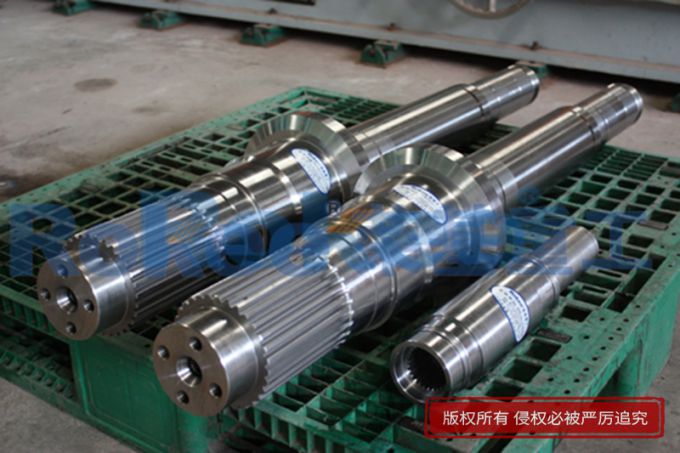

The core functional logic of the marine propeller shaft system lies in efficient and stable power transmission. During vessel operation, the main engine generates high-power rotational torque, which is adjusted and optimized through the gearbox and then transmitted sequentially through segmented shaft structures to the tail-end propeller. As the shaft rotates at a constant or variable speed, it drives the propeller to stir seawater, generating reaction thrust that propels the vessel forward or backward. Beyond basic rotational torque transmission, the propeller shaft also bears multiple complex loads during operation, including bending stress caused by hull vibration and water flow impact, axial thrust generated by propeller rotation resistance, and torsional vibration stress formed by alternating power output. These superimposed loads act on the shaft body continuously during long-distance navigation, putting forward extremely high requirements for the structural design, material performance, and manufacturing precision of the propeller shaft.
A complete marine propeller shaft system is not a single independent component but a systematic assembly composed of multiple segmented structures and matching auxiliary parts, with each part coordinating closely to ensure overall operational reliability. The entire shaft system mainly includes the thrust shaft, intermediate shaft, and tail shaft, which are connected by high-precision couplings to form a continuous power transmission path. The thrust shaft is close to the engine and gearbox assembly, primarily bearing the axial thrust generated during propeller operation and transferring the thrust to the hull structure to push the vessel forward. The intermediate shaft acts as a transitional connection component, adapting to the spatial layout differences between the engine cabin and the stern propeller compartment, balancing the torque transmission of the entire system, and buffering partial vibration and stress concentration. The tail shaft, also known as the stern tube shaft, extends out of the hull through the stern tube structure, directly connecting to the propeller and working in direct contact with seawater for a long time, making it the most severely eroded and stressed part of the entire shaft system.
Auxiliary supporting structures are equally essential for the stable operation of the propeller shaft system. Support bearings arranged at fixed intervals bear the weight of the shaft body and offset the bending deformation caused by self-weight and external force impact. Special bearing lining structures are installed inside the bearings to ensure smooth rotational friction of the shaft body, while supporting lubrication and cooling systems maintain the stable working state of the bearings and shaft body. The lubrication system adopts an oil immersion circulating lubrication mode, with oil thrower rings evenly coating the rotating shaft surface with lubricating oil to form a stable oil film, effectively reducing friction and wear between the shaft body and bearings. Meanwhile, the circulating water cooling system attached to the bearing structure continuously dissipates the heat generated by friction and mechanical operation, avoiding component damage and performance degradation caused by overheating during long-term high-speed operation. In addition, the stern sealing device isolates the internal shaft system and cabin equipment from external seawater, preventing seawater infiltration and internal lubricating oil leakage, which is crucial to maintaining the long-term stable operation of the shaft system.
Material selection is the core foundation that determines the service life and comprehensive performance of marine propeller shafts, and all applicable materials must meet the dual requirements of high mechanical performance and strong marine environmental adaptability. In the early stage of marine industry development, ordinary carbon steel was mostly used for manufacturing small-vessel propeller shafts due to its low cost and basic processability. However, carbon steel has obvious defects such as poor corrosion resistance and low fatigue strength, making it unable to adapt to long-term ocean navigation and heavy-load operation, so it is now only applied to low-demand inland water vessels. With the upgrading of marine engineering standards, high-strength alloy structural steel has become the mainstream material for medium and large-sized vessel propeller shafts. This type of material optimizes the proportion of alloy elements such as chromium, molybdenum, and manganese, with significantly improved tensile strength, toughness, and fatigue resistance, which can resist long-term alternating torsional and bending loads and avoid sudden fracture failure during operation.
For high-end marine equipment and offshore engineering vessels with stricter operating requirements, higher-performance corrosion-resistant alloys and composite materials are widely used. Stainless steel, nickel-based alloys, and duplex alloys have excellent seawater corrosion resistance, effectively resisting electrochemical corrosion and marine biological attachment erosion in saltwater environments. Some special titanium alloy materials further reduce the weight of the shaft body while maintaining high strength, improving the overall power transmission efficiency of the vessel. In recent years, composite propeller shafts have gradually been promoted and applied in light-duty vessels. Compared with traditional metal shafts, composite shafts have the advantages of light weight, strong corrosion resistance, low vibration and noise, and minimal maintenance demand, which can effectively reduce vessel fuel consumption and improve navigation comfort, showing broad application prospects in green and low-carbon marine development.
Structural design optimization runs through the entire development process of marine propeller shafts, adapting to the differentiated operational needs of various vessels. Propeller shafts are mainly divided into solid and hollow structural types. Solid shafts are integrally forged with a single piece of material, featuring extremely high structural rigidity and impact resistance, not easy to bend or deform under heavy loads, and are widely used in large ocean-going vessels and heavy-duty engineering ships that require high load-bearing performance. Hollow shafts adopt a hollow inner cavity design, which greatly reduces the self-weight of the shaft body on the premise of ensuring basic torsional strength, reduces the overall operating load of the power system, and helps improve vessel speed and fuel economy, making them more suitable for medium and small-sized civil vessels and high-speed working boats.
In modern marine engineering, the shaft alignment design of propeller shafts has abandoned the traditional single absolute straight-line layout and adopted the advanced fair curve alignment technology. This design fully considers the natural deflection of the hull under different load states and navigation conditions and the slight sag deformation of bearings after long-term operation, realizing the curved layout of the shaft system that matches the hull’s stress changes. It effectively avoids local stress concentration and abnormal vibration caused by rigid straight-line alignment, reduces the friction loss between the shaft body and supporting components, and significantly improves the operational stability and service life of the entire shaft system. Meanwhile, the modular design concept is gradually applied to propeller shaft manufacturing and assembly. The standardized segmented structure facilitates on-site installation, disassembly, and later maintenance, and partial damaged components can be replaced independently without integral disassembly, greatly improving the convenience of vessel after-sales maintenance.
Precision manufacturing and strict quality inspection are key links to ensure the excellent performance of marine propeller shafts. The production process of high-quality propeller shafts adopts integral forging molding technology, which optimizes the internal metal fiber structure of the material, eliminates internal pores, cracks, and other defects, and improves the overall mechanical uniformity of the shaft body. After forging, multiple precision processing procedures such as turning, grinding, and heat treatment are carried out. Reasonable quenching and tempering heat treatment processes improve the hardness and toughness of the shaft surface and core, enhancing wear resistance and fatigue resistance. The surface of the shaft body will also undergo anti-corrosion treatments such as alloy welding cladding and high-hardness coating treatment, forming a protective layer with hardness exceeding 60 HRC, which effectively resists seawater erosion and mechanical friction damage.
Every finished propeller shaft needs to pass comprehensive performance tests before delivery, including torsional strength test, bending fatigue test, surface hardness detection, and precision straightness calibration. Non-destructive testing technologies such as ultrasonic and magnetic particle inspection are used to detect tiny internal and surface defects that are invisible to the naked eye, ensuring that all indexes meet international marine industry standards. Strict manufacturing and inspection standards ensure that the propeller shaft can maintain stable performance in complex and changeable marine environments and avoid operational failures caused by manufacturing defects.
Scientific installation calibration and daily maintenance management are essential to extend the service life of marine propeller shafts and maintain efficient operation. During vessel construction and shaft system installation, professional alignment calibration is required to accurately adjust the horizontal and vertical position of each shaft segment and bearing, ensuring that the entire power transmission system has accurate coaxiality. Excessive alignment deviation will cause severe vibration, abnormal friction, and local overload during shaft operation, accelerating component wear and even leading to shaft fracture in severe cases. After installation, the sealing performance of the stern tube and the operating state of the lubrication and cooling systems need to be debugged to ensure no oil leakage or water seepage, and the lubricating oil circuit and cooling water circuit operate smoothly.
In daily vessel operation, crew members need to conduct regular inspection and maintenance of the propeller shaft system. Conventional daily inspections include observing the vibration and noise state of the shaft system during operation, checking whether the stern sealing device has leakage problems, and confirming the liquid level and cleanliness of lubricating oil and cooling water. Regular maintenance includes regular replacement of lubricating oil, cleaning of bearing and cooling pipeline dirt, and calibration of shaft alignment accuracy. For vessels operating in offshore saltwater environments, regular cleaning of marine biological attachments on the shaft surface and supplementary anti-corrosion treatment are required to prevent biological corrosion and scaling from affecting shaft operation efficiency.
Timely fault diagnosis and maintenance are crucial to avoid major navigation accidents. Common faults of marine propeller shafts include shaft body wear, fatigue crack generation, alignment deviation, bearing ablation, and sealing failure. Most early faults will be accompanied by abnormal vibration, increased operating noise, reduced power transmission efficiency, or slight oil and water leakage. Through real-time monitoring of shaft system operating parameters and regular professional detection, early faults can be found and repaired in time to prevent small defects from evolving into major failures that affect vessel navigation safety. Long-term standardized maintenance can effectively reduce the failure rate of the propeller shaft system, extend the service cycle of components, and reduce vessel operational and maintenance costs.
With the continuous development of the global marine industry towards intelligence, environmental protection, and high efficiency, the technical upgrading of marine propeller shafts is also accelerating. Intelligent monitoring technology has been gradually applied to shaft system operation management. By installing vibration sensors, temperature sensors, and pressure monitoring devices on the shaft system, the operating state of the propeller shaft can be monitored in real time, and abnormal data can be automatically alarmed, realizing predictive maintenance of equipment and greatly improving the intelligence level of shaft system management. In terms of environmental protection and energy saving, lightweight high-strength composite materials and low-friction coating technologies continue to be optimized, which can effectively reduce the self-weight of the shaft system and mechanical friction loss, reduce vessel fuel consumption and carbon emissions, and meet the increasingly stringent global marine environmental protection standards.
In addition, the personalized customized design of propeller shafts has become an industry development trend. According to the differentiated operating conditions of different types of vessels, such as navigation waters, load capacity, and power configuration, targeted optimization of shaft structure, material selection, and process design is carried out to maximize the matching degree between the shaft system and the vessel’s overall performance. For offshore wind power engineering vessels, marine survey vessels, and other special equipment with high stability and high precision requirements, the propeller shaft system adopts higher-precision manufacturing and more stable structural design to adapt to complex marine operation scenarios and meet the special operational needs of special vessels.
Throughout the entire marine transportation and marine engineering industry, the marine propeller shaft, as a basic core component, although inconspicuous in the overall vessel structure, undertakes the key mission of power transmission and navigation guarantee. Its technical level, manufacturing quality, and maintenance management level are closely related to the operational safety, economic benefits, and environmental protection performance of vessels. With the continuous progress of material science, precision manufacturing technology, and intelligent monitoring technology, marine propeller shafts will develop towards higher precision, higher stability, lower energy consumption, and longer service life, providing more reliable core support for the high-quality development of the global marine industry and marine transportation cause.
« Marine Propeller Shaft » Update Date: 2026/7/16
Contact
If you require custom machined couplings, please contact Rokee via the contact information below for inquiries.
Email: https://www.gshmdpq.com
 WeChat


