Motor Shaft Coupling
Rokee is a manufacturer of motor shaft coupling from china, we can provide non-standard custom motor shaft coupling based on parameters or drawings supplied by customers, with export support available.

In the intricate ecosystem of mechanical power transmission, motor shaft couplings stand as indispensable core components that bridge the gap between driving and driven mechanical systems. Serving as the critical connecting medium between a motor’s output shaft and the shaft of auxiliary equipment, these mechanical devices undertake the fundamental mission of transmitting torque and rotational motion while resolving a host of inherent mechanical challenges in industrial operation. From precision automated production lines and high-speed rotating machinery to heavy-duty industrial transmission equipment, motor shaft couplings are embedded in almost all power transmission scenarios involving motor drive, quietly ensuring the stable, efficient, and safe operation of mechanical equipment. Although often categorized as small auxiliary parts, their structural design, performance characteristics, and matching rationality directly determine the overall operating accuracy, service life, and failure rate of the entire mechanical system, making them a key research and application focus in the field of mechanical engineering and industrial manufacturing.
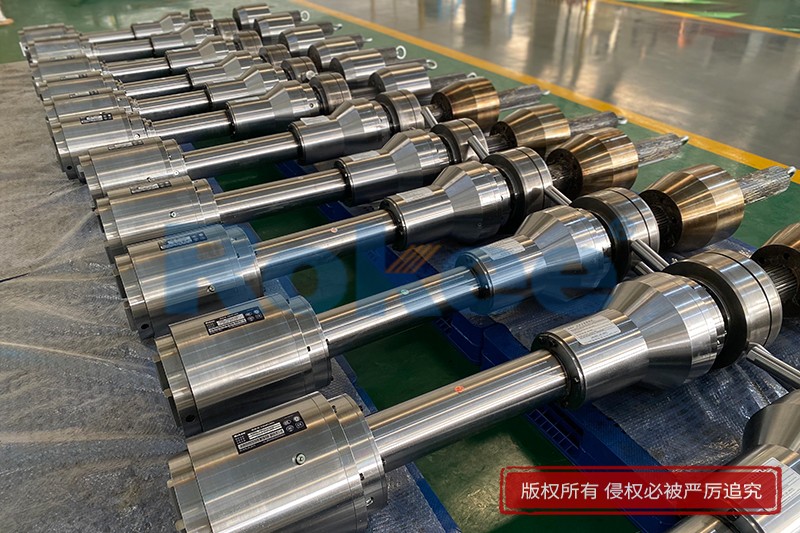
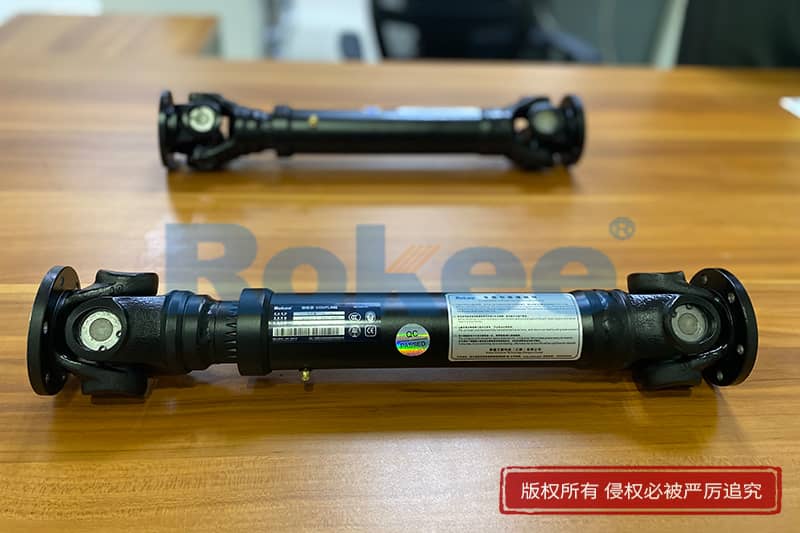

The core operational principle of motor shaft couplings is rooted in mechanical connection and flexible adaptation. In ideal mechanical design theory, the driving shaft and driven shaft should maintain absolute coaxial alignment to achieve loss-free power transmission. However, in actual industrial production and equipment operation, absolute coaxiality is almost unattainable. Manufacturing tolerances of mechanical parts, assembly deviations during equipment installation, structural deformation caused by long-term load operation, thermal expansion and contraction of metal materials under alternating operating temperatures, and slight foundation settlement will all lead to different degrees of relative displacement and misalignment between the two connected shafts. These misalignment states mainly include parallel offset misalignment, angular deflection misalignment, and axial displacement misalignment, which often coexist in actual working conditions rather than appearing independently. Motor shaft couplings compensate for these inevitable misalignment errors through their unique structural forms and material characteristics, realizing continuous and stable transmission of torque and rotational speed while isolating and mitigating mechanical stresses generated by shaft misalignment.
Beyond the basic torque transmission function, modern motor couplings bear multiple auxiliary functional values that are crucial to equipment protection and system optimization. In high-speed operation scenarios, mechanical vibration and impact shocks generated by motor startup, shutdown, and load mutation will be transmitted along the shaft system, easily causing fatigue wear of bearings, gears, and other precision parts, and even triggering resonance of the entire equipment system. Well-designed couplings can effectively absorb vibration energy and buffer instantaneous impact forces through structural flexibility or material elasticity, suppressing the propagation of mechanical fluctuations in the transmission system. Additionally, couplings act as a natural overload protection mechanism for mechanical equipment. When the equipment encounters extreme working conditions such as sudden load jamming and over-torque operation, the coupling will preferentially deform, slip or fail to release excessive load stress, avoiding irreversible damage to core components such as motors and reducers, and minimizing equipment maintenance costs and production downtime losses. Meanwhile, couplings also simplify equipment assembly and later maintenance work, allowing convenient disassembly and separation between the motor and driven equipment without disassembling the entire mechanical structure, greatly improving the efficiency of equipment overhaul and parts replacement.
Based on structural characteristics and functional attributes, motor shaft couplings are mainly divided into two core categories: rigid couplings and flexible couplings, each with distinct applicable working conditions and performance boundaries. Rigid couplings feature a simple and compact integrated structure, which realizes rigid fixed connection between two shafts through precise mechanical fastening. This type of coupling has extremely high torsional stiffness, zero transmission backlash, and stable torque transmission efficiency, enabling accurate synchronization of rotational speed and torque. However, rigid couplings have no adaptive compensation capability for shaft misalignment, requiring extremely high assembly accuracy of equipment. Any slight misalignment will generate huge additional mechanical stress during operation, accelerating part wear and even causing shaft deformation or fracture. Therefore, rigid couplings are mostly suitable for low-speed, heavy-load, and high-coaxiality fixed transmission scenarios, such as large-scale static mechanical transmission structures with fixed installation positions and stable operating loads, where the priority is to ensure rigid and accurate power transmission.
Flexible couplings, which account for the vast majority of industrial applications, have become the mainstream choice for modern motor transmission systems by virtue of their excellent misalignment compensation and vibration damping capabilities. Different from rigid structures, flexible couplings introduce flexible adaptive components, which can be divided into metallic flexible structures and elastomeric flexible structures according to different flexible mediums. Metallic flexible couplings rely on the elastic deformation or mechanical relative movement of all-metal structures to realize flexibility. Typical structural forms include diaphragm type, gear type, and grid type. Such couplings have outstanding torsional stiffness, high temperature resistance, and fatigue resistance, and can maintain stable performance in high-speed, high-precision, and harsh industrial environments. They are widely used in precision servo transmission, high-speed turbine equipment, and heavy-duty metallurgical machinery that require high transmission accuracy and long-term continuous operation.
Elastomeric flexible couplings adopt elastic polymer materials such as rubber and plastic as the flexible force-bearing medium, relying on the elastic deformation of non-metallic materials to compensate for shaft misalignment and absorb vibration and impact. Compared with metallic flexible couplings, elastomeric couplings have more excellent high-frequency vibration damping effects, lower operating noise, and more economical application costs. Their flexible characteristics can well buffer the instantaneous impact generated by motor frequent startup, forward and reverse rotation, and load fluctuation, providing effective protection for precision transmission systems. However, restricted by the material properties of polymers, elastomeric couplings have limited high temperature resistance and torsional stiffness, and are prone to aging and fatigue loss after long-term high-load operation. They are mostly applied in medium and low-speed, variable-load, and vibration-sensitive transmission scenarios, such as automated processing equipment, light industrial machinery, and general mechanical transmission systems.
In practical industrial applications, the selection of motor shaft couplings is a systematic engineering work that needs to comprehensively cover multiple dimensional factors of working conditions, equipment parameters, and operating environments. The primary basis for selection is the torque demand of the transmission system, including rated operating torque and instantaneous peak torque. The coupling’s torque bearing capacity must leave a sufficient safety margin to adapt to impact loads and variable load fluctuations in actual operation, preventing structural failure caused by overload. Secondly, the operating speed of the equipment directly affects the coupling’s operating stability. High-speed rotating scenarios require couplings with high dynamic balance accuracy, low wind resistance, and stable structural stress distribution to avoid vibration and resonance problems caused by centrifugal force. Low-speed and heavy-load scenarios focus more on structural rigidity and wear resistance to ensure long-term stable torque output.
The misalignment tolerance of the coupling is another core selection indicator. According to the actual assembly accuracy and operating deformation range of the equipment, it is necessary to select a coupling that can adapt to the corresponding parallel, angular, and axial misalignment. For precision servo systems and automated precision processing equipment that require micron-level transmission accuracy, zero-backlash flexible couplings with high torsional stiffness and accurate torque transmission must be selected to ensure no phase deviation in motion transmission. For general industrial equipment with ordinary accuracy requirements, couplings with strong misalignment adaptability and comprehensive cost performance can be preferred to reduce assembly difficulty and later maintenance pressure.
The operating environment also imposes strict constraints on coupling selection. In high-temperature working environments such as metallurgy, thermal power, and industrial furnace equipment, non-metallic elastomeric couplings are prone to thermal aging and performance degradation, so high-temperature resistant all-metal flexible couplings are required. In humid, dusty, or corrosive medium environments such as chemical industry, marine equipment, and outdoor industrial facilities, couplings need to have good sealing performance and corrosion resistance to prevent structural rust, material aging, and foreign matter abrasion from affecting transmission performance. In addition, special working conditions such as frequent startup and shutdown, forward and reverse alternating operation, and ultra-low temperature operation also need targeted matching of coupling types and materials to adapt to complex and changeable industrial scenarios.
Scientific installation, standardized operation, and regular maintenance are key links to ensure the long-term stable performance of motor shaft couplings and extend their service life. Installation accuracy is the primary factor affecting coupling operating status. Excessive manual assembly misalignment will far exceed the coupling’s adaptive compensation range, leading to continuous additional stress during operation, accelerating component wear, and inducing equipment vibration and noise. Therefore, the installation process must strictly follow mechanical assembly specifications, use professional testing tools to calibrate shaft coaxiality, and control misalignment errors within the allowable range of the coupling. During the assembly process, it is also necessary to ensure uniform fastening of connecting fasteners to avoid structural stress concentration caused by uneven locking force, which affects the overall structural stability of the coupling.
Daily equipment operation management should avoid long-term overload operation and frequent extreme startup and shutdown behaviors, which can effectively reduce the fatigue loss of coupling structures and materials. For metallic couplings that require lubrication, such as gear couplings and grid couplings, regular replacement of lubricating grease and cleaning of internal dirt are required to ensure the flexibility of mechanical relative movement, reduce friction and wear, and avoid performance degradation caused by dry friction and dirt accumulation. For elastomeric couplings, regular visual inspection is needed to check for aging cracking, elastic failure, and deformation damage of elastic components, and replace aging parts in a timely manner to prevent sudden failure during equipment operation.
Regular professional maintenance and fault detection can effectively eliminate potential safety hazards of couplings. In the daily maintenance process, the operating vibration, noise, and temperature rise of the coupling can be monitored to judge its operating state. Abnormal vibration and sharp noise during equipment operation often indicate excessive misalignment, loose fastening, or internal wear failure of the coupling; excessive local temperature rise usually reflects overload operation or severe friction loss. Timely diagnosis and troubleshooting can avoid small faults evolving into large-scale equipment failures, ensuring the continuous and stable operation of the production system. At the same time, regular dynamic balance detection of high-speed operating couplings can eliminate unbalanced hidden dangers caused by long-term wear and deformation, maintaining the high-precision operating state of the equipment.
With the continuous upgrading of modern industrial manufacturing towards high precision, high efficiency, intelligence, and energy saving, the technical iteration and application innovation of motor shaft couplings are also advancing rapidly. Traditional single-function couplings can no longer fully meet the complex and diverse working condition requirements of intelligent equipment and automated production lines. Modern coupling design is developing towards integrated multi-function, high precision, long life, and low energy consumption. New composite material couplings and optimized topological structure couplings have better vibration damping performance, higher fatigue resistance, and lighter structural weight, which can effectively reduce the energy consumption of the transmission system and improve the comprehensive operating efficiency of equipment.
In the field of high-end precision manufacturing such as industrial robots, precision numerical control machine tools, and semiconductor processing equipment, ultra-high precision zero-backlash couplings have become essential supporting components. These couplings achieve almost lossless torque and motion transmission through precise structural design and high-performance materials, ensuring the micron-level motion accuracy and repeated positioning accuracy of intelligent equipment, providing core guarantee for high-precision industrial processing and intelligent operation. In the field of new energy equipment, environmental protection machinery, and intelligent logistics equipment, lightweight, low-noise, and long-life flexible couplings are widely applied, adapting to the characteristics of frequent variable load operation and long-term continuous work of new industrial equipment, and meeting the development needs of energy conservation, environmental protection, and efficient operation of modern industry.
Throughout the entire mechanical transmission system, motor shaft couplings are small in size but bear crucial system functions. They are not only simple connecting parts for power transmission, but also key components for equipment vibration reduction, error compensation, overload protection, and system stability optimization. The reasonable selection, standardized installation, and scientific maintenance of couplings are of great significance for improving the operating efficiency of mechanical equipment, reducing equipment failure rates, extending the service life of mechanical systems, and lowering industrial production and maintenance costs. With the continuous progress of mechanical design technology, material science, and industrial manufacturing technology, motor shaft couplings will continue to achieve performance breakthroughs and functional innovation, adapt to more complex and high-end industrial application scenarios, and provide more reliable basic support for the high-quality development of modern industrial manufacturing.
« Motor Shaft Coupling » Update Date: 2026/7/16
Contact
If you require custom machined couplings, please contact Rokee via the contact information below for inquiries.
Email: https://www.gshmdpq.com
 WeChat


