Motor Couplings
Rokee is a manufacturer of motor couplings from china, we can provide non-standard custom motor couplings based on parameters or drawings supplied by customers, with export support available.
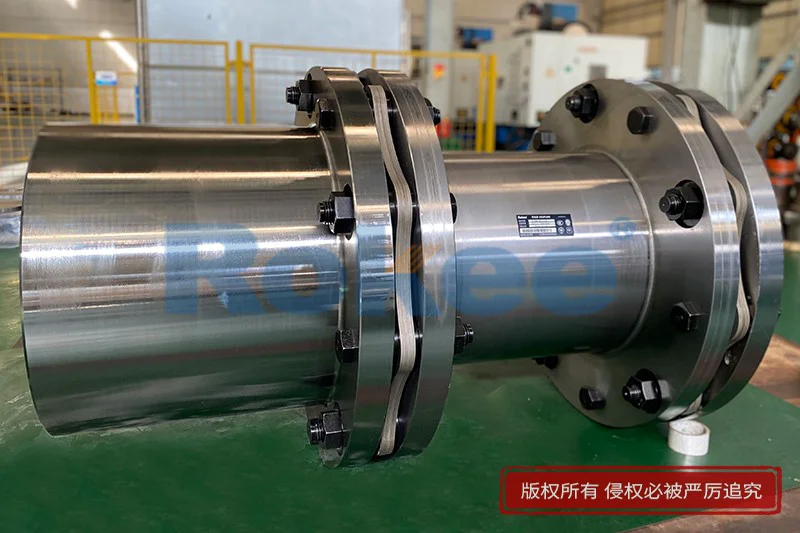
In modern industrial mechanical transmission systems, motor couplings stand as indispensable core components that bridge motor power sources and driven equipment. Serving as the critical connecting medium between two rotating shafts, these mechanical structures undertake the fundamental task of torque transmission while resolving a series of practical mechanical problems arising from equipment operation and installation. In all power transmission scenarios involving motor drive, from precision automated production equipment to heavy-duty industrial processing machinery, motor couplings determine the stability, efficiency, and service life of the entire transmission system. Although often categorized as auxiliary mechanical parts, their functional value directly affects the overall operating performance of mechanical equipment, making their structural characteristics, working principles, and application logic worthy of in-depth exploration and systematic research.


The core functional essence of a motor coupling lies in efficient and stable torque transmission between adjacent rotating shafts. In ideal mechanical design scenarios, the motor output shaft and the load input shaft should maintain complete coaxiality, with fully consistent rotating axes and no positional deviation. However, actual industrial production and equipment installation environments can never achieve such absolute ideal conditions. Manual installation errors, equipment manufacturing tolerances, minor structural deformation caused by long-term equipment operation, thermal expansion and contraction of metal materials during high-speed operation, and subtle foundation settlement of equipment bases will all lead to different degrees of misalignment between the motor shaft and the load shaft. This unavoidable misalignment will generate additional mechanical stress, vibration, and friction during equipment operation, which not only reduces power transmission efficiency but also easily causes fatigue wear of shafts, bearings, and other core components, and even triggers equipment failure and shutdown in severe cases. The motor coupling is designed to solve these practical industrial pain points, realizing flexible power transmission while compensating for various shaft deviations and buffering operating vibration.
According to different structural forms and functional characteristics, motor couplings can be divided into two core categories: rigid couplings and flexible couplings, each with distinct application scenarios and performance advantages. Rigid couplings are the simplest structural form among motor couplings, featuring a compact overall structure, high torsional rigidity, and no elastic deformation during operation. They rely on rigid structural components to lock the two connected shafts tightly, achieving zero-loss torque transmission. Due to the lack of flexible deformation capacity, rigid couplings cannot compensate for shaft misalignment or absorb vibration and impact. Their application scenarios are extremely limited, only suitable for high-precision installation environments with absolute shaft coaxiality, stable operating load, and no alternating impact. In such standardized and stable working conditions, rigid couplings can exert their advantages of high transmission efficiency, strong load-bearing capacity, and long service life, and are widely used in low-speed, heavy-duty, and stable mechanical transmission systems with strict installation accuracy.
Flexible couplings are the most widely used type in modern industrial scenarios, fundamentally solving the adaptability problems of rigid couplings in complex working conditions. Different from rigid structures, flexible couplings are equipped with elastic deformable components or flexible mechanical structures, which can rely on micro elastic deformation and structural movement to compensate for angular deviation, radial offset, and axial displacement between shafts. This flexible compensation capability can effectively eliminate additional mechanical stress caused by shaft misalignment, avoid concentrated wear of local components, and greatly improve the operating stability of the transmission system. Meanwhile, the flexible structure can absorb vibration and impact generated during motor start-stop, load switching, and high-speed operation, realizing smooth power transmission and protecting motors, bearings, reducers, and other key equipment from impact damage. In long-term continuous industrial production, this buffering and protection function can significantly reduce equipment failure rates and extend the service cycle of the entire mechanical system.
There are diverse structural forms of flexible motor couplings, with mainstream types including jaw couplings, disc couplings, gear couplings, and elastic sleeve couplings, each adapting to differentiated working condition requirements. Jaw couplings are typical general-purpose flexible couplings, composed of two metal jaw hubs and intermediate elastomer inserts. The elastomer spider can produce elastic deformation during operation, which not only compensates for small-range shaft misalignment but also has excellent vibration damping and noise reduction effects. This structural design features simple assembly and disassembly, stable operation, and good fail-safe performance; even if the elastomer insert fails accidentally, the metal jaws can still mesh temporarily to maintain continuous equipment operation, providing sufficient time for equipment maintenance and shutdown. Such couplings are widely applied in medium and low-power transmission scenarios such as ordinary conveying equipment, small pump bodies, and general automated machinery, and can adapt to most conventional industrial working conditions.
Disc couplings belong to high-precision metal flexible couplings, adopting multi-group thin metal diaphragm structures as flexible transmission components. Different from elastomer couplings, metal diaphragms rely on their own micro bending deformation to realize shaft deviation compensation, featuring zero backlash, high torsional rigidity, and excellent high-speed adaptability. Since all core components are metal structures, disc couplings have outstanding high-temperature resistance, corrosion resistance, and fatigue resistance, and will not age or deform due to long-term high-speed operation. They are extremely suitable for high-precision, high-speed, and high-stability transmission scenarios such as precision processing equipment, turbine machinery, and automated servo systems, which have strict requirements on transmission accuracy and operating stability. In addition, disc couplings require no daily lubrication and maintenance, reducing long-term equipment operation and maintenance costs, and are ideal core components for high-end precision mechanical transmission systems.
Gear couplings are designed for heavy-duty and high-torque transmission scenarios, with power transmission completed through the meshing of internal and external gear structures. The special gear meshing structure allows them to bear ultra-high torque loads and compensate for large-range radial and angular shaft deviations, showing excellent adaptability in complex and harsh working conditions. However, due to the friction and wear of gear meshing, gear couplings require regular lubrication maintenance to reduce component wear and ensure transmission stability. They are mostly used in heavy industrial equipment such as metallurgical machinery, mining equipment, and large mechanical transmission systems, stably outputting power under heavy-load and high-strength operating conditions.
In addition to the above common types, special structural motor couplings such as fluid couplings and chain couplings also undertake important transmission tasks in specific scenarios. Fluid couplings rely on hydraulic fluid kinetic energy to transmit power, realizing non-contact torque transmission between the motor and the load. This hydraulic transmission mode can achieve extremely smooth start and stop processes, effectively reducing the starting current of the motor and the impact on the power grid and equipment, and has inherent overload protection performance. When the equipment is overloaded, the fluid transmission efficiency decreases automatically, avoiding motor burnout and mechanical component damage caused by overload. It is widely used in large inertial equipment, conveyor systems, and mechanical equipment that requires soft start. Chain couplings utilize roller chain meshing to connect two shaft hubs, featuring simple structure, convenient installation and replacement, and strong environmental adaptability, and can work stably in dusty and harsh industrial environments, suitable for low-speed and heavy-duty conventional transmission scenarios.
The correct selection of motor couplings is the key to ensuring the efficient and stable operation of the transmission system, and the selection process needs to comprehensively consider multiple working condition parameters and equipment characteristics. First of all, the matching between coupling torque bearing capacity and equipment operating torque is the primary selection index. It is necessary to reserve a reasonable torque safety margin according to the rated torque of the motor and the instantaneous impact torque during equipment operation, so as to avoid coupling deformation, damage or transmission failure caused by insufficient torque capacity. Secondly, the operating speed of the equipment directly determines the applicable coupling type; high-speed operating scenarios need to prioritize high-precision, low-vibration, and low-noise couplings with good dynamic balance performance, while low-speed and heavy-duty scenarios can choose high-load rigid or gear couplings.
Shaft misalignment compensation demand is also a core factor in selection. Equipment with large installation errors or easy structural deformation during operation needs flexible couplings with strong deviation compensation ability, while high-precision precision equipment with small misalignment can adopt high-rigidity flexible couplings to ensure transmission accuracy. In addition, the operating environment of the equipment cannot be ignored; high-temperature, low-temperature, humid, dusty, or corrosive environments have different requirements on the material and structural stability of couplings. Elastomer couplings are not suitable for long-term high-temperature and corrosive environments, while all-metal flexible couplings can adapt to most harsh working conditions. At the same time, factors such as equipment start-stop frequency, load fluctuation amplitude, and daily maintenance conditions need to be comprehensively considered to select the most matching coupling type.
The importance of motor couplings in equipment operation is also reflected in equipment protection and energy saving and consumption reduction. In the entire mechanical transmission system, the coupling acts as a buffer protection component. When the equipment is subjected to sudden impact load or overload, the flexible structure of the coupling can absorb most of the impact force and isolate the load impact from the motor and precision components, effectively protecting the motor rotor, bearing, reducer gear and other vulnerable precision parts from damage. This passive protection function greatly reduces the failure probability of core equipment, extends the overall service life of mechanical equipment, and reduces frequent equipment maintenance and replacement costs. At the same time, excellent coupling matching can reduce transmission friction resistance and vibration loss, improve power transmission efficiency, reduce invalid energy consumption during equipment operation, and achieve the effect of energy saving and efficient production in long-term continuous operation.
Daily maintenance and inspection of motor couplings are crucial to maintain the long-term stable operation of the transmission system. In the daily operation of equipment, regular visual inspection and operating state monitoring are required. For elastomer flexible couplings, it is necessary to check whether the intermediate elastic insert has aging, deformation, cracking or wear, and replace the damaged parts in a timely manner to avoid transmission instability caused by elastic component failure. For metal couplings such as gear couplings and disc couplings, it is necessary to regularly check the fastening state of connecting components to prevent bolt loosening caused by long-term vibration, and supplement lubricating oil for structures requiring lubrication to reduce meshing friction and wear. In addition, the operating vibration and noise of the coupling should be monitored in real time. Once abnormal vibration or noise is found, it indicates that the coupling may have misalignment, wear or failure, and the equipment should be shut down for inspection and adjustment in a timely manner to avoid minor faults evolving into major equipment failures.
With the continuous upgrading of modern industrial manufacturing technology, the performance requirements for motor couplings are also constantly improving. Intelligent manufacturing, high-precision processing, and high-efficiency and low-energy consumption production modes have put forward higher standards for coupling transmission accuracy, stability, fatigue resistance, and environmental adaptability. The development trend of motor couplings is gradually moving towards high precision, high durability, maintenance-free, and intelligent adaptation. New high-performance elastic materials, precision metal processing technology, and optimized structural design are constantly improving the comprehensive performance of couplings, enabling them to adapt to more complex and extreme industrial working conditions. At the same time, with the development of intelligent monitoring technology, some coupling structures are combined with sensing components to realize real-time monitoring of operating torque, vibration state, and deviation degree, providing data support for equipment predictive maintenance and further improving the intelligent operation level of mechanical transmission systems.
In conclusion, motor couplings are small in structural size but bear vital transmission and protection functions in mechanical systems. They connect power sources and load equipment, resolve various adverse factors such as shaft misalignment, vibration impact, and load fluctuation in actual operation, and are the key guarantee for the stable, efficient, and safe operation of motor drive equipment. Different types of couplings have their own unique performance characteristics and applicable scenarios, and scientific type selection, standardized installation, and reasonable maintenance management can maximize the service performance of couplings, reduce equipment operating failures, and improve the overall operating efficiency of industrial mechanical systems. In the field of modern industrial mechanical transmission, the continuous optimization and technological innovation of motor couplings will always accompany the upgrading and development of manufacturing equipment, providing basic support for efficient and intelligent industrial production.
« Motor Couplings » Update Date: 2026/7/16
Contact
If you require custom machined couplings, please contact Rokee via the contact information below for inquiries.
Email: https://www.gshmdpq.com
 WeChat


