Hydraulic Pump Gear Couplings
Rokee is a manufacturer of hydraulic pump gear couplings from china, we can provide non-standard custom hydraulic pump gear couplings based on parameters or drawings supplied by customers, with export support available.
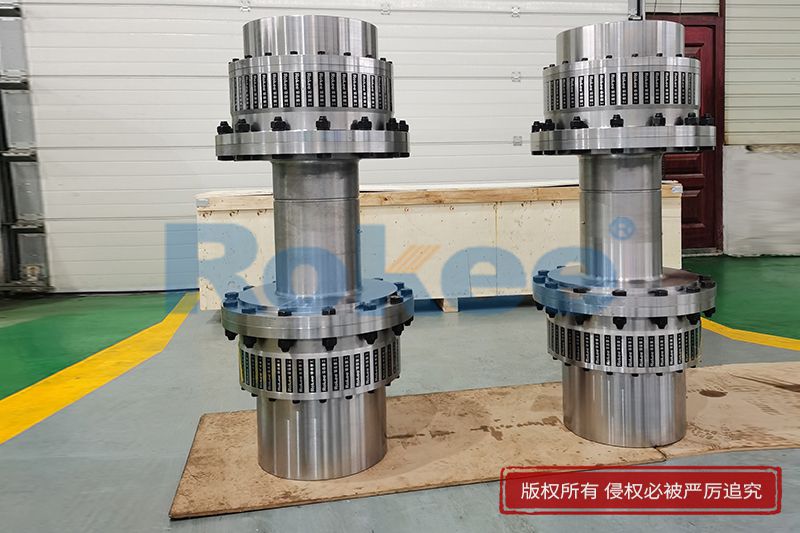
In modern industrial hydraulic systems, the stable transmission of power is the core guarantee for the efficient operation of all mechanical equipment. As a key connecting component between hydraulic pumps and driving motors, gear couplings undertake the important task of torque transmission, shaft deviation compensation and equipment operation protection. Unlike ordinary flexible couplings and rigid couplings, gear couplings for hydraulic pumps combine the high rigidity of rigid transmission parts and the adaptive flexibility of flexible connecting structures, which can adapt to the complex and variable working conditions of hydraulic equipment, such as high pressure, variable load and frequent start-stop. They have become one of the most indispensable basic components in heavy-duty hydraulic transmission scenarios, widely covering construction machinery, agricultural equipment, industrial production lines, marine hydraulic systems and other fields.
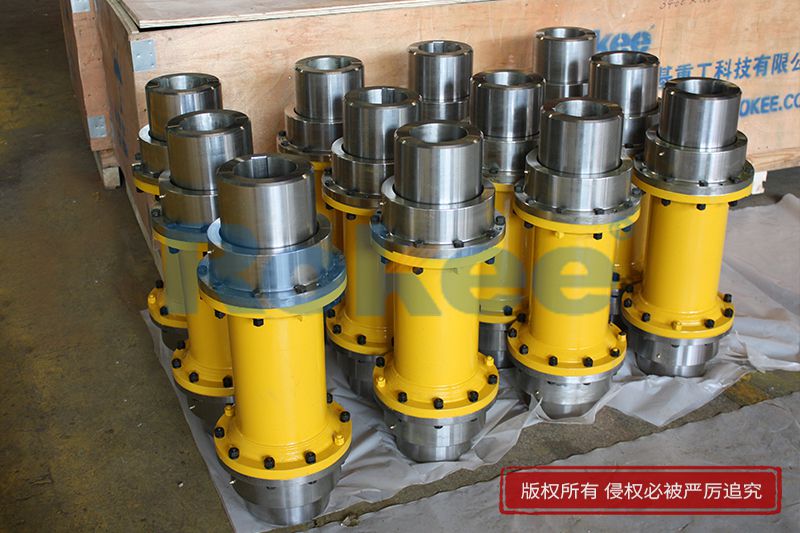

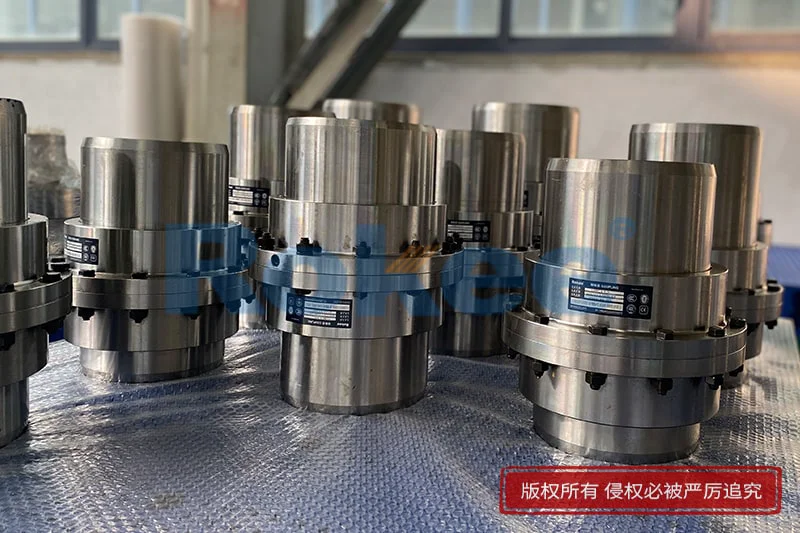
The essential value of hydraulic pump gear couplings lies in solving the core pain points of shaft connection in hydraulic power transmission. In the actual installation and operation of hydraulic equipment, it is impossible to achieve absolute coaxiality between the motor shaft and the pump shaft. Minor radial deviation, angular deflection and axial displacement are inevitable due to installation errors, equipment vibration, thermal expansion and cold contraction during operation, and foundation settlement. Statistical data of industrial mechanical failure shows that more than half of the premature damage of rotating equipment is caused by shaft misalignment, which will directly lead to increased friction of hydraulic pump bearings, accelerated wear of sealing components, unstable system pressure, and even abnormal vibration and noise of the whole machine, greatly shortening the service life of hydraulic pumps and supporting power components. The gear coupling perfectly makes up for this defect. Through its unique gear meshing structure, it can effectively compensate for various minor deviations between the driving shaft and the driven shaft while stably transmitting torque, avoid additional stress concentration caused by shaft misalignment, and ensure the continuous and stable operation of the hydraulic system.
The working principle of hydraulic pump gear couplings is based on the precise meshing transmission of internal and external gear structures, which is essentially a rigid movable coupling with adaptive compensation performance. The basic structure consists of two inner gear hubs with external gear teeth and two outer sleeves with internal gear teeth. The inner gear hubs are respectively fixed on the output shaft of the driving motor and the input shaft of the hydraulic pump, and the outer sleeves are connected and fixed by high-strength bolts to form a closed transmission whole. When the equipment starts to operate, the motor drives the active inner gear hub to rotate synchronously. The external gear teeth on the hub mesh closely with the internal gear teeth of the outer sleeve, and the meshing contact force drives the outer sleeve to rotate. Then the outer sleeve transmits the torque to the driven inner gear hub and further drives the hydraulic pump shaft to operate, realizing the synchronous rotation and power transmission of the two shafts.
Different from conventional gear transmission structures that focus on speed conversion and torque amplification, the gear meshing design of hydraulic pump gear couplings focuses more on uniform force bearing and flexible compensation. The gear teeth are usually designed with a special tooth profile and a proper meshing gap. This structural design enables the coupling to produce a small relative sliding displacement between the gear teeth during operation. On the premise of ensuring efficient torque transmission, it can adapt to radial offset, angular deviation and axial displacement between the connected shafts. In the high-pressure working state of the hydraulic pump, the system load changes frequently, and the instantaneous torque impact is obvious. The micro sliding between the gear teeth can effectively buffer the instantaneous impact load, disperse the concentrated stress generated by load fluctuation, and avoid the rigid collision between the motor shaft and the pump shaft, thus protecting the core precision components of the hydraulic pump from impact damage.
In terms of structural performance, hydraulic pump gear couplings have outstanding advantages in load resistance, transmission efficiency and environmental adaptability compared with other types of couplings. First of all, the gear meshing transmission mode has large contact area and uniform force distribution, which can bear large torque and heavy load. It is especially suitable for high-power hydraulic pump equipment that needs long-term continuous operation. Its torque transmission capacity is far higher than that of sleeve couplings and diaphragm couplings of the same volume, which can meet the power transmission needs of heavy-duty hydraulic systems in industrial production and engineering construction. Secondly, the overall structural rigidity of the gear coupling is high, the deformation is extremely small during operation, the synchronous rotation accuracy of the two shafts is excellent, and the power transmission loss is low, which can maintain high-efficiency power output for a long time and avoid energy waste caused by transmission lag and component deformation.
In addition, the structural compactness of hydraulic pump gear couplings makes them more adaptable to limited installation space. Most hydraulic equipment has compact internal structural layout, and the installation space reserved for connecting components is narrow. The gear coupling has a simple and compact overall structure, no redundant parts, and small axial and radial occupation space, which can perfectly adapt to the integrated design of modern hydraulic pump units. At the same time, the main components of the coupling are made of high-strength alloy materials through integral forging and precision heat treatment. The surface of the gear teeth is strengthened and wear-resistant, with high hardness, good fatigue resistance and strong corrosion resistance. It can stably operate in harsh working environments such as high dust, high humidity and variable temperature, and is not easy to wear, deform or rust, ensuring long-term operational stability.
The matching adaptability between gear couplings and hydraulic pumps is reflected in the whole working cycle of hydraulic equipment. The hydraulic pump, as the power source of the hydraulic system, converts mechanical energy into hydraulic energy, and its operating stability directly determines the working accuracy and efficiency of the entire system. In the start-up stage of the equipment, the motor will generate instantaneous starting torque, and the gear coupling can buffer the starting impact through the micro gap of gear meshing, avoid the instantaneous overload of the hydraulic pump, and make the equipment start smoothly. In the stable operation stage, it can compensate the axis deviation caused by equipment operation vibration and thermal deformation, maintain the coaxiality of the transmission shaft system, ensure the stable output of hydraulic pump flow and pressure, and avoid system pressure fluctuation and flow pulsation. In the load changing stage, when the hydraulic system performs lifting, pushing, cutting and other actions, the load changes suddenly, and the gear coupling can quickly adapt to the torque fluctuation, disperse the impact force, and prevent the hydraulic pump from generating cavitation, vibration and other abnormal phenomena due to unstable transmission.
In different application scenarios, the performance advantages of hydraulic pump gear couplings are fully reflected. In construction machinery such as excavators, loaders and bulldozers, the hydraulic system needs to bear frequent variable loads and complex working conditions of alternating tension and compression. The high load resistance and impact resistance of gear couplings can adapt to the severe working environment of construction sites, ensuring that the hydraulic pump can continuously output power during high-intensity operation. In agricultural machinery such as tractors and harvesters, the equipment often operates in dusty and humid field environments, and the good wear resistance and corrosion resistance of gear couplings reduce the failure rate of connecting parts and improve the durability of agricultural hydraulic systems.
In industrial manufacturing fields such as automated production lines, hydraulic presses and conveying equipment, the hydraulic system requires high operation stability and transmission accuracy. The high synchronous rotation accuracy of gear couplings ensures the precise power output of the hydraulic pump, makes the hydraulic actuator operate stably and accurately, and meets the high-precision operation requirements of industrial production. In marine hydraulic systems and outdoor engineering equipment, the equipment is affected by temperature change, wind and vibration for a long time. The excellent deviation compensation performance of gear couplings can eliminate the adverse effects of thermal expansion and mechanical vibration on the shaft system connection, and ensure the long-term reliable operation of the hydraulic system in complex outdoor environments.
Although hydraulic pump gear couplings have excellent comprehensive performance, their long-term stable operation is inseparable from standardized installation and daily maintenance. Installation accuracy is the primary factor affecting the service life of couplings and even the whole hydraulic system. In the installation process, it is necessary to strictly calibrate the coaxiality of the motor shaft and the hydraulic pump shaft to control the shaft deviation within the allowable range of the coupling. Excessive deviation will lead to accelerated wear of gear teeth, increased transmission noise and shortened service life even with compensation performance. At the same time, the fastening degree of connecting bolts should be standardized to avoid loose bolts caused by equipment vibration, which will lead to transmission failure and abnormal equipment operation.
Lubrication maintenance is the key link to ensure the efficient operation of gear couplings. The meshing operation of internal and external gear teeth relies on high-quality lubricating oil to reduce friction and wear, reduce operating temperature and buffer meshing impact. In the daily use process, it is necessary to regularly check the lubrication state of the coupling, replace the aging and deteriorated lubricating oil in time, and ensure that the gear meshing part is fully lubricated. Lack of lubrication will lead to dry friction of gear teeth, serious wear and even tooth surface peeling, which will directly affect the torque transmission capacity and service life of the coupling. In addition, regular appearance inspection and fault detection are required to check for gear wear, bolt looseness, component deformation and other problems, and timely handle potential faults to avoid small defects evolving into large equipment failures and causing production shutdown losses.
With the continuous upgrading of industrial hydraulic technology, hydraulic pump equipment is developing towards high power, high precision, energy saving and intelligence, which also puts forward higher requirements for the performance of supporting gear couplings. Modern industrial scenarios require couplings to have higher torque density, better deviation compensation ability, lower transmission noise and longer service life. At the same time, with the popularization of energy-saving and environmental protection concepts in the industrial field, the low-loss transmission performance of gear couplings has become an important research and development direction. Optimizing the gear tooth profile design, improving the processing precision of components, and adopting new high-strength and wear-resistant materials can further reduce transmission energy consumption, improve the operational stability of the hydraulic system, and meet the development needs of modern high-efficiency hydraulic equipment.
In the whole hydraulic transmission system, the gear coupling is a small but vital core component. It does not directly participate in the conversion of hydraulic energy, but it is the key bridge to ensure the stable transmission of power. The operating state of the coupling is closely related to the service life of the hydraulic pump, the stability of the system pressure, the accuracy of mechanical action and the overall operating efficiency of the equipment. Many equipment operation failures that are attributed to hydraulic pump failure are actually caused by the failure of the gear coupling, such as unstable system pressure, equipment vibration and noise, and reduced power output. Therefore, correct selection, standardized installation and scientific maintenance of hydraulic pump gear couplings are crucial to improving the overall reliability and service life of hydraulic equipment and reducing equipment operation and maintenance costs.
In conclusion, hydraulic pump gear couplings occupy an irreplaceable position in industrial hydraulic systems by virtue of their high torque transmission capacity, excellent shaft deviation compensation performance, strong environmental adaptability and stable and efficient transmission characteristics. Whether in heavy industrial production, engineering construction, agricultural operations or special environmental equipment applications, they can provide reliable power connection guarantee for hydraulic pump equipment. With the continuous progress of mechanical manufacturing technology and the continuous upgrading of hydraulic system performance, gear coupling technology will also continue to innovate and optimize, adapting to more complex and high-standard hydraulic transmission scenarios, and providing more solid basic support for the efficient and stable operation of modern industrial mechanical equipment.
« Hydraulic Pump Gear Couplings » Update Date: 2026/7/16
Contact
If you require custom machined couplings, please contact Rokee via the contact information below for inquiries.
Email: https://www.gshmdpq.com
 WeChat