Flexible Gear Couplings
Rokee is a manufacturer of flexible gear couplings from china, we can provide non-standard custom flexible gear couplings based on parameters or drawings supplied by customers, with export support available.
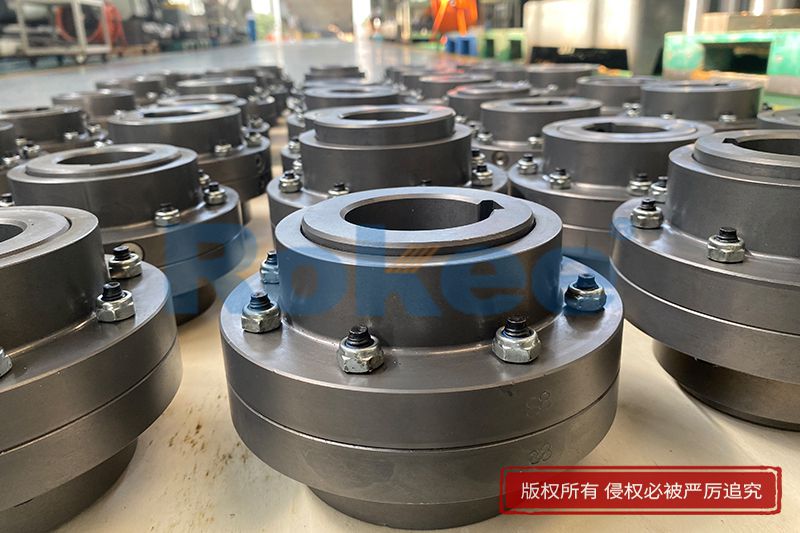
In the complex and dynamic field of mechanical power transmission, flexible gear couplings stand out as one of the most reliable and versatile connecting components, serving as a critical bridge between driving and driven equipment in modern industrial systems. Unlike rigid coupling structures that pursue absolute fixation and zero displacement, flexible gear couplings integrate precise gear meshing transmission with adaptive flexible compensation capabilities, perfectly balancing high-efficiency torque transmission and operational fault tolerance. This unique structural and performance integration enables the component to adapt to various harsh and variable working conditions, becoming an indispensable core part in heavy-duty machinery, precision automation, and continuous production equipment worldwide. With the continuous upgrading of industrial manufacturing toward high speed, high load, and high precision, the technical value and application scope of flexible gear couplings have been further expanded, making them a key research and application focus in the field of mechanical transmission engineering.
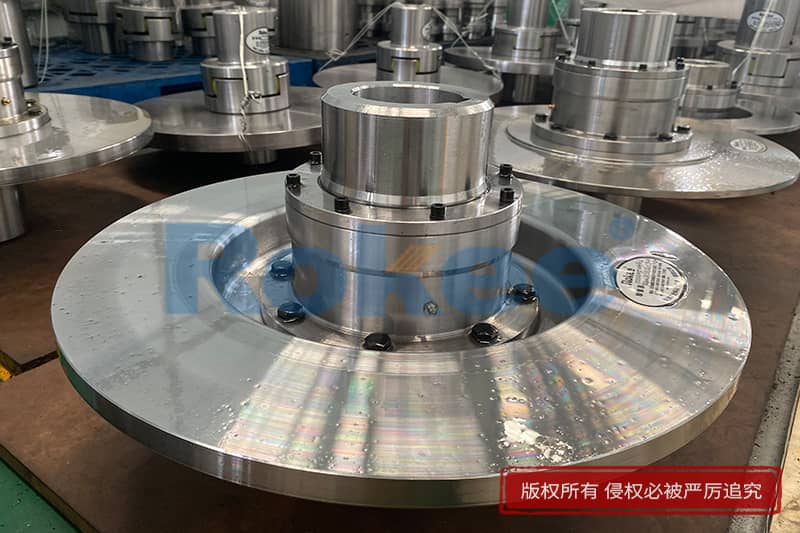

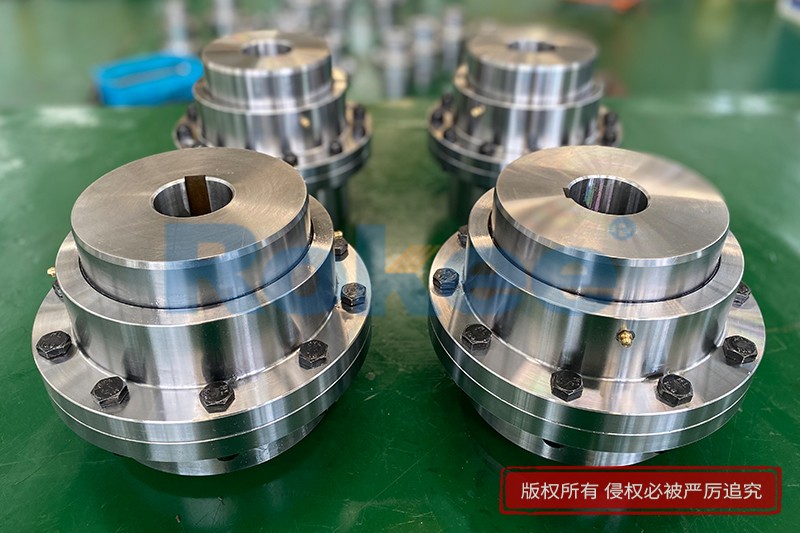
The working principle of flexible gear couplings is based on the mechanical meshing transmission of internal and external gear teeth and the flexible displacement compensation brought by crowned tooth profiles and reserved meshing gaps. During equipment operation, the driving shaft drives the connected gear hub to perform synchronous rotational motion, and the external crowned gear teeth on the hub transmit rotational torque and mechanical power to the internal gear teeth of the outer sleeve through precise meshing action. Subsequently, the outer sleeve drives the other gear hub and the connected driven shaft to rotate synchronously, realizing the stable transmission of power between the two shafts. In this process, the crowned tooth profile can produce slight elastic deformation and adaptive angle adjustment during meshing. When the shaft system generates axial displacement, radial offset, or angular deflection due to equipment installation errors, mechanical vibration, thermal deformation, or foundation settlement, the flexible gear coupling can rely on the tooth gap and tooth profile deformation to automatically compensate for various misalignment deviations. This compensation mechanism avoids rigid extrusion and friction between shaft components, eliminates additional mechanical stress caused by misalignment, and ensures the continuity and stability of power transmission in complex operating states.
Material selection is the fundamental guarantee for the excellent comprehensive performance of flexible gear couplings, and modern industrial production adopts targeted material matching schemes according to different working condition requirements. Most conventional heavy-duty and general industrial scenarios adopt high-strength alloy steel as the core manufacturing material. After integral forging and heat treatment processes such as quenching and tempering, the material obtains high tensile strength, surface hardness, and structural toughness, which can resist high torque impact, mechanical wear, and alternating load fatigue during long-term operation. For special working environments such as high humidity, chemical corrosion, and seawater erosion, stainless steel materials with excellent corrosion resistance are selected to avoid component rust, oxidation, and structural performance degradation, extending the service life of the coupling. In low-load, low-noise, and light-duty precision equipment, special engineering nylon materials are also applied to individual coupling components. This non-metallic material has good vibration absorption and noise reduction effects, while reducing the overall weight of the coupling and lowering the inertial resistance of high-speed operation. The scientific matching of materials enables flexible gear couplings to maintain stable mechanical properties in extreme environments such as high temperature, low temperature, high humidity, and strong corrosion, realizing wide environmental adaptability.
The core performance advantages of flexible gear couplings are reflected in three key dimensions: efficient deviation compensation, excellent vibration damping and impact resistance, and stable high-power transmission capability. In terms of deviation compensation, high-quality flexible gear couplings can synchronously compensate for three typical shaft misalignment states, including axial displacement, radial offset, and angular deflection. Compared with elastic couplings that only have single or limited compensation capability, gear flexible couplings have larger compensation range and higher compensation accuracy, which can adapt to installation deviations and dynamic operation deviations of most industrial shaft systems. The optimized tooth profile contact structure can disperse local stress concentration, effectively reducing the vibration and impact generated during equipment start-up, shutdown, and load mutation. This vibration damping characteristic can absorb and buffer the alternating mechanical impact between the driving end and the load end, protect precision bearings, gears, and transmission parts in the equipment, and reduce the failure rate of mechanical components.
In terms of power transmission performance, the meshing structure of multiple gear teeth forms a large-area contact transmission mode, which enables the coupling to bear ultra-high torque load and realize high-power stable transmission. Its power density is far higher than that of diaphragm couplings and sleeve couplings of the same volume, which can meet the power transmission needs of heavy-duty equipment such as mining machinery, metallurgical equipment, and large fans. At the same time, through precise tooth profile optimization and tolerance control, advanced flexible gear couplings can achieve nearly zero-backlash transmission, with extremely high angular synchronization accuracy. This high-precision transmission feature makes it applicable to precision automation equipment and multi-axis linkage systems, ensuring the synchronization and positioning accuracy of mechanical motion. In addition, the torsional stiffness of flexible gear couplings is moderate and controllable, which can not only meet the rigidity requirements of high-precision transmission but also retain flexible buffering performance, avoiding rigid damage to the shaft system caused by sudden load changes.
Industrial application scenarios of flexible gear couplings cover almost all fields involving mechanical power transmission, showing strong industry adaptability and engineering practicability. In the heavy industry field such as mining, metallurgy, and cement production, large-scale crushing equipment, rolling mills, and rotary kiln equipment operate under long-term heavy load and harsh working conditions with serious dust and vibration interference. Flexible gear couplings rely on their high load-bearing capacity and anti-fatigue performance to maintain stable transmission in high-intensity operating environments, reducing equipment downtime caused by coupling failure. In the field of power energy, wind power generation equipment, thermal power fans, and water conservancy pumping units have high requirements for transmission stability and safety. The vibration damping and misalignment compensation functions of flexible gear couplings can effectively solve the transmission failure problems caused by blade swing, foundation vibration, and shaft system deviation, ensuring the long-term safe operation of energy equipment.
In modern intelligent manufacturing and precision automation industries, flexible gear couplings are applied to robotic transmission systems, numerical control machine tools, and automated assembly lines. Their zero-backlash transmission and high synchronization accuracy ensure the precise execution of equipment motion trajectories, improving the processing accuracy and production efficiency of precision equipment. In the transportation and logistics machinery field, port handling equipment, conveyor systems, and engineering machinery often face frequent start-stop operations and variable load impacts. The flexible buffering performance of gear couplings can effectively reduce the mechanical loss caused by frequent load changes and extend the overall service life of the equipment. In addition, in petrochemical, pharmaceutical, and environmental protection equipment with high environmental cleanliness and corrosion resistance requirements, corrosion-resistant flexible gear couplings can adapt to chemical medium erosion and sterile operating environments, meeting the special production standard requirements of the industry.
Processing technology and quality control determine the operational stability and service life of flexible gear couplings in actual working conditions. Modern high-end flexible gear couplings adopt integral forging molding technology, which makes the internal metal structure of components more compact and uniform, avoiding structural defects such as internal pores and cracks caused by welding and assembly molding. The gear tooth surface is processed by precision gear grinding technology to ensure the smoothness and tolerance accuracy of the tooth surface, reduce meshing friction resistance, and lower operation noise and wear rate. After mechanical processing, all core components will undergo strict heat treatment processes to adjust the hardness and toughness of the material surface and core, realizing the mechanical performance matching of hard surface for wear resistance and tough core for anti-fracture. In the finishing stage, dynamic balance detection and correction are carried out for the overall coupling to eliminate unbalanced mass errors generated during processing, ensuring the stability of high-speed rotation and avoiding vibration and resonance problems in high-speed operation.
Daily maintenance and scientific application management are key links to give full play to the performance advantages of flexible gear couplings and extend their service cycle. Although the coupling has strong adaptability and fault tolerance, long-term operation under overload, extreme misalignment, and lack of maintenance will still lead to tooth surface wear, fatigue cracking, and lubrication failure. In actual industrial application, regular lubrication maintenance is essential. Good lubricating oil or grease can form a uniform oil film on the gear meshing surface, reducing dry friction and wear between tooth surfaces, while taking away the heat generated by meshing friction to avoid high-temperature aging and deformation of components. It is necessary to regularly check the alignment state of the shaft system during equipment operation, adjust the installation deviation in time to avoid long-term operation of the coupling beyond the allowable compensation range, and prevent excessive stress accumulation from causing structural damage.
In addition, regular visual inspection and performance detection of the coupling surface are required to observe whether there are abnormal wear marks, cracks, and corrosion on the tooth surface and hub, and replace aging and failed components in a timely manner. For equipment operating in high-speed and high-precision scenarios, regular dynamic balance detection and transmission accuracy calibration should be carried out to ensure that the coupling always maintains excellent transmission performance. Scientific maintenance management can not only maximize the service life of flexible gear couplings and reduce equipment replacement costs but also avoid production safety accidents and production halt losses caused by coupling failure, improving the overall operational efficiency of industrial production lines.
With the continuous progress of industrial manufacturing technology and the upgrading of industrial equipment toward high efficiency, intelligence, and energy saving, the technical development of flexible gear couplings is also constantly innovating and iterating. At present, the industry is committed to developing new high-strength, wear-resistant, and low-energy-consumption coupling materials, optimizing tooth profile structures and compensation mechanisms, further improving the misalignment compensation accuracy and torque transmission density of products, and reducing operation noise and energy consumption. At the same time, combined with intelligent sensing technology, new flexible gear coupling products with real-time monitoring of operating temperature, vibration amplitude, and wear state are gradually emerging, realizing intelligent early warning of equipment failure and predictive maintenance. This intelligent upgrading enables flexible gear couplings to adapt to the operation needs of future intelligent factories and unmanned production equipment.
As a classic and continuously optimized mechanical transmission component, flexible gear couplings have irreplaceable application value in the industrial field. Their perfect combination of rigid high-efficiency transmission and flexible adaptive compensation solves many pain points in mechanical power transmission, such as difficult alignment of shaft systems, easy vibration and impact of equipment, and limited load-bearing capacity. In the future, with the continuous development of high-end equipment manufacturing, new energy industry, and intelligent manufacturing, flexible gear couplings will continue to exert their performance advantages, realize wider industry penetration and technical upgrading, and provide more stable, efficient, and reliable basic component support for the high-quality development of modern industrial machinery.
« Flexible Gear Couplings » Update Date: 2026/7/16
Contact
If you require custom machined couplings, please contact Rokee via the contact information below for inquiries.
Email: https://www.gshmdpq.com
 WeChat