Face Gear Couplings
Rokee is a manufacturer of face gear couplings from china, we can provide non-standard custom face gear couplings based on parameters or drawings supplied by customers, with export support available.

In the field of modern mechanical transmission systems, the stability, efficiency, and durability of power transmission components directly determine the overall operating performance of industrial equipment. As a high-performance transmission component, face gear coupling has gradually become a core connecting part for heavy-duty, high-precision, and long-cycle mechanical operation by virtue of its unique tooth surface meshing structure and excellent comprehensive mechanical properties. Different from traditional gear couplings, diaphragm couplings, and sleeve couplings, face gear coupling adopts a special face gear meshing design, which abandons the limitations of traditional straight-tooth and spiral-tooth transmission structures, realizes more uniform load distribution and flexible misalignment compensation in power transmission, and adapts to complex and variable industrial operating conditions. With the continuous upgrading of industrial manufacturing towards high precision, high load, and high efficiency, the application scope of face gear coupling continues to expand, covering basic industrial manufacturing, aerospace equipment, energy power transmission, and heavy engineering machinery, becoming an indispensable key component in modern mechanical transmission systems.
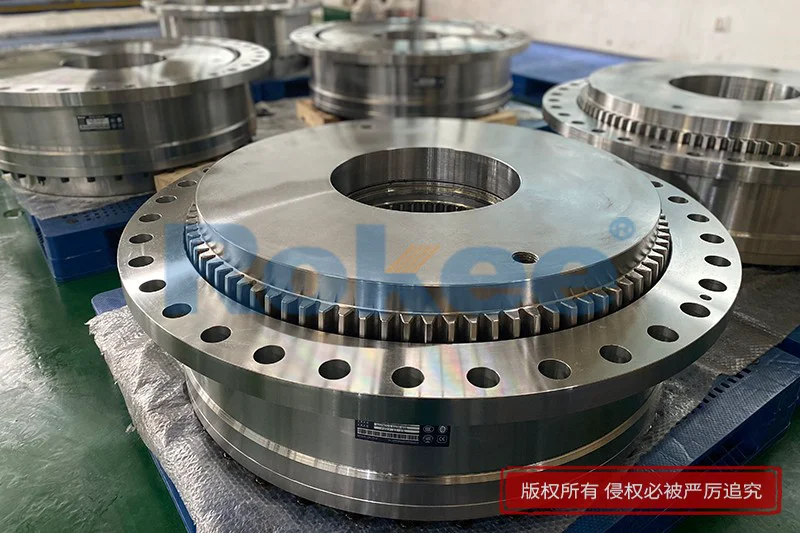
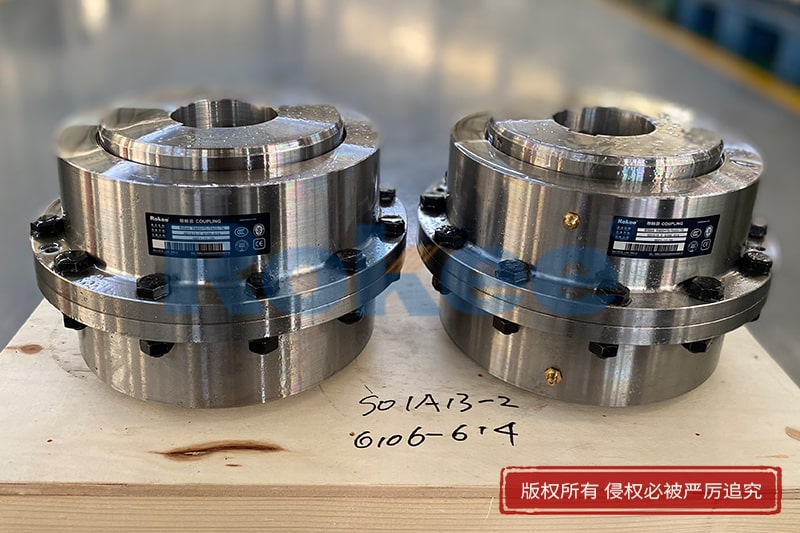

The structural design of face gear coupling is derived from the innovative optimization of conjugate gear transmission theory, forming a unique internal and external tooth meshing system suitable for shaft connection and power transmission. The basic composition of the coupling is concise and compact, mainly including two matching gear hubs and a closed protective structure. The core transmission part adopts the cooperation of face gear and cylindrical spur gear, and the tooth surface contour is optimized through advanced gear processing technology to form a smooth conjugate meshing interface. Different from the axial meshing mode of traditional gear couplings, the face gear coupling realizes meshing transmission on the end face of the gear pair, which fundamentally changes the force bearing mode of the gear teeth during operation. This structural innovation makes the stress distribution of each tooth surface more uniform during torque transmission, avoids the local stress concentration and tooth surface wear caused by uneven meshing of traditional gear structures, and greatly improves the structural stability and service life of the coupling.
In terms of working mechanism, the power transmission process of face gear coupling follows the precise conjugate motion law of gear pairs. When the driving shaft operates, it drives the active gear hub to rotate synchronously, and the face gear teeth on the end face of the active hub mesh with the cylindrical gear teeth of the driven hub in real time, stably transmitting rotational motion and torque to the driven shaft. In this process, the optimized crown tooth profile design effectively expands the contact area of the tooth surface, enabling multiple gear teeth to participate in meshing and bearing load simultaneously. Compared with the single-tooth or few-tooth bearing state of traditional gear couplings, this multi-tooth synchronous meshing mode significantly improves the torque bearing capacity and transmission stability. More importantly, the special geometric characteristics of the face gear tooth surface endow the coupling with excellent flexible compensation capability. During the operation of mechanical equipment, affected by installation errors, equipment vibration, thermal deformation of components, and foundation settlement, the connecting shafts will inevitably produce axial, radial, and angular misalignment. The face gear coupling can rely on the tiny sliding and fitting of the conjugate tooth surface to automatically absorb and compensate for these deviations, ensuring that the power transmission process remains smooth and continuous without additional mechanical loss or structural damage.
The superior performance of face gear coupling is fully reflected in multiple core mechanical indicators, forming obvious technical advantages over traditional transmission couplings. First of all, it has extremely high transmission efficiency. The smooth conjugate meshing relationship of the tooth surface reduces sliding friction resistance during operation, avoids energy loss caused by tooth surface jamming and uneven contact, and maintains ultra-high transmission efficiency under both low-speed heavy-load and high-speed stable operation conditions. This efficient transmission characteristic not only reduces the energy consumption of mechanical equipment operation but also avoids the heat accumulation problem caused by friction loss, improving the thermal stability of the transmission system. Secondly, the face gear coupling has outstanding load-bearing performance and impact resistance. The uniform stress distribution of the multi-tooth meshing structure enables it to bear large instantaneous impact load and alternating load, which can effectively cope with the load fluctuation frequently occurring in heavy industrial production. In the working scenario of frequent start-stop and variable load operation, the coupling will not produce tooth surface deformation, tooth breakage or fatigue failure due to instantaneous load changes, ensuring the continuous and stable operation of equipment.
In terms of misalignment adaptability, face gear coupling shows more comprehensive performance than most traditional coupling products. Traditional couplings often have single compensation capability, which can only adapt to a single type of shaft deviation, and are prone to transmission jitter and component wear under complex multi-dimensional misalignment conditions. In contrast, the face gear coupling can simultaneously compensate for axial displacement, radial deflection, and angular deflection of the connected shafts, with a large allowable deviation range. This feature greatly reduces the installation accuracy requirements of mechanical equipment, avoids the debugging difficulty and time cost caused by ultra-high precision installation, and also eliminates the mechanical vibration and noise problems caused by minor installation errors and later equipment operation deviation. At the same time, the structural design of face gear coupling does not produce additional axial thrust during operation, which effectively protects the supporting bearings of the shaft system, reduces the wear loss of bearing components, and further reduces the overall maintenance cost of the mechanical system.
The structural and performance advantages of face gear coupling determine its wide adaptability to complex industrial working conditions, and it has shown excellent application effects in multiple high-demand industrial fields. In heavy industrial manufacturing such as metallurgy, mining, and cement production, equipment often operates in harsh environments with heavy load, high dust, and continuous operation. The face gear coupling relies on its high load-bearing capacity and fatigue resistance, adapting to the long-term uninterrupted operation state of rolling mills, crushers, and ball mills. Its closed structural design can effectively isolate dust, impurities, and moist air, prevent tooth surface corrosion, abrasion and lubricant failure, and maintain stable transmission performance in harsh environments for a long time. In the field of energy and power, such as wind power generation, thermal power units, and hydraulic power equipment, the coupling needs to adapt to variable speed and variable load operation conditions for a long time. The face gear coupling can stably transmit torque under fluctuating wind speed and variable power conditions, absorb unit vibration and shaft system deviation, ensure the safe and efficient operation of power transmission equipment, and improve the power generation stability of the unit.
In the field of precision mechanical equipment and aerospace transmission systems, the high-precision meshing characteristics and low vibration operation advantages of face gear coupling are fully exerted. Aerospace equipment and high-end precision machinery have extremely strict requirements on transmission accuracy, vibration noise, and operational stability, and any tiny transmission error may affect the overall equipment performance. The ultra-smooth tooth surface meshing of face gear coupling can realize micro-vibration and low-noise operation, effectively control the transmission error of the shaft system, and meet the high-precision operation requirements of precision equipment. In addition, the compact structure and light weight of face gear coupling can reduce the overall weight of precision equipment and aerospace components, which is of great significance for improving the equipment's energy efficiency and operational flexibility. In transportation machinery, chemical equipment, and general industrial transmission systems, face gear coupling also replaces traditional coupling products in batches, optimizing the overall transmission performance of equipment and improving the operational reliability and service life of mechanical systems.
In terms of manufacturing and processing, face gear coupling has good processability and interchangeability, which lays a foundation for its large-scale industrial application. With the maturity of modern gear precision processing technology such as CNC grinding and precision hobbing, the machining accuracy of face gear tooth surfaces can be strictly controlled, ensuring the consistency and matching accuracy of gear pair meshing. The standardized structural design enables the coupling components to have high interchangeability, which is convenient for later equipment maintenance and part replacement. Different from special customized coupling products, the standardized production mode of face gear coupling reduces the manufacturing error of products, ensures the stable and consistent performance of each batch of products, and also shortens the production cycle and maintenance cycle of equipment. At the same time, through the optimization of tooth surface modification and heat treatment process, the surface hardness, wear resistance, and fatigue strength of face gear can be significantly improved, so that the coupling can maintain stable mechanical properties under long-term high-load operation and delay the occurrence of fatigue failure.
Lubrication and maintenance are key links to ensure the long-term stable operation of face gear coupling, and its structural design also has unique advantages in maintenance. The closed protective structure can lock the lubricating grease inside the meshing area for a long time, reduce the volatilization and loss of lubricant, and avoid the failure of lubrication performance caused by external impurity pollution. In the actual operation process, regular simple lubrication maintenance can maintain the good working state of the coupling. Compared with diaphragm couplings and elastic couplings which are easy to aging and damage, face gear coupling has no vulnerable elastic components, and its core gear components have high structural strength and long service life, which greatly reduces the frequency of equipment shutdown maintenance and replacement parts. For industrial production lines that pursue continuous operation, this low-maintenance characteristic can effectively improve the equipment operation rate, reduce production interruption losses, and bring stable economic benefits to industrial production.
Despite the excellent comprehensive performance of face gear coupling, its application and popularization still need to rely on reasonable design selection and standardized use. In the actual industrial design process, it is necessary to select the appropriate coupling specification according to the actual operating parameters of the equipment, such as transmission torque, operating speed, shaft system deviation, and operating environment. Reasonable parameter matching can give full play to the performance advantages of face gear coupling and avoid performance attenuation and service life reduction caused by improper selection. At the same time, standardized installation and debugging are also crucial. Although the coupling has strong misalignment compensation capability, excessive installation deviation will still increase the operating load of the tooth surface, accelerate component wear, and affect the long-term operating stability of the equipment. In the daily operation and management of equipment, regular inspection of the operating state of the coupling, checking for abnormal vibration, noise and temperature rise, and timely supplementing and replacing lubricants can effectively extend the service life of the coupling and ensure the long-term stable operation of the transmission system.
From the perspective of industrial development trend, with the continuous progress of intelligent manufacturing and high-end equipment manufacturing industry, the mechanical transmission system is developing towards high efficiency, high precision, high reliability, and low energy consumption. As a high-performance transmission component, face gear coupling perfectly fits the development needs of modern mechanical transmission technology. Its unique meshing mechanism, excellent misalignment compensation ability, efficient transmission performance, and durable structural stability make it have irreplaceable technical advantages in heavy-duty transmission, precision transmission, and long-cycle stable operation scenarios. In the future, with the continuous innovation of gear processing technology, material technology, and surface treatment technology, the performance of face gear coupling will be further optimized, with higher precision, stronger load-bearing capacity, and better environmental adaptability. It will be more widely used in high-end equipment fields such as intelligent manufacturing equipment, new energy equipment, and aerospace precision transmission, and become an important supporting component for the upgrading and development of modern industrial transmission systems.
In conclusion, face gear coupling realizes the organic combination of high efficiency, high stability, and high durability through innovative structural design and excellent mechanical properties. It solves many pain points of traditional coupling products in industrial application, such as low transmission efficiency, poor misalignment adaptability, easy wear and frequent maintenance. Whether in harsh heavy-duty industrial environments or high-precision precision equipment operation scenarios, face gear coupling can show stable and superior transmission performance, provide reliable guarantee for the safe and efficient operation of mechanical equipment. With the continuous development of industrial modernization, face gear coupling will continue to exert its technical advantages, promote the optimization and upgrading of mechanical transmission technology, and make important contributions to the high-quality development of modern manufacturing industry.
« Face Gear Couplings » Update Date: 2026/7/16
Contact
If you require custom machined couplings, please contact Rokee via the contact information below for inquiries.
Email: https://www.gshmdpq.com
 WeChat