Gear Shaft Couplings
Rokee is a manufacturer of gear shaft couplings from china, we can provide non-standard custom gear shaft couplings based on parameters or drawings supplied by customers, with export support available.
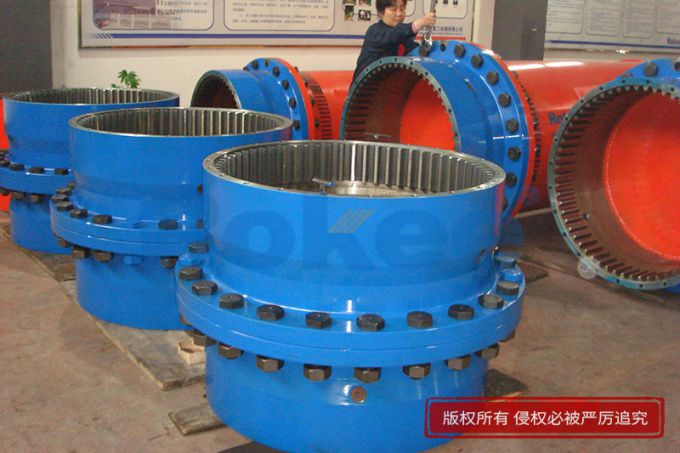
As a core mechanical transmission component in modern industrial systems, gear shaft coupling serves as a critical connecting medium between rotating shafts, undertaking the essential task of transmitting torque and rotational motion while accommodating inevitable shaft misalignment and operational deviations in mechanical equipment. Unlike rigid connecting components that pursue absolute shaft alignment and fixed connection, gear shaft coupling integrates flexible compensation performance with high-load transmission capacity, making it adaptable to complex and variable working conditions that most ordinary couplings cannot bear. It has become an indispensable basic part in heavy-duty machinery, high-speed operating equipment and continuous production industrial systems, supporting the stable and long-term operation of various mechanical transmission structures.
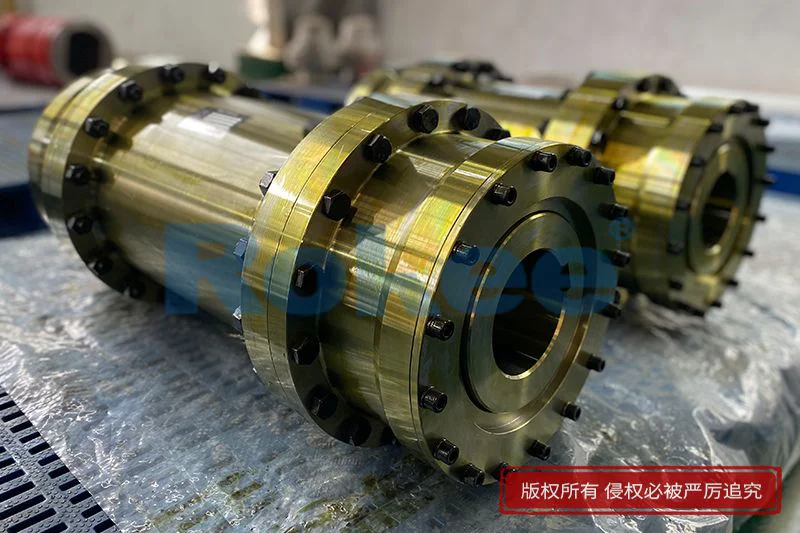
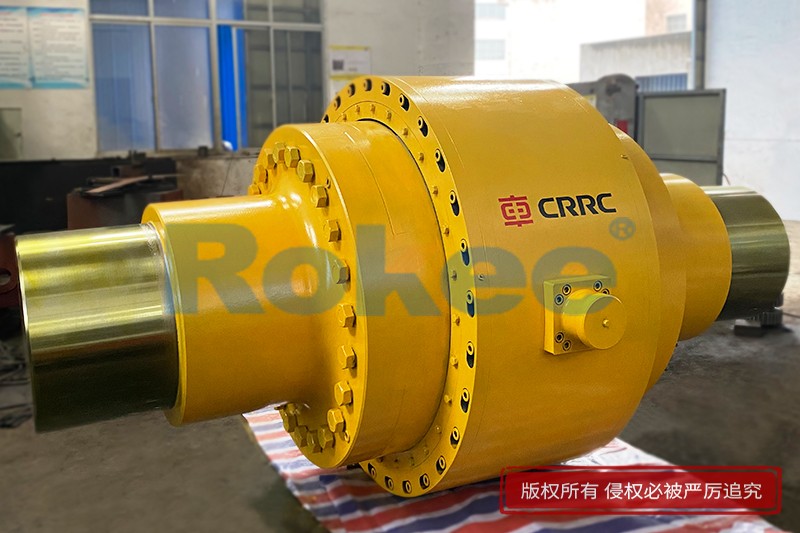

The basic structural composition of gear shaft coupling is simple and compact, with the core operating unit composed of two external gear hubs and one or two internal gear sleeves. The external gear hubs are fixedly installed on the driving shaft and driven shaft respectively through fastening structures, while the internal gear sleeves mesh with the external gear teeth to form a closed transmission pair. This unique gear meshing structure abandons the single friction transmission or rigid connection mode of traditional couplings, and relies on the precise engagement of multiple gear teeth to share transmission load, which fundamentally enhances the overall torque bearing capacity of the component. In actual operation, the rotational power of the driving shaft is transmitted to the external gear hub, and then evenly transferred to the internal gear sleeve through the meshing gear teeth, finally driving the driven shaft hub to rotate synchronously, realizing the continuous and stable transmission of mechanical power between the two shafts.
The outstanding performance of gear coupling is mainly reflected in its excellent misalignment compensation capability, which solves the core pain point of shaft connection in mechanical operation. In the assembly and long-term operation of mechanical equipment, it is impossible to achieve absolute perfect alignment between two connected shafts. Processing errors of parts, assembly deviations, structural deformation caused by long-term load operation, and thermal expansion and contraction of equipment during high-speed operation will lead to different degrees of angular deviation, radial offset and axial displacement between driving and driven shafts. Ordinary rigid couplings will generate huge additional stress at the shaft connection under such conditions, resulting in severe wear of shaft bodies and bearings, increased equipment vibration and noise, and even fatigue damage and equipment shutdown in severe cases. In contrast, the specially optimized tooth profile structure of gear shaft coupling can effectively adapt to these deviations. The most widely used crowned tooth design optimizes the outer gear tooth tip into an arc spherical structure, which makes the gear teeth form linear contact during meshing rather than point contact. This structural improvement enables the gear pair to produce gentle sliding and rolling displacement during operation, reasonably releasing the additional mechanical stress caused by shaft misalignment, and realizing flexible compensation for multiple dimensional deviations.
Compared with other types of flexible couplings, gear shaft coupling has prominent advantages in load performance and structural compactness. Under the same outer dimension and installation space, its multi-tooth simultaneous meshing structure can bear far greater torque load than diaphragm couplings, sleeve couplings and other products. This feature makes it particularly suitable for heavy-load transmission scenarios, where equipment needs to output large torque to drive heavy mechanical structures to operate stably. At the same time, the compact integrated structure avoids the bulky volume and complex assembly of some high-load couplings, which not only saves the installation space of mechanical equipment, but also simplifies the overall structural design of the transmission system. In addition, the gear meshing transmission mode has high transmission efficiency, with almost no power loss in the torque transmission process, which effectively guarantees the overall operating efficiency of mechanical equipment and meets the energy-saving and efficient operation requirements of modern industrial production.
Gear shaft coupling can be roughly divided into straight tooth type and crowned tooth type according to different tooth profile designs, and the two types have distinct application characteristics and performance differences. Straight tooth gear coupling adopts linear straight tooth structure, with simple processing technology and stable basic transmission performance. It is more suitable for working conditions with low operation speed, small load fluctuation and negligible shaft misalignment, and shows good cost performance and operational stability in conventional medium and low-load transmission scenarios. Crowned tooth gear coupling, as an upgraded optimized structure, has completely improved the stress state of gear teeth. The arc tooth profile makes the contact position of gear teeth always stay in the middle of the tooth surface during meshing, avoiding stress concentration at the tooth tip and tooth root. This optimization greatly improves the misalignment tolerance of the coupling, reduces the wear rate of gear teeth, and extends the service life of the product. It is the preferred type for high-speed operation, heavy-load impact and frequent start-stop working conditions, and can maintain stable transmission performance in complex and harsh operating environments for a long time.
In terms of operational adaptability, gear shaft coupling has strong environmental tolerance and working condition applicability. It can maintain normal and stable operation in a wide temperature range, and is not easily affected by conventional environmental temperature changes, which enables it to adapt to outdoor open-air operation equipment and high-temperature workshop production equipment. Meanwhile, the sealed structural design of most gear shaft couplings can effectively isolate external dust, debris, moisture and other pollutants, preventing foreign matters from entering the gear meshing area to cause tooth surface abrasion, meshing jamming and other failures. This excellent environmental adaptability makes it widely used in mining machinery, metallurgical equipment, building materials machinery and other industrial fields with harsh working environments. In addition, the coupling can resist certain alternating load and impact load, and can buffer and absorb part of the mechanical vibration generated by equipment start-stop and load mutation, reducing the impact of fluctuating load on the transmission system and protecting the normal operation of shafts, bearings and other precision components.
Although gear shaft coupling has comprehensive and excellent transmission performance, its operating state is closely related to lubrication maintenance, which is a key link to ensure its long-term stable operation. The relative sliding and rolling friction between meshing gear teeth will inevitably produce friction loss during operation. Good lubrication can form a uniform oil film on the gear tooth surface, isolating direct contact between metal surfaces, reducing friction and wear, and lowering operating heat generation. Insufficient or deteriorated lubrication will lead to dry friction of gear teeth, resulting in rapid wear of tooth surfaces, increased meshing clearance, equipment vibration and noise, and even tooth surface pitting, peeling and other fatigue failures in severe cases, which will directly affect the transmission accuracy and service life of the coupling. Therefore, regular lubricant replacement and lubrication state inspection are essential in daily equipment operation management. Reasonable lubrication cycle and high-quality lubricating materials can effectively reduce the failure rate of gear shaft couplings and maintain the long-term stability of the transmission system.
In the whole industrial transmission field, the application scope of gear shaft coupling covers almost all mechanical equipment that needs high-efficiency and high-stability shaft torque transmission. In heavy industrial equipment such as mining conveyors, metallurgical rolling mills and large cranes, it undertakes heavy-load torque transmission tasks to ensure the stable operation of large mechanical structures under heavy load. In high-speed operating equipment such as mechanical processing machine tools and rotating machinery, its precise meshing transmission and small vibration characteristics ensure the high-precision operation of equipment and meet the processing and operation accuracy requirements of precision machinery. In continuous production equipment such as chemical machinery and food processing machinery, its reliable operation performance avoids frequent equipment shutdown caused by coupling failure, ensuring the continuity and efficiency of industrial production. With the continuous upgrading of modern industrial equipment towards high speed, high load and high precision, the application value and market demand of gear shaft coupling are constantly improving, and it has become a core basic component supporting the upgrading of industrial mechanical transmission systems.
In terms of service life and operational reliability, gear shaft coupling has obvious advantages over many flexible couplings. Its main body is made of high-strength alloy materials through precision processing and heat treatment, which has high structural strength, hardness and fatigue resistance. The overall structure has no vulnerable elastic parts, and will not produce aging, deformation and failure like elastic couplings after long-term operation. Under standardized installation and regular maintenance, gear shaft coupling can maintain stable performance for a long time, with low failure rate and long service cycle, which greatly reduces the equipment maintenance cost and downtime loss for industrial production. At the same time, its simple and detachable structural design facilitates daily inspection, maintenance and replacement. Operators can quickly complete the disassembly, cleaning, lubrication and replacement operations without complicated professional tools and processes, which improves the efficiency of equipment maintenance and ensures the rapid recovery of equipment operation.
In summary, gear shaft coupling integrates high torque transmission capacity, excellent misalignment compensation performance, strong environmental adaptability and long operational life, and its comprehensive performance makes it occupy an irreplaceable position in the field of mechanical transmission. From conventional medium and low-load mechanical transmission to high-speed and heavy-duty industrial equipment operation, from simple working conditions to complex and harsh industrial environments, gear shaft coupling can always adapt to diverse operational needs and provide stable and efficient power transmission guarantee for mechanical equipment. With the continuous development of mechanical manufacturing technology, the structural design, processing technology and material performance of gear shaft coupling are also constantly optimized and upgraded, which will further improve its transmission efficiency, misalignment tolerance and service life, and provide more reliable basic support for the efficient and stable operation of modern industrial mechanical systems.
« Gear Shaft Couplings » Update Date: 2026/7/17
Contact
If you require custom machined couplings, please contact Rokee via the contact information below for inquiries.
Email: https://www.gshmdpq.com
 WeChat


