Gear Sleeve Couplings
Rokee is a manufacturer of gear sleeve couplings from china, we can provide non-standard custom gear sleeve couplings based on parameters or drawings supplied by customers, with export support available.

Gear sleeve coupling stands as one of the most robust and versatile mechanical transmission components widely adopted in modern industrial mechanical systems, serving as a critical connecting medium between rotating shafts in power transmission equipment. Designed to transfer torque efficiently while accommodating various forms of shaft misalignment, this mechanical part integrates precise gear meshing structure and compact sleeve assembly, achieving a perfect balance between high load capacity, operational stability and structural adaptability. Unlike flexible couplings that rely on elastic deformation or rigid couplings with zero misalignment tolerance, gear sleeve couplings combine the rigidity of gear transmission with the flexible compensation capability of sleeve structures, enabling stable power output under complex and dynamic operating conditions, which makes them indispensable in heavy-duty mechanical transmission scenarios.
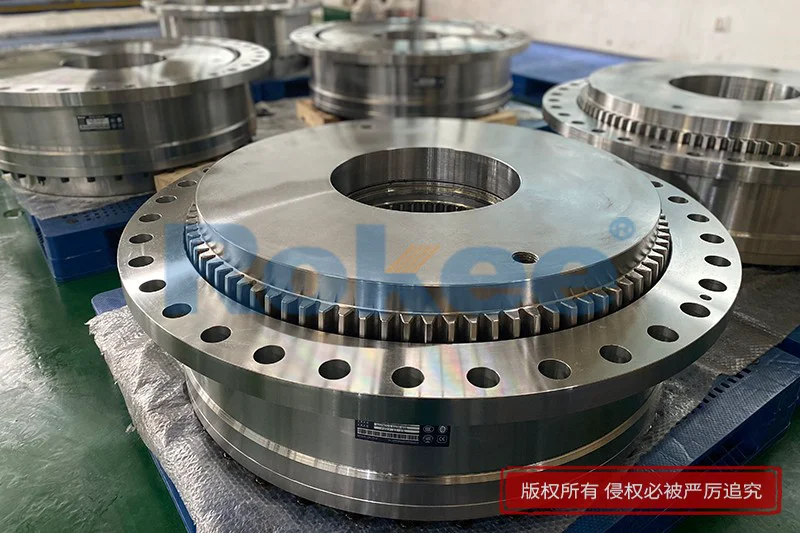
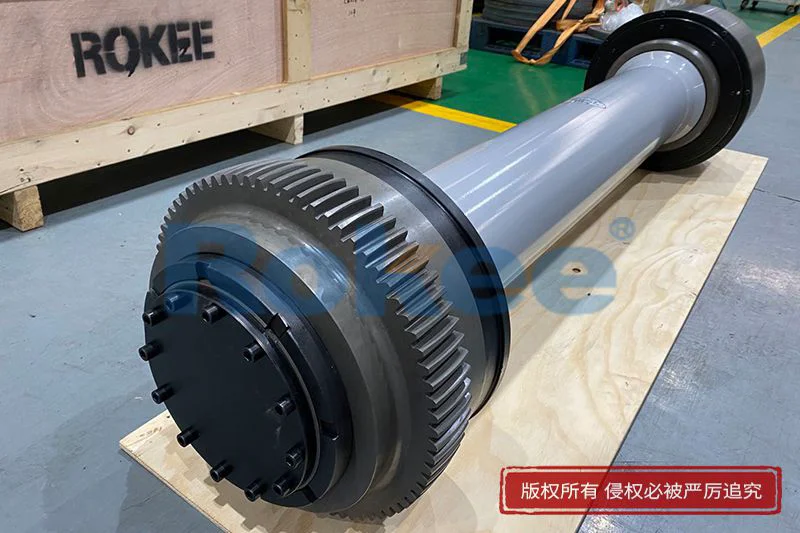

The basic structural composition of a gear sleeve coupling is sophisticated yet highly integrated, consisting of two external gear hubs fixed on the driving and driven shafts respectively and a hollow cylindrical sleeve with internal gear teeth that matches the external gear profile. The external gear hubs are precision-machined with uniform gear teeth on the outer circumference, while the inner wall of the sleeve is processed with corresponding internal gear teeth. In assembly, the two gear hubs are inserted into both ends of the sleeve, realizing full meshing fit between internal and external gear teeth. To further optimize operational performance, most gear sleeve couplings adopt crowned gear tooth design, where the tooth surface presents a gentle curved transition rather than a straight flat surface. This subtle structural optimization eliminates rigid contact stress concentration during operation and creates reasonable tooth surface clearance, laying a structural foundation for the coupling to compensate for multiple types of shaft misalignment. In addition, complete sealing and lubrication auxiliary structures are equipped inside the coupling, including sealing gaskets and lubricant storage cavities, which work together to isolate external impurities and maintain long-term lubrication of meshing tooth surfaces.
The working mechanism of gear couplings follows the basic mechanical principle of gear meshing transmission, realizing synchronous rotation and torque transfer between disjointed driving and driven shafts. When the power equipment starts to operate, the driving shaft drives the fixed external gear hub to rotate synchronously, and the torque generated by rotation is transmitted to the internal gear sleeve through the meshing contact of gear teeth. Driven by the sleeve, the other external gear hub connected to the driven shaft rotates synchronously, thus completing the continuous and efficient transmission of power and torque. During the entire power transmission process, the unique matching structure of gear teeth and sleeve allows relative micro-displacement between the two connected shafts. When the installation deviation, equipment vibration or thermal deformation causes parallel offset, angular deflection or axial displacement between the driving and driven shafts, the meshing gear teeth can produce slight sliding and swinging within the reserved clearance range. This micro-movement does not interfere with the normal torque transmission function, but can effectively offset the misalignment error between shafts, avoid additional bending stress and friction loss caused by shaft dislocation, and ensure the continuity and stability of power transmission.
One of the core competitive advantages of gear sleeve couplings lies in their excellent comprehensive mechanical performance, especially the outstanding high torque transmission capacity under compact structural dimensions. Benefiting from the multi-tooth simultaneous meshing structure, the load is evenly distributed on multiple gear tooth pairs during operation, avoiding the defect of local overload and easy damage of single-point contact transmission structures. This structural characteristic enables the coupling to bear huge instantaneous impact load and long-term stable load, making it suitable for heavy-load industrial transmission scenarios that require high power output. Meanwhile, the overall structure of the gear sleeve coupling is extremely compact, with small axial and radial occupation space, which can adapt to equipment installation environments with limited structural space. Compared with other high-load coupling products, it achieves higher torque transmission efficiency with smaller volume and lighter weight, effectively optimizing the overall structural layout of mechanical equipment and reducing the space occupation of transmission components.
In terms of operational stability and environmental adaptability, gear sleeve couplings exhibit remarkable superiority. The all-metal main body structure has extremely high structural rigidity and mechanical strength, which can resist mechanical fatigue and structural deformation caused by long-term high-speed operation and frequent load changes. The precisely matched gear tooth surface ensures smooth meshing operation, low operational vibration and low noise, avoiding the abnormal vibration and noise problems that are easy to occur in flexible couplings after long-term use and aging. In addition, through surface strengthening treatment, the gear and sleeve components obtain excellent wear resistance, oxidation resistance and corrosion resistance, which can maintain stable working performance in harsh working environments such as high temperature, low temperature, dust pollution and humid atmosphere. Whether it is continuous high-intensity operation or intermittent variable-load operation, the coupling can maintain consistent transmission accuracy and structural stability, with low performance attenuation rate and long effective service life.
Lubrication and sealing systems are key auxiliary structures that determine the service life and operational reliability of gear sleeve couplings, and reasonable lubrication management is the core link to maintain the efficient operation of the coupling. The interior of the coupling is designed with an independent lubrication cavity, which can store a certain amount of high-performance lubricating grease or lubricating oil. During the rotation process of the coupling, the lubricant can uniformly cover all meshing tooth surfaces, forming a stable lubricating oil film between the contact surfaces of gear teeth. This oil film can effectively reduce sliding friction and wear between gear teeth, lower frictional heat generation, and avoid tooth surface scratch, abrasion and sintering failure caused by dry friction. At the same time, the complete sealing structure composed of high-performance sealing elements can completely isolate external dust, moisture, metal debris and other impurities from the internal meshing area, preventing impurities from entering the tooth surface gap to cause abrasive wear and transmission jamming. Good sealing performance also avoids the leakage of internal lubricant, maintains the long-term stability of the internal lubrication environment, and reduces the frequency of supplementary lubrication and maintenance operations.
Gear sleeve couplings have extremely wide application scenarios, covering almost all industrial fields that require high-efficiency and stable shaft power transmission. In heavy machinery and engineering equipment, they are applied to the transmission systems of large hoisting equipment, conveyor equipment and crushing equipment, stably bearing the heavy-load torque output of equipment and adapting to the vibration and impact generated during equipment operation. In metallurgy and rolling industry, the coupling can adapt to the high-temperature working environment of rolling equipment and the frequent variable-load operation state, ensuring the synchronous and stable operation of each transmission shaft of the rolling mill. In energy and power equipment, it serves the transmission structure of power generation equipment and pump equipment, realizing efficient power transmission and reducing energy loss in the transmission process. In addition, in chemical industry, building materials, port machinery and other fields, gear sleeve couplings also become the preferred transmission connecting components due to their strong adaptability and high reliability, providing stable technical support for the continuous operation of industrial production lines.
In actual industrial application, the installation accuracy and daily maintenance level directly affect the service performance and service life of gear sleeve couplings. During the installation process, it is necessary to ensure the coaxiality of the driving and driven shafts within a reasonable range, avoid excessive installation misalignment exceeding the compensation limit of the coupling, and prevent long-term eccentric operation from causing accelerated wear of gear teeth and reduced transmission efficiency. The fastening state of the coupling and the matching tightness of gear teeth should be checked regularly in daily operation. Loose assembly will cause impact and vibration during operation, while excessive tightening will lead to excessive contact stress of gear teeth and accelerate fatigue damage. Regular inspection of the sealing state and lubricant quality is also essential. Aging and damaged sealing elements should be replaced in a timely manner, and deteriorated and failed lubricants should be cleaned and supplemented to ensure that the internal meshing state is always in the best condition. Standardized installation and scientific maintenance can not only maximize the working performance of the coupling, but also effectively extend its service life and reduce the operating cost of equipment.
With the continuous upgrading of modern industrial equipment towards high speed, high precision and high intelligence, the design and manufacturing technology of gear sleeve couplings is also constantly optimized and innovated. Modern manufacturing processes realize ultra-precision processing of gear tooth surfaces, effectively improving the meshing accuracy and contact uniformity of gear teeth, further reducing transmission vibration and energy loss. The continuous innovation of material technology makes the coupling materials have higher specific strength, better wear resistance and fatigue resistance, and can adapt to more extreme working conditions. At the same time, the structural design is gradually developing towards miniaturization, integration and low maintenance. Optimized structural layout reduces the overall weight and volume of the coupling, and the improved sealing and lubrication structure prolongs the maintenance cycle, which is more in line with the development needs of modern industrial equipment for high efficiency and low failure rate. In the future, with the continuous progress of industrial manufacturing technology, gear sleeve couplings will achieve further breakthroughs in transmission accuracy, load capacity and environmental adaptability, and play a more important role in the field of mechanical power transmission.
As a mature and high-performance mechanical transmission component, gear sleeve coupling relies on its unique gear meshing transmission principle and flexible sleeve compensation structure to solve many pain points in industrial shaft transmission, such as misalignment adaptation, heavy-load transmission and stable operation. Its compact structure, strong load-bearing capacity, excellent misalignment compensation performance and long-term operational stability make it have irreplaceable application value in the industrial field. From basic heavy machinery transmission to high-precision industrial equipment operation, gear sleeve couplings always provide reliable connection and transmission guarantee for mechanical systems. With the continuous development of industrial modernization, this classic mechanical component will continue to iterate and upgrade with technological progress, continuously adapt to the increasingly complex industrial working conditions and higher equipment operation requirements, and provide solid basic support for the stable and efficient operation of modern industrial mechanical systems.
« Gear Sleeve Couplings » Update Date: 2026/7/17
Contact
If you require custom machined couplings, please contact Rokee via the contact information below for inquiries.
Email: https://www.gshmdpq.com
 WeChat


