Gear Tooth Couplings
Rokee is a manufacturer of gear tooth couplings from china, we can provide non-standard custom gear tooth couplings based on parameters or drawings supplied by customers, with export support available.
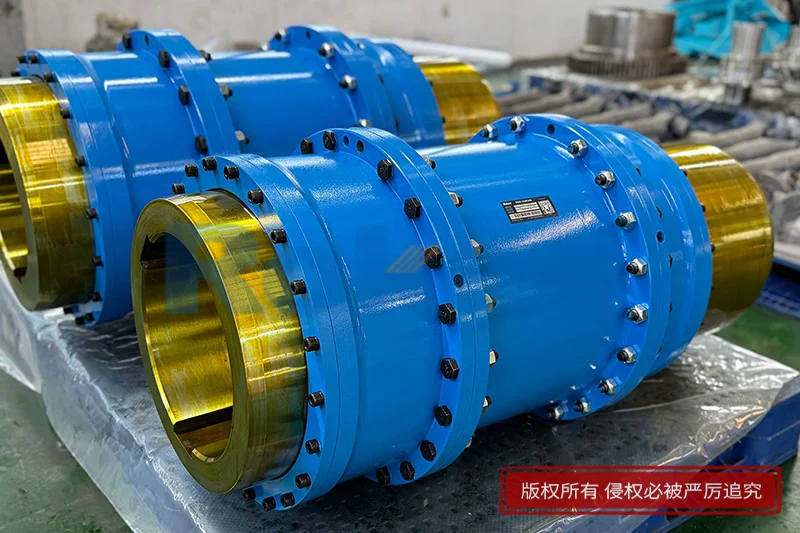
As a core mechanical transmission component widely applied in industrial power systems, gear tooth coupling serves as a critical connecting medium between rotating shafts, undertaking the key task of transmitting torque, rotational speed and mechanical power while adapting to complex operating deviations in mechanical operation. Classified as a flexible rigid coupling, it integrates the high rigidity of rigid transmission parts and the adaptive flexibility of flexible connection structures, breaking through the transmission limitations of traditional coupling devices that either lack deviation compensation capability or cannot bear heavy loads. Its unique internal and external gear meshing structure endows it with outstanding comprehensive performance, making it indispensable in heavy-duty mechanical transmission scenarios that require stable power output, high load capacity and certain misalignment tolerance. Unlike ordinary elastic couplings that rely on elastic component deformation to achieve buffering and deviation compensation, gear tooth coupling realizes power transmission and displacement adaptation purely through the precise meshing fit of gear tooth profiles, forming a highly reliable mechanical transmission mechanism with compact structure and strong environmental adaptability.
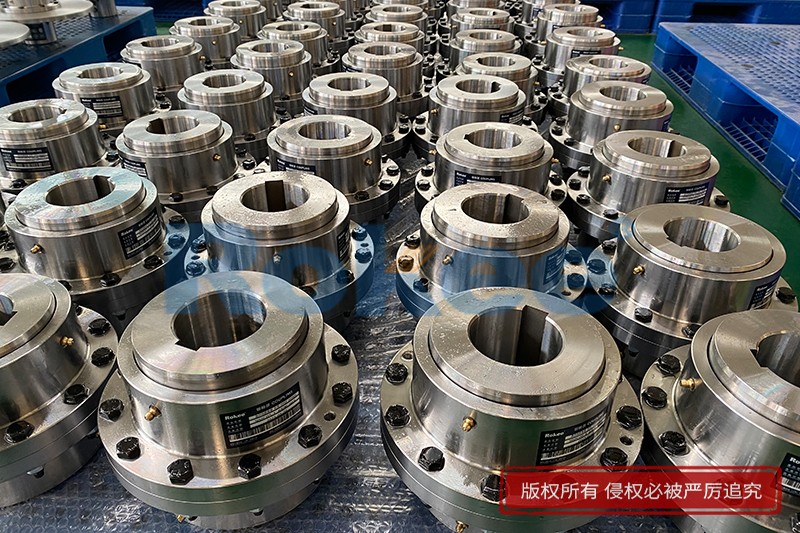

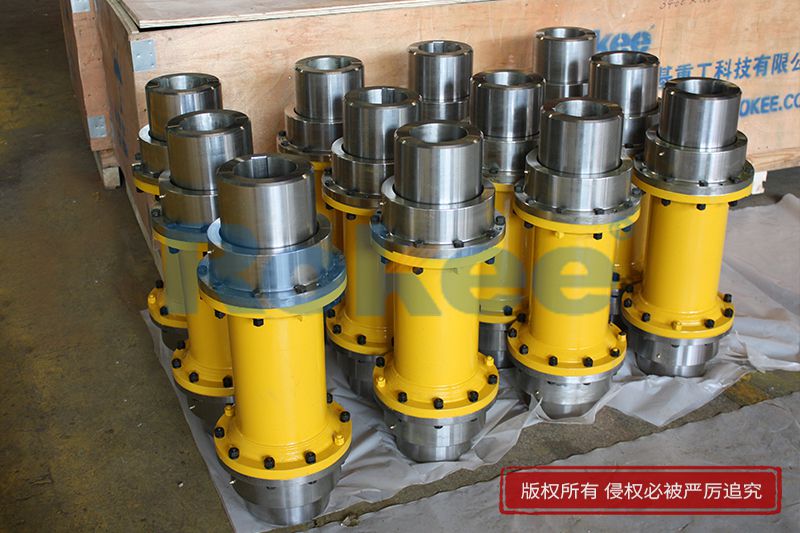
The basic structural composition of gear tooth coupling is sophisticated and practical, with all core components cooperating closely to complete efficient power transmission. The main body is composed of two external gear hubs fixed on the driving shaft and driven shaft respectively, and a shared internal gear sleeve sleeved on the outer side of the two hubs. The external gear teeth on the hub and the internal gear teeth on the sleeve form a precise meshing pair, which is the core functional area for torque transmission. To ensure the stability of the overall structure in high-speed and heavy-load operation, standard matching fasteners are used to fix and connect all components, and a complete sealing structure is equipped at both ends of the gear sleeve. This closed structural design forms an independent internal working cavity, which not only locks the lubricating medium inside the meshing area but also effectively isolates external dust, moisture, corrosive particles and other impurities, avoiding abrasive wear and electrochemical corrosion of gear tooth surfaces caused by external pollution. The overall structural layout abandons redundant accessories, achieving a highly integrated design, which enables the gear tooth coupling to maintain a small outer diameter and compact volume while possessing ultra-high torque transmission capacity, perfectly adapting to the installation space constraints of various industrial equipment.
The working principle of gear coupling is based on the involute gear meshing transmission theory, relying on the continuous and stable meshing motion between internal and external gear teeth to realize synchronous rotation and power transmission between two shafts. When the mechanical equipment starts to operate, the power source drives the driving shaft and the fixed external gear hub to rotate synchronously. The external gear teeth generate continuous uniform driving force through surface contact and meshing extrusion with the internal gear teeth of the outer sleeve, pushing the internal gear sleeve to perform synchronous rotational motion. Subsequently, the gear sleeve transmits the rotational torque to the external gear hub on the driven side through the reverse meshing action of the internal teeth, thereby driving the driven shaft to rotate synchronously and completing the whole process of power and torque transmission. In this working process, the tiny fit gaps reserved between the meshing tooth profiles are the key to its adaptive deviation compensation function. These gaps can effectively absorb and compensate multiple forms of shaft displacement generated during equipment operation, including axial displacement caused by thermal expansion and contraction of parts, radial displacement caused by installation errors and equipment vibration, and angular displacement formed by slight deflection of the shaft system. This unique working mechanism enables the coupling to maintain stable transmission state without additional auxiliary correction devices even when the connected two shafts are not completely concentric, greatly reducing the installation and operation difficulty of mechanical systems.
In terms of comprehensive performance, gear tooth coupling has incomparable advantages over many traditional coupling products, which is the core reason for its wide application in industrial fields. First of all, it has extremely high load-bearing efficiency and torque transmission density. Under the same overall dimension and installation space, its effective torque transmission capacity is far higher than that of sleeve couplings, flange couplings and common elastic couplings. This feature makes it particularly suitable for low-speed heavy-duty operating conditions, and can stably bear instantaneous impact load and alternating load generated by equipment start-stop, load switching and sudden working condition changes, avoiding transmission failure caused by load shock. Secondly, the gear tooth coupling has a wide adaptive speed range. After precise dynamic balancing processing, high-precision optimized products can not only operate stably in conventional low and medium speed scenarios, but also adapt to high-speed rotating working environments, with stable transmission accuracy and no obvious vibration and noise.
In addition, the structural wear resistance and service life of gear tooth coupling are prominent. The gear tooth profiles are processed by precision machining and surface strengthening technology, with high surface hardness, good wear resistance and strong anti-fatigue ability. The closed lubrication system ensures that all meshing tooth surfaces are always covered with a complete lubricating oil film during operation, which greatly reduces dry friction and abrasive wear between tooth surfaces, avoids tooth surface scratch, gluing and tooth breakage failures, and significantly prolongs the continuous service cycle of the coupling. Meanwhile, its overall structural rigidity is excellent, with small deformation under load, no obvious torsional deformation during torque transmission, which can effectively ensure the synchronization accuracy of the driving and driven shafts and maintain the operating precision of the whole mechanical system. Different from elastic couplings that are prone to aging, fatigue and deformation of elastic components after long-term operation, the main metal components of gear tooth coupling have stable performance and are not easy to age and fail, with more reliable long-term operation stability.
Gear tooth coupling shows strong scene adaptability and can work stably in various harsh industrial working environments. It has good temperature resistance, can adapt to low-temperature cold working conditions and high-temperature thermal operation environments, and will not have performance attenuation or structural failure due to temperature changes. At the same time, the fully sealed structural design enables it to resist the erosion of humid, dusty and slightly corrosive working media, and can operate continuously and stably in outdoor open-air equipment, workshop heavy dust equipment and chemical industrial production equipment. In terms of mechanical vibration adaptation, the gear meshing gap can absorb and buffer part of the vibration impact generated by the operation of the shaft system, reduce the vibration conduction between the driving and driven equipment, and play a certain protective role for the whole transmission system and supporting equipment. Moreover, the installation and disassembly process of gear tooth coupling is simple and convenient, with low assembly precision threshold and good versatility. It does not need complex debugging procedures after installation, and can quickly reach the stable working state, which greatly improves the equipment assembly and maintenance efficiency.
In practical industrial applications, gear tooth coupling also has targeted performance characteristics and usage limitations, and reasonable selection and application according to working conditions are the key to giving full play to its performance advantages. Although it can compensate for slight misalignment of the shaft system, excessive installation deviation or long-term cumulative displacement will cause uneven stress on the meshing gear teeth, resulting in local accelerated wear of tooth surfaces, increased transmission noise and even reduced transmission efficiency. Therefore, in the equipment installation process, it is necessary to control the shaft misalignment within the reasonable adaptation range of the coupling to ensure uniform stress on all gear teeth and stable meshing state. In addition, compared with flexible couplings with strong buffering and damping performance, the vibration damping and impact buffering capacity of gear tooth coupling is relatively limited, and it cannot eliminate severe vibration and strong impact generated by equipment operation. For working conditions with extremely frequent impact loads and severe vibration, it is necessary to cooperate with corresponding damping structures or select matched auxiliary devices to optimize the transmission system.
Lubrication and maintenance are crucial links to ensure the long-term stable operation of gear tooth coupling, and the operating state of the lubrication system directly determines the service life and working performance of the product. The internal meshing operation of gear teeth relies entirely on the lubricating medium to reduce friction and wear. Clean and high-performance lubricating grease or lubricating oil can form a uniform and tough oil film on the tooth surface, isolating direct contact between metal surfaces, reducing friction coefficient, and taking away the heat generated by meshing friction and tiny metal wear debris in time. In the daily operation of the equipment, regular inspection of the sealing performance of the coupling is required to prevent lubricant leakage caused by aging and damage of the sealing ring, and avoid lubrication failure. At the same time, regular replacement of the lubricating medium is necessary. Long-term used lubricant will be mixed with wear debris and impurities, which will increase friction and cause abrasive wear on the tooth surface, affecting the transmission accuracy and service life of the coupling. In addition, it is necessary to regularly check the fastening state of the connecting fasteners to prevent the fasteners from loosening due to long-term vibration, which will lead to structural dislocation, uneven meshing of gear teeth and abnormal equipment operation.
With the continuous upgrading of modern industrial manufacturing technology and the continuous improvement of mechanical transmission system requirements, the design and processing technology of gear tooth coupling are also constantly optimized and innovated. The traditional straight-tooth structure is gradually upgraded to the crowned tooth optimized structure. The tooth profile with slight crown deformation can provide larger misalignment compensation space, make the gear tooth meshing contact more uniform under the condition of shaft displacement, further reduce local stress concentration, and effectively avoid tooth edge wear and stress damage. At the same time, the application of precision machining technology and surface treatment technology further improves the machining accuracy, surface finish and comprehensive mechanical properties of gear teeth, making the coupling have higher transmission efficiency, lower operation noise and longer service life. The lightweight and integrated structural design optimization also reduces the overall weight of the coupling on the premise of ensuring load-bearing performance, reduces the rotational inertia of the transmission system, and improves the response speed and operation flexibility of mechanical equipment.
In the whole field of mechanical transmission, gear tooth coupling occupies an irreplaceable market position with its balanced comprehensive performance of high load, high efficiency, high stability and strong adaptability. It is widely used in heavy machinery, metallurgical equipment, mining machinery, chemical transmission systems, power transmission equipment and other industrial fields involving heavy-load power transmission. In the complex and changeable industrial production environment, it undertakes the important task of connecting power components and executing components, ensuring the continuous, stable and efficient operation of the whole mechanical system. Compared with other types of couplings, its comprehensive cost performance in long-term operation is more prominent. Although the initial machining and manufacturing cost is higher than that of ordinary simple couplings, its advantages of long service life, low failure rate and simple later maintenance greatly reduce the comprehensive operation and maintenance cost of equipment, creating higher economic benefits for industrial production.
In conclusion, gear tooth coupling is a mature and efficient mechanical transmission component formed based on precise gear meshing principle and optimized structural design. Its unique internal and external gear meshing structure, excellent load-bearing transmission performance, reliable deviation compensation capability and strong environmental adaptability make it a key connecting part for heavy-duty and high-stability mechanical transmission systems. In the future, with the continuous development of intelligent manufacturing and high-precision mechanical equipment, the performance optimization of gear tooth coupling will be further deepened, and it will be more widely used in more sophisticated and high-end mechanical transmission scenarios, providing more stable and reliable basic guarantee for the efficient operation of modern industrial equipment. Reasonable type selection, standardized installation and scientific daily maintenance can maximize the service performance and service life of gear tooth coupling, so that it can always maintain efficient and stable working state in long-term industrial operation and create continuous value for mechanical transmission systems.
« Gear Tooth Couplings » Update Date: 2026/7/17
Contact
If you require custom machined couplings, please contact Rokee via the contact information below for inquiries.
Email: https://www.gshmdpq.com
 WeChat


