Curved Jaw Couplings
Rokee is a manufacturer of curved jaw couplings from china, we can provide non-standard custom curved jaw couplings based on parameters or drawings supplied by customers, with export support available.

In the intricate ecosystem of mechanical power transmission, the efficiency, stability, and durability of shaft connection components determine the overall operational quality of industrial equipment. Among numerous flexible coupling solutions, curved jaw coupling stands out as a versatile and high-reliability transmission component, widely adopted in light, medium, and heavy-duty mechanical systems that require stable torque transmission, vibration damping, and misalignment compensation. As a core elastic coupling with a mature optimized structure, it integrates precise mechanical design and elastic material performance, perfectly balancing rigid torque transmission and flexible buffering functions, and has become an indispensable basic component in modern industrial manufacturing, automation equipment, and power machinery fields.
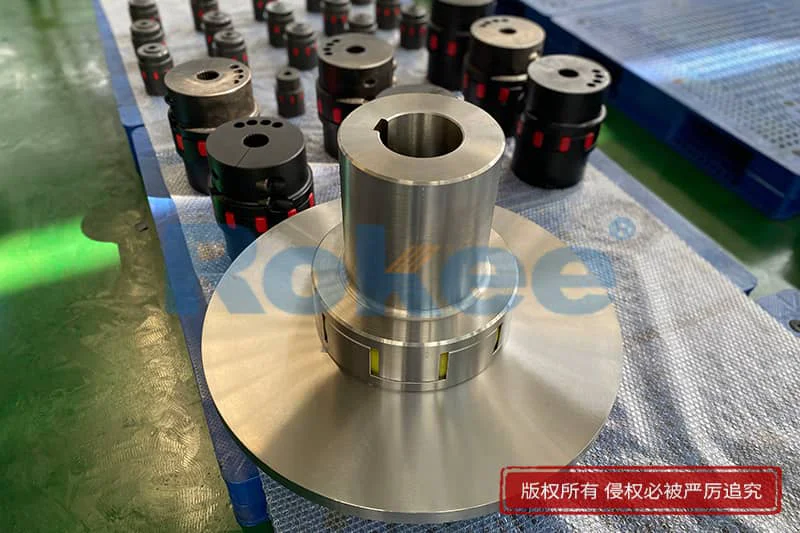

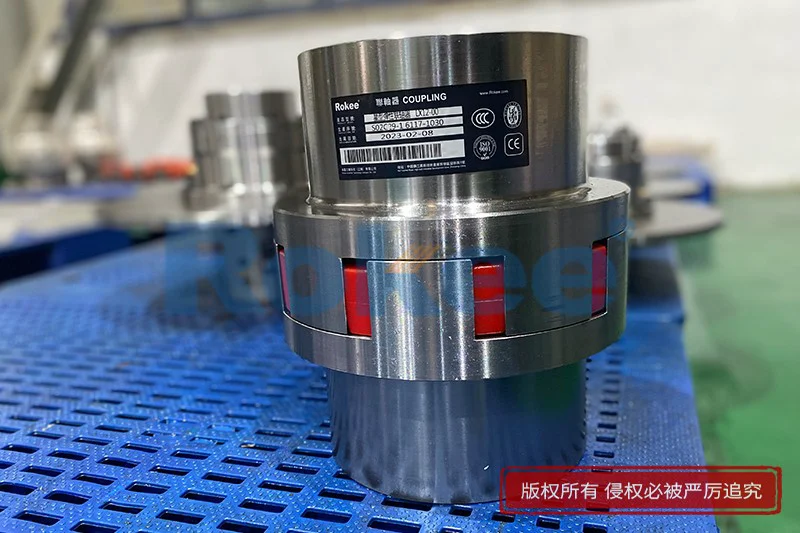
The fundamental structural design of curved jaw coupling follows the dual functional logic of rigid support and flexible buffer, consisting of two symmetric metal jaw hubs and an integral elastic spider element clamped between them. Different from traditional straight jaw couplings that rely on linear contact for torque transmission, the core innovation of curved jaw coupling lies in the curved profile design of the jaw teeth on the metal hubs. This streamlined curved structure enables the elastic insert to achieve surface contact rather than line contact during torque transmission, effectively optimizing the internal stress distribution of the coupling system. The overall structure is compact and concise, with no complex auxiliary transmission parts or locking structures, which lays a solid foundation for its stable operation, convenient installation, and low maintenance cost in long-term industrial scenarios.
The working principle of curved jaw coupling is based on elastic compression torque transmission and flexible deformation adaptive compensation. During equipment operation, the driving shaft drives the active hub to rotate, and the curved jaws uniformly squeeze the intermediate elastic spider to transmit torque to the driven hub, thereby realizing synchronous operation of the two shafts. In this process, the elastic element undergoes controllable elastic deformation under pressure, which brings two core functional advantages. On one hand, the elastic deformation can effectively absorb the instantaneous impact load generated during equipment start-stop, sudden load change, and variable-speed operation, suppressing torsional vibration in the transmission system. On the other hand, the flexible deformation of the elastic insert can adaptively compensate for multi-dimensional misalignment between the driving shaft and the driven shaft, including axial displacement, radial offset, and angular deflection caused by installation errors, equipment vibration, or thermal deformation during operation.
The unique curved contact design endows the coupling with superior torque transmission performance compared with conventional jaw couplings. The enlarged curved contact area disperses the concentrated contact pressure generated during torque transmission, avoiding local stress overload and premature wear of the elastic element that commonly occurs in linear contact structures. This structural advantage enables curved jaw coupling to bear higher torque loads under the same volume and dimensional specifications, achieving a perfect combination of compact structure and high torque capacity. Even under long-term continuous operation or periodic variable load conditions, the uniform stress distribution can maintain stable transmission accuracy, effectively reducing the fatigue loss of components and extending the overall service life of the coupling.
Misalignment compensation capability is one of the most valuable core performances of curved jaw coupling in industrial applications. In actual mechanical installation and operation, absolute coaxiality of dual shafts is almost unattainable, and tiny misalignments will inevitably occur due to manual installation errors, equipment base settlement, mechanical vibration, and thermal expansion and contraction of metal components. These subtle deviations, if not compensated, will generate additional alternating loads on the transmission shaft system, leading to increased component wear, aggravated equipment vibration, reduced transmission efficiency, and even premature failure of bearings and shafts. Curved jaw coupling can adaptively offset these adverse effects through the flexible deformation of the elastic element, with a reasonable tolerance range for angular, radial, and axial misalignments. This excellent compensation performance greatly reduces the assembly precision requirements of mechanical equipment and improves the fault tolerance of the transmission system in complex operating environments.
Vibration damping and impact buffering performance further expand the application boundaries of curved jaw coupling in high-precision and high-stability mechanical scenarios. Industrial equipment such as power motors, internal combustion engines, and variable-frequency devices will produce periodic vibration and instantaneous impact during operation, which will be directly transmitted to the entire mechanical system through the rigid shaft connection, affecting the operating accuracy of precision components and reducing the stability of equipment operation. The high-elasticity intermediate element of curved jaw coupling can effectively absorb and attenuate torsional vibration and mechanical impact in the transmission process, isolate vibration transmission between the driving and driven ends, and maintain the smooth and continuous power output of the equipment. This characteristic is particularly critical for precision transmission equipment and processing devices that are sensitive to vibration and impact.
The material diversity of curved jaw coupling components enables it to adapt to differentiated working conditions and environmental requirements. The metal jaw hubs are manufactured from a variety of high-strength metal materials, each with targeted performance characteristics. Aluminum alloy hubs feature light weight, high processing precision, and good corrosion resistance, suitable for light-duty, high-speed, and low-load equipment scenarios that require lightweight design. Gray iron hubs have excellent vibration absorption and casting performance, with stable rigidity and low cost, widely used in conventional medium-duty industrial equipment. Steel and sintered steel hubs boast ultra-high structural strength and fatigue resistance, capable of withstanding heavy torque and frequent impact loads, applicable to heavy-duty mechanical systems. Stainless steel hubs are adopted for special environments with high humidity, corrosive gas, or liquid erosion, ensuring long-term structural stability and anti-oxidation performance.
The elastic spider element, as the core flexible functional component, also has diversified material and hardness configurations to match different operating needs. Urethane and Hytrel are the most commonly used elastic materials, with adjustable durometer levels to form differentiated flexibility and load-bearing performance. Low-durometer elastic elements have excellent flexibility and vibration absorption effects, suitable for low-torque, high-speed, and vibration-sensitive working conditions, providing superior buffering and damping performance. High-durometer elastic materials have enhanced rigidity and torque resistance, which can reduce torsional deformation during high-load operation and ensure high-precision torque transmission, meeting the operating requirements of medium and heavy-duty equipment. In addition, optimized elastic materials can maintain stable physical properties within a wide temperature range, avoiding soft failure in high-temperature environments or brittle cracking in low-temperature environments, and adapting to complex and variable industrial operating conditions.
Curved jaw coupling has extremely wide industrial applicability, covering light, medium, and heavy-duty power transmission scenarios across multiple industries. In general industrial machinery, it is commonly used for shaft connection of pumps, compressors, blowers, fans, mixers, and conveyors, stabilizing the power transmission of conventional production equipment and reducing equipment failure rates caused by vibration and misalignment. In power equipment systems, it matches with motors, generator sets, and reduction gearboxes to realize efficient and stable power conversion and transmission, ensuring the continuous and reliable operation of power systems. In automated production equipment and precision mechanical devices, its low vibration, low wear, and high-precision transmission characteristics can effectively guarantee the processing accuracy and operating stability of automated production lines. In engineering machinery and special power equipment, its high torque resistance and impact resistance enable it to adapt to harsh working conditions with variable loads and frequent start-stops.
In addition to superior functional performance, curved jaw coupling also has prominent advantages in installation, use, and later operation and maintenance. Its integrated split structure design makes the assembly and disassembly process simple and efficient, without the need to disassemble other mechanical components of the equipment, greatly reducing the time cost of equipment installation and maintenance. The entire coupling does not require lubrication during operation, eliminating the daily maintenance work of oil injection and oil change, avoiding equipment pollution and environmental problems caused by lubricating oil leakage, and reducing the long-term operating cost of the equipment. The wearing parts are mainly the intermediate elastic elements, which have low replacement cost and convenient replacement process, enabling the equipment to quickly resume normal operation after component aging and failure, and improving the overall operating efficiency of the production system.
Safety and operational stability are also important advantages of curved jaw coupling in industrial applications. The structural design has inherent fail-safe characteristics. Even when the elastic element is severely worn or fails due to long-term overload operation, the metal curved jaws of the two hubs can still mesh with each other to maintain basic torque transmission, avoiding sudden shutdown or equipment damage caused by instantaneous disconnection of the transmission system. This safety design provides a reliable buffer for equipment maintenance and fault handling, effectively preventing major mechanical failures and production accidents. At the same time, the optimized curved contact structure avoids sharp friction and stress concentration between components, reducing the generation of wear debris and abnormal noise during operation, realizing low-noise and clean operation of the equipment.
In terms of long-term operational economy and system compatibility, curved jaw coupling also shows outstanding comprehensive advantages. Its compact structural form saves installation space, which is very suitable for modern mechanical equipment with integrated and miniaturized design trends. The diversified material and hardness matching schemes can accurately adapt to different load levels, operating speeds, and environmental conditions, avoiding performance redundancy or function deficiency caused by single-type coupling matching. The excellent fatigue resistance and stable mechanical properties greatly extend the service life of the coupling, reducing the frequency of component replacement and equipment downtime, and creating stable economic benefits for industrial production.
With the continuous upgrading of modern industrial manufacturing technology and the increasingly stringent requirements for equipment energy saving, efficiency, and stability, the structural optimization and performance improvement of curved jaw coupling are also ongoing. Modern precision machining technology further improves the dimensional accuracy and surface finish of the curved jaws, making the contact stress distribution more uniform and the torque transmission more stable. New elastic composite materials continuously enhance the temperature resistance, wear resistance, and aging resistance of the intermediate elements, expanding the adaptable temperature range and service life of the coupling. Meanwhile, refined hardness grading and structural parameter optimization realize more accurate scene matching, enabling curved jaw coupling to better adapt to the high-precision, high-efficiency, and high-reliability development needs of modern industrial transmission systems.
In conclusion, curved jaw coupling has become a mainstream flexible power transmission component in the industrial field by virtue of its ingenious curved contact structure, excellent misalignment compensation capability, efficient vibration damping and impact buffering performance, diverse material adaptability, and low-cost maintenance advantages. It solves many practical problems in mechanical power transmission, such as installation deviation, operational vibration, load impact, and environmental adaptation, and provides a stable and reliable connection guarantee for various mechanical transmission systems. With its comprehensive performance advantages and wide scene adaptability, curved jaw coupling will continue to play an irreplaceable core role in industrial manufacturing, automated production, power machinery, and other fields, and continuously meet the high-standard operational requirements of modern mechanical equipment through continuous technological optimization and performance upgrading.
« Curved Jaw Couplings » Update Date: 2026/7/15
Contact
If you require custom machined couplings, please contact Rokee via the contact information below for inquiries.
Email: https://www.gshmdpq.com
 WeChat