Generator Couplings
Rokee is a manufacturer of generator couplings from china, we can provide non-standard custom generator couplings based on parameters or drawings supplied by customers, with export support available.

In the entire power generation system, the connection between the prime mover and the generator is the core link that converts mechanical energy into electrical energy, and generator coupling serves as the pivotal mechanical component supporting this energy conversion process. As a key transmission structure connecting the driving shaft of power equipment such as engines and turbines and the driven shaft of generators, generator coupling undertakes the fundamental task of efficient torque transmission, and its operating state directly determines the stability, efficiency and service life of the entire power generation unit. Unlike ordinary shaft connection structures, generator coupling is not a simple fixed connection device. It needs to adapt to complex and changeable operating conditions, offset various assembly and operation deviations, and resist long-term vibration, impact load and temperature changes, making it an indispensable core part of industrial power generation, emergency power supply and new energy power generation systems.

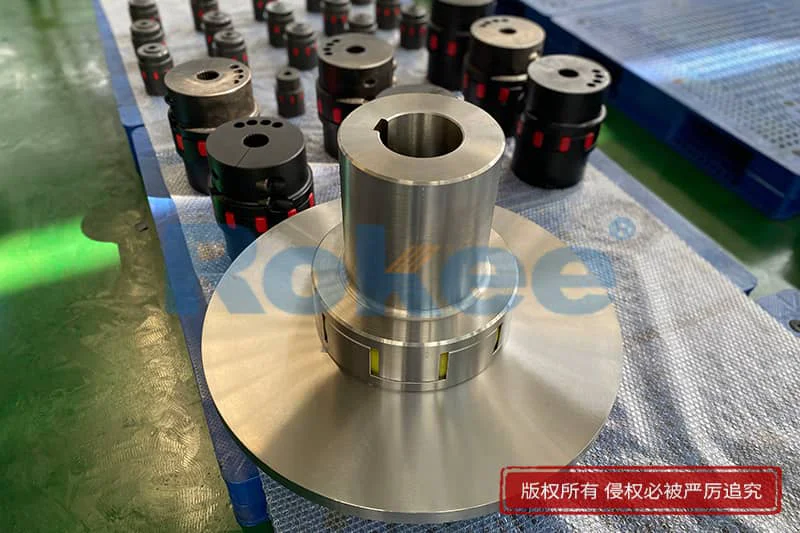

The essential functional logic of generator coupling originates from the inherent characteristics of rotating mechanical operation. In ideal mechanical design, the driving shaft and driven shaft of a power generation unit should maintain complete coaxial rotation, with no deviation in angle, position and axial direction. However, in actual engineering scenarios, absolute coaxial alignment is almost impossible to achieve. Manufacturing tolerances of mechanical parts, minor deviations in equipment assembly, foundation settlement of unit installation, thermal expansion and contraction of metal components during long-term operation, and mechanical vibration generated by high-speed operation will all cause different degrees of misalignment between the prime mover shaft and the generator shaft. These subtle deviations will not only reduce the efficiency of power transmission, but also produce additional alternating stress on the shaft system, bearings and internal components of the generator. If not buffered and compensated, such stress will gradually accumulate, leading to shaft wear, bearing damage, unit vibration and noise increase, and even sudden failure of power generation equipment in severe cases. Generator coupling is precisely designed to solve this engineering problem, realizing efficient and stable torque transmission while tolerating and offsetting various minor misalignments of the shaft system.
The core working principle of generator coupling can be summarized as flexible torque transmission and multi-dimensional deviation compensation. In terms of power transmission, the coupling firmly connects the two rotating shafts through its internal structural components, synchronizing the rotation speed and torque of the prime mover and the generator, so that the mechanical energy output by the prime mover can be continuously and stably transmitted to the generator rotor, driving it to rotate and cut magnetic lines to generate electric energy. In terms of deviation compensation, different coupling structures realize adaptive adjustment of shaft system states through their unique mechanical characteristics. Common misalignment forms in power generation systems include parallel misalignment, angular misalignment and axial displacement. Parallel misalignment refers to the parallel offset of the central axes of the two shafts; angular misalignment means the two shaft axes form a certain included angle; axial displacement is the relative displacement of the two shafts along the rotation axis caused by thermal expansion or mechanical loosening. High-quality generator coupling can simultaneously adapt to these three types of misalignment within a reasonable range, eliminate additional mechanical stress caused by deviation, and ensure the shaft system operates in a stable stress state all the time.
According to different structural forms and working mechanisms, generator couplings can be divided into rigid couplings and flexible couplings, and flexible couplings can be further subdivided into mechanical flexible couplings and hydrodynamic flexible couplings, each with distinct application characteristics and applicable working conditions. Rigid couplings are the simplest connection form, which fix the driving shaft and driven shaft into an integrated structure through rigid fastening parts. This type of coupling has the advantages of simple structure, low energy loss and high transmission efficiency, and can realize precise and synchronous torque transmission. However, rigid couplings have almost no deviation compensation capability and vibration buffering performance, requiring extremely high assembly accuracy and installation foundation stability. They are only suitable for small-power power generation units with stable operation, fixed installation foundation and extremely high shaft alignment accuracy, and are rarely used in large and medium-sized industrial power generation systems due to poor adaptability to complex working conditions.
Flexible couplings are the mainstream type applied in modern generator systems, and their core advantage lies in the flexible deformation or fluid buffer structure to realize deviation adaptation and vibration damping. Mechanical flexible couplings rely on the elastic deformation of internal elastic components such as discs, diaphragms and rubber parts to complete torque transmission and deviation compensation. During the operation of the unit, the elastic components can produce tiny elastic deformation following the shaft misalignment, effectively absorbing the vibration and impact generated by shaft system deviation, and avoiding rigid friction and stress concentration between shafts. This kind of coupling has stable performance, convenient maintenance and strong adaptability to conventional working conditions, and is widely used in diesel generator sets, small and medium-sized wind power generators and conventional thermal power generation auxiliary units. Its limitation is that the elastic components will produce fatigue loss after long-term high-frequency operation, requiring regular inspection and replacement to avoid transmission failure caused by aging parts.
Hydrodynamic couplings, also known as fluid couplings, are high-performance transmission structures suitable for high-power generator units, with a completely different working principle from mechanical couplings. This type of coupling takes liquid as the power transmission medium, and its core structure consists of a driving impeller and a driven runner sealed inside the shell. When the prime mover drives the impeller to rotate, the internal liquid forms a high-speed rotating vortex under the action of the impeller blades, converting the mechanical energy of the driving shaft into liquid kinetic energy. The high-speed flowing liquid impacts the runner blades to drive the driven runner and the connected generator shaft to rotate, realizing the non-contact transmission of mechanical energy. The power transmission of hydrodynamic couplings is related to the speed difference between the driving and driven parts, which has excellent soft start and overload protection characteristics.
In the start-up stage of high-power generator units, the instantaneous starting current and mechanical impact load are extremely large, which is easy to cause damage to the generator winding and shaft system. Hydrodynamic couplings can effectively solve this problem through the fluid buffer effect. In the initial stage of start-up, the liquid flow speed is low, the transmitted torque is small, and the prime mover can start smoothly with low load; as the rotation speed increases gradually, the fluid kinetic energy increases synchronously, and the transmission torque rises steadily, realizing the smooth start of the generator unit and avoiding rigid impact. In addition, when the generator is overloaded or stuck accidentally, the speed difference between the impeller and the runner increases sharply, the fluid cannot transmit enough torque, and the power transmission is automatically disconnected, which protects the prime mover and generator equipment from overload damage. This unique soft transmission performance makes hydrodynamic couplings the preferred configuration for large-capacity power generation units such as thermal power, hydropower and large wind power generation systems.
Beyond basic torque transmission and deviation compensation, generator coupling also undertakes the important task of optimizing the dynamic performance of the entire power generation system. Torsional vibration is a common hidden danger in the operation of generator shaft systems. The periodic fluctuation of prime mover output torque and the change of generator load will cause torsional vibration of the shaft system. Long-term torsional vibration will lead to fatigue damage of shaft components, loose equipment connection and unstable power output. Excellent coupling design can effectively suppress torsional vibration through structural optimization and material characteristics. Flexible couplings with damping structures can consume vibration energy through the deformation and friction of internal components, reduce the vibration amplitude of the shaft system, and maintain the stable operation of the unit. At the same time, the reasonable coupling configuration can balance the load distribution of the shaft system, avoid local stress concentration, and extend the overall service life of the power generation unit.
The selection and matching of generator couplings is a systematic engineering work that needs to comprehensively consider multiple factors such as unit power level, operation mode, working environment and load characteristics. For small and medium-sized generator sets with intermittent operation and conventional load changes, mechanical flexible couplings with simple structure and convenient maintenance are usually selected to balance performance and economy. For large continuous operation power generation units with high power and high load stability requirements, hydrodynamic couplings or high-strength diaphragm flexible couplings are mostly adopted to ensure transmission stability and safety. In special working environments such as high temperature, high humidity and dust corrosion, couplings with corrosion-resistant, high-temperature resistant and wear-resistant materials need to be selected, and structural sealing performance should be optimized to prevent internal component failure caused by environmental erosion.
The installation and daily maintenance of generator couplings are key links to ensure their long-term stable operation, and standardized operation can effectively avoid most coupling failures. In the installation stage, precise shaft alignment is the core requirement. Although flexible couplings have deviation compensation capability, excessive misalignment will still cause accelerated wear of internal components and increased operating vibration. Professional alignment tools are required to calibrate the coaxiality of the driving and driven shafts to control the misalignment within the allowable range of the coupling design. At the same time, the fastening degree of coupling connecting parts should be strictly controlled to avoid equipment vibration and torque transmission failure caused by loose bolts and gaps.
In daily operation and maintenance, regular inspection of generator couplings is essential. For mechanical flexible couplings, the aging, deformation and wear of elastic components should be checked regularly, and damaged parts should be replaced in a timely manner to prevent elastic failure from affecting transmission performance. For hydrodynamic couplings, the liquid level and quality of the internal transmission medium need to be monitored for a long time. Deteriorated, contaminated or insufficient liquid will reduce transmission efficiency and lose buffer protection performance. In addition, the operating vibration, noise and temperature of the coupling should be monitored in real time during the operation of the unit. Abnormal vibration and high temperature often indicate hidden troubles such as excessive misalignment, component wear or liquid failure, which need to be inspected and maintained in time to avoid minor faults evolving into major equipment failures.
With the continuous upgrading of modern power generation technology towards high efficiency, intelligence and low energy consumption, the technical iteration of generator couplings is also accelerating. Traditional couplings are gradually optimized in structural design, material technology and processing technology. New high-strength elastic materials, alloy wear-resistant materials and integrated sealing structures are widely used in coupling manufacturing, which significantly improves the service life, environmental adaptability and transmission efficiency of couplings. At the same time, intelligent monitoring technology is gradually applied to the coupling operation. By embedding vibration, temperature and stress sensing modules, the real-time operating state of the coupling can be dynamically monitored, realizing early warning of faults and predictive maintenance, which greatly improves the operational reliability of power generation units.
In the field of new energy power generation such as wind power and photovoltaic energy storage, the operating conditions of generator units are more complex and changeable, putting forward higher requirements for coupling performance. Wind power generators are often affected by random wind speed changes, resulting in frequent fluctuation of unit load and continuous impact of alternating load on the shaft system. Energy storage generator units need to adapt to frequent start-stop and load switching working conditions. The optimized generator coupling can effectively adapt to these variable working conditions, absorb impact loads, stabilize shaft system operation, and provide reliable mechanical transmission guarantee for the stable grid connection and power output of new energy power generation systems. It can be said that the performance improvement of generator coupling is an important technical support for the efficient and stable operation of the entire new energy power generation industry.
In conclusion, generator coupling, as a small but core mechanical component in power generation systems, bears the key responsibility of connecting mechanical power and electric energy conversion. Its performance quality directly affects the operating efficiency, stability and safety of generator units, and plays an irreplaceable role in conventional power generation and new energy power generation fields. From rigid connection to flexible buffer, from mechanical transmission to hydrodynamic energy transfer, the technical evolution of generator couplings always revolves around adapting to complex working conditions, improving transmission efficiency and reducing operating loss. In the future, with the continuous development of high-end equipment manufacturing and intelligent operation and maintenance technology, generator couplings will develop towards higher precision, stronger adaptability, longer service life and intelligent monitoring, continuously empowering the high-quality and efficient development of the power generation industry. For power generation engineering design, equipment operation and maintenance, attaching importance to the reasonable selection, standardized installation and scientific maintenance of generator couplings is an important prerequisite to ensure the long-term stable and efficient operation of power generation units.
« Generator Couplings » Update Date: 2026/7/16
Contact
If you require custom machined couplings, please contact Rokee via the contact information below for inquiries.
Email: https://www.gshmdpq.com
 WeChat


