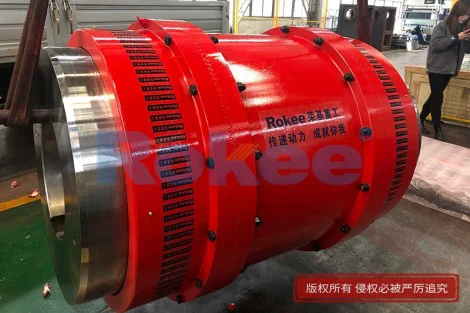
Small Universal Joint Couplings
Rokee is a manufacturer of small universal joint couplings from china, we can provide non-standard custom small universal joint couplings based on parameters or drawings supplied by customers, with export support available.

Small universal joint couplings stand as essential and versatile mechanical components in modern micro and precision transmission systems, serving as a critical bridge for power and motion transfer between misaligned rotating shafts. Unlike rigid coupling structures that demand precise coaxial alignment of connected shafts, these miniature transmission parts are ingeniously designed to accommodate angular deviations and minor positional offsets between two shafts while maintaining continuous and stable torque transmission. Their compact structural layout, flexible motion characteristics, and reliable working performance make them irreplaceable in a wide range of precision mechanical equipment, intelligent devices, and miniature transmission mechanisms, supporting the normal operation of countless small-scale mechanical systems that require accurate and efficient power delivery. With the continuous miniaturization and precision upgrading of mechanical equipment in various industries, small universal joint couplings have gradually evolved from auxiliary mechanical parts into core components that determine the overall operating stability and service life of micro transmission systems, winning widespread application and recognition in the field of precision machinery manufacturing.
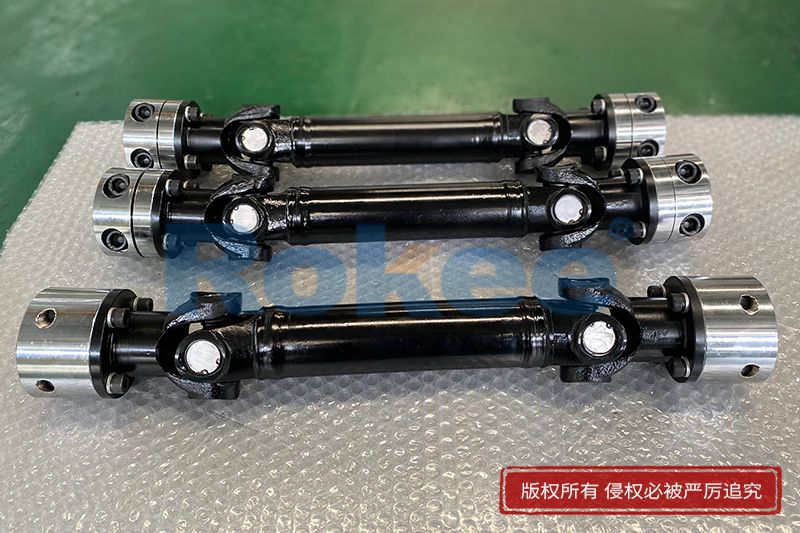


The basic structural composition of small universal joint couplings follows the classic spatial linkage mechanism principle, with all parts refined and miniaturized to adapt to narrow installation spaces and micro transmission requirements. The core structure consists of a central cross shaft, two symmetrically distributed yokes, and miniature bearing assemblies matched with the cross shaft ends. The cross shaft, featuring four mutually perpendicular arm structures, serves as the central force-bearing and motion-converting component, with each arm end precisely fitted with high-precision miniature bearings. These bearings are mostly compact needle bearings or tiny ball bearings, which can effectively reduce the friction resistance during relative rotation between the cross shaft and yokes while ensuring excellent load-bearing capacity in a limited structural space. The two yokes are respectively connected to the driving shaft and driven shaft of the transmission system, forming a flexible connection structure through the cross shaft and bearing combination. All structural parts adopt high-precision processing technology to ensure extremely small assembly gaps and high structural coordination, which lays a solid foundation for the flexible rotation and stable power transmission of the coupling in miniature mechanical systems. Every structural detail is optimized for miniaturization and precision, avoiding the bulky and redundant design of ordinary universal joints, and fully adapting to the compact layout characteristics of small mechanical equipment.
The working principle of small universal couplings is based on the spatial compound motion conversion mechanism, realizing efficient torque and rotational motion transmission between non-coaxial shafts. In the operating state, the driving shaft drives the connected active yoke to perform continuous rotary motion, and the rotational power is transmitted to the central cross shaft through the bearing assembly. Driven by the active yoke, the cross shaft generates a composite motion of rotation and spatial swing, which can adapt to the angular offset between the driving shaft and the driven shaft. Subsequently, the cross shaft transmits the converted stable rotational power to the passive yoke and the connected driven shaft, thus completing the continuous transmission of mechanical power. What distinguishes small universal joint couplings from rigid couplings is their unique adaptive adjustment capability. When the two connected shafts produce angular misalignment or tiny radial offset due to installation errors, equipment vibration or mechanical deformation during operation, the flexible matching structure of the cross shaft and bearings can automatically compensate for these deviations. This compensation function effectively avoids the problem of transmission jamming, power loss and mechanical abrasion caused by shaft misalignment, ensuring the continuity and stability of the transmission process even in non-ideal installation and operating conditions. The entire motion transmission process is smooth and efficient, with low mechanical loss, which can well meet the high-precision and high-stability operation requirements of miniature mechanical transmission systems.
Small universal joint couplings possess multiple unique performance advantages that make them highly adaptable to complex micro transmission working conditions. First of all, they have excellent angular compensation performance, which can effectively adapt to the angular deviation between shafts within a reasonable range, breaking through the limitation that traditional rigid couplings can only work under strict coaxial conditions. This flexible compensation ability greatly reduces the installation difficulty of miniature mechanical equipment and allows a certain tolerance for assembly errors, which is particularly important for small precision devices with extremely high assembly accuracy requirements. Secondly, the overall structure of the coupling is extremely compact and lightweight, with a small occupied installation space, which perfectly matches the miniaturization and integrated design trend of modern precision machinery. Compared with other flexible transmission components, small universal joint couplings do not require additional auxiliary structures such as elastic elements or telescopic sleeves, realizing integrated transmission functions with a minimal structural volume. In addition, these couplings feature low friction loss and high transmission efficiency. The high-precision bearing matching design minimizes the rolling friction during motion conversion, enabling most of the input torque to be stably transmitted to the driven end, with negligible power loss in the transmission process.
Moreover, small universal joint couplings exhibit outstanding operational stability and durability in long-term working scenarios. The optimized structural stress distribution avoids local stress concentration during torque transmission, enabling the components to bear stable alternating loads for a long time without structural deformation or damage. The surface of key parts is treated with professional anti-wear and anti-corrosion processes, which can effectively resist the wear caused by long-term high-frequency rotation and the corrosion interference of conventional working environments, greatly extending the service life of the coupling. Meanwhile, the structural design of the coupling is highly adaptable to high-speed operating conditions. The miniaturized and balanced structural layout reduces rotational inertia and vibration amplitude during operation, ensuring smooth and low-noise operation even in high-speed micro transmission systems. Unlike elastic couplings that are prone to fatigue aging after long-term use, small universal joint couplings rely on rigid mechanical fit for power transmission, with stable performance attenuation and no obvious elastic fatigue problem, maintaining consistent transmission accuracy and efficiency throughout the whole service cycle.
The application scenarios of small universal joint couplings cover numerous fields of precision machinery and intelligent equipment, becoming a key component supporting the operation of various miniature transmission systems. In the field of precision automated processing equipment, they are widely used in small CNC equipment, miniature drilling and milling machines, and precision engraving devices. These devices require high-precision power transmission and slight angle adaptation during operation, and small universal joint couplings can accurately transmit rotational torque while compensating for tiny shaft misalignment caused by equipment operation vibration, ensuring the processing accuracy and stability of precision workpieces. In intelligent robot and automation accessory manufacturing, miniature universal joints are applied to the joint transmission structures of small robotic arms, micro rotating execution components and sensor adjustment mechanisms, providing flexible and stable power transmission for the fine action execution of intelligent equipment, and realizing accurate angle adjustment and position control.
In addition, small universal joint couplings play an indispensable role in the field of household intelligent equipment and electronic mechanical devices. Many miniature transmission structures in smart home devices, such as the rotating adjustment parts of intelligent cameras, the folding transmission mechanisms of miniature intelligent appliances, and the rotating execution structures of small automatic control equipment, all rely on the flexible transmission performance of small universal joint couplings. Their compact size and low-noise operation characteristics can well adapt to the quiet and miniaturized use environment of household intelligent equipment. In the field of experimental precision instruments and testing equipment, these couplings are used in the micro transmission systems of various precision testing devices, sensor calibration equipment and laboratory miniature mechanical devices, providing high-stability power support for precision testing and data acquisition, and avoiding test errors caused by unstable transmission. At the same time, in the field of model manufacturing and DIY precision machinery production, small universal joint couplings are also favored by designers and producers for their simple assembly, flexible performance and low failure rate, and are widely used in various customized miniature mechanical transmission models and experimental devices.
Reasonable type selection and standardized installation are crucial to giving full play to the performance advantages of small universal joint couplings and ensuring the long-term stable operation of the transmission system. In the selection process, the first factor to consider is the actual transmission demand of the equipment, including the magnitude of operating torque, working speed, required compensation angle and installation space size. It is necessary to select couplings with matching structural specifications and load-bearing levels according to the peak torque and continuous working torque of the micro transmission system, to avoid structural damage or transmission failure caused by insufficient load-bearing capacity. Meanwhile, different structural forms of small universal joint couplings have different adaptation characteristics. Single-section miniature universal joints are suitable for working conditions with small angular deviation and conventional transmission requirements, while double-section combined structures can achieve larger angle compensation and are more suitable for transmission scenarios with relatively large shaft misalignment and complex motion tracks.
The installation process of small universal joint couplings requires high-precision operation to ensure the coordination accuracy of the overall transmission structure. Before installation, all matching parts need to be cleaned and inspected to remove tiny impurities and burrs on the surface of the shaft and coupling holes, so as to avoid assembly gaps and jitter during operation caused by impurities. During installation, the coaxiality and angle of the driving shaft and driven shaft should be finely adjusted to control the misalignment within the optimal compensation range of the coupling, which can not only give full play to the flexible compensation performance of the coupling, but also avoid excessive angle deviation leading to increased internal friction and accelerated component wear. After the installation is completed, a no-load test operation is required to check whether the coupling operates smoothly, without jamming, abnormal noise and obvious vibration, so as to ensure that the assembly quality meets the operating requirements. Scientific and standardized installation can effectively reduce the operating load of the coupling, reduce mechanical loss, and lay a foundation for long-term stable operation.
Daily maintenance and reasonable use management are important guarantees to extend the service life of small universal joint couplings and maintain stable transmission performance. In the daily operation process of the equipment, regular visual inspection and operating state monitoring should be carried out. It is necessary to observe whether there is abnormal vibration, noise and jitter during the operation of the coupling, and check whether there is looseness in the matching parts and wear on the surface of key components. For couplings working in high-speed and high-load environments, regular lubrication maintenance is required. Appropriate high-precision miniature lubricating grease can reduce the friction coefficient of the internal bearing and matching structures, weaken wear and heat generation during operation, and prevent component aging and failure caused by long-term dry friction. At the same time, it is necessary to avoid long-term overload operation of the coupling. Long-term overload torque will cause fatigue deformation of the cross shaft and bearing structures, reduce transmission accuracy, and even lead to structural fracture in severe cases.
In terms of fault maintenance, common abnormal problems of small universal joint couplings include operating noise, transmission jitter and power transmission lag. Most of the abnormal noise is caused by insufficient lubrication, loose assembly or slight wear of internal bearings, which can be solved by re-lubrication, fastening assembly parts and replacing worn miniature bearings. Transmission jitter is mostly due to excessive shaft misalignment or assembly deviation beyond the optimal compensation range of the coupling, which requires re-adjusting the shaft installation accuracy and optimizing the assembly state. Power transmission lag is usually caused by component wear and increased structural gaps, and regular inspection and replacement of aging and worn parts can effectively solve this problem. Timely fault detection and maintenance can avoid minor faults evolving into major equipment failures, reduce equipment operating costs, and ensure the continuous and efficient operation of the transmission system.
With the rapid development of precision manufacturing technology and intelligent mechanical equipment, the technical upgrading and performance optimization of small universal joint couplings are also advancing continuously. Modern processing and manufacturing technologies continue to improve the dimensional accuracy and structural coordination of miniature couplings, making their transmission stability and compensation accuracy reach a higher level. At the same time, the application of new high-strength and wear-resistant materials further enhances the load-bearing capacity, durability and environmental adaptability of small universal joint couplings, enabling them to adapt to more extreme miniature transmission working conditions such as high-speed operation, low-temperature environment and long-term continuous work. In the future, with the further miniaturization, precision and intelligence of mechanical equipment, small universal joint couplings will be further optimized in structural design, material application and processing technology, and their application fields will continue to expand, becoming a more core basic component in the field of precision micro transmission systems, and providing more reliable technical support for the development of modern miniature intelligent mechanical equipment.
« Small Universal Joint Couplings » Update Date: 2026/7/17
Contact
If you require custom machined couplings, please contact Rokee via the contact information below for inquiries.
Email: https://www.gshmdpq.com
 WeChat