Water Pump Couplings
Rokee is a manufacturer of water pump couplings from china, we can provide non-standard custom water pump couplings based on parameters or drawings supplied by customers, with export support available.

In the entire fluid transmission system, the water pump serves as the core power source that drives the continuous flow and circulation of liquid media, while the water pump coupling acts as an indispensable connecting component that links the pump body and the driving power device. Though often regarded as a small and auxiliary part in mechanical equipment, the coupling plays a decisive role in the stable operation, service life and overall working efficiency of the water pump system. It undertakes the key task of transmitting rotational torque from the driving end, usually an electric motor or engine, to the pump shaft, ensuring that the mechanical energy generated by the power device is efficiently converted into the kinetic energy required for liquid transportation. Without a properly selected and well-maintained coupling, even high-performance water pump equipment will face frequent operational failures, energy waste and shortened service cycle, which will directly affect the normal operation of the entire fluid delivery system in industrial production, civil water supply, environmental protection treatment and other scenarios.
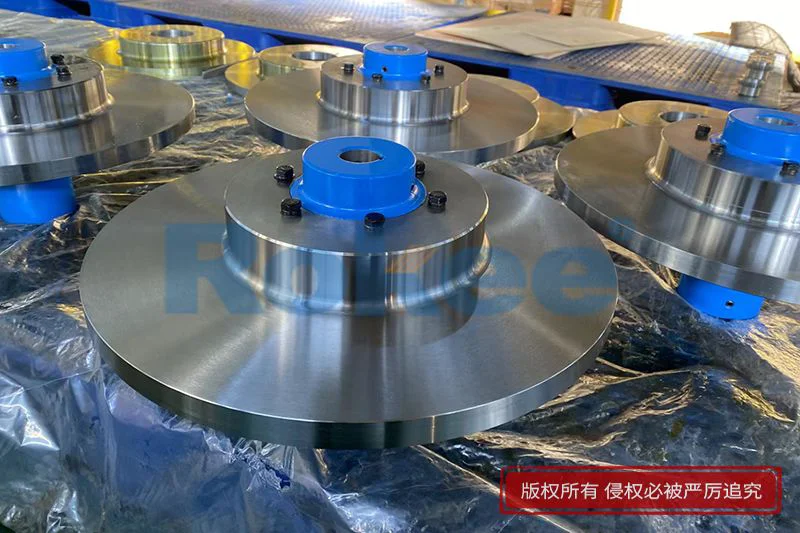


The basic working logic of a water pump coupling is centered on flexible and rigid power transmission, adapting to the complex mechanical changes during the operation of water pump equipment. During the working process of the water pump, the motor drives the active shaft to rotate at a high speed, and the coupling tightly connects the active shaft and the passive pump shaft, realizing synchronous rotation and torque transmission. In this process, the coupling is not just a simple connecting part. It needs to buffer and offset various abnormal mechanical forces generated during equipment operation, including axial displacement, radial deviation and angular deflection between the two shafts caused by equipment installation errors, mechanical vibration, thermal expansion and contraction after long-term operation, and slight structural deformation of the frame. These subtle deviations are inevitable in the assembly and long-term operation of mechanical equipment. If there is no coupling for transition and adjustment, the rigid friction and extrusion between the two shafts will cause serious wear on the shaft body, bearings and sealing parts, leading to shaft deformation, bearing burnout, liquid leakage and other faults, and even cause equipment shutdown in severe cases.
According to different structural designs and working characteristics, water pump couplings can be divided into multiple types, each with unique application advantages and applicable working scenarios, which provides diversified matching options for different water pump operation conditions. Flexible couplings are the most widely used type in conventional water pump systems. This kind of coupling is equipped with elastic deformation components inside, which can rely on the elastic deformation of materials to absorb vibration and impact force during operation. It has excellent compensation ability for small shaft displacement and angle deviation, and can effectively reduce the vibration and noise of the water pump unit during high-speed operation. The elastic parts of flexible couplings are usually made of high-strength rubber, polyurethane, spring steel and other materials. These materials have good toughness and fatigue resistance, can withstand frequent alternating load impacts, and play a good role in protecting the pump shaft and motor shaft. They are very suitable for conventional water supply pumps, circulating water pumps and low-load fluid transmission equipment that operate continuously for a long time.
Rigid couplings are another common type, which are designed with an integrated rigid structure without elastic deformation parts. They rely on precise mechanical assembly to realize rigid connection and torque transmission between shafts. This type of coupling has the characteristics of simple structure, high transmission accuracy and strong bearing capacity, and can realize zero-loss transmission of mechanical torque. However, rigid couplings have extremely high requirements for equipment installation accuracy. They cannot compensate for shaft displacement and vibration deviation. Once there is a slight misalignment between the two shafts, it will cause severe mechanical wear. Therefore, rigid couplings are mostly used in high-power, high-precision water pump equipment with strict installation standards, stable operation environment and low vibration amplitude, such as large industrial booster pumps and constant-pressure water supply pump units that require high transmission efficiency.
In addition, there are special structural couplings such as gear couplings and chain couplings, which are mainly oriented to heavy-duty and high-torque water pump working conditions. Gear couplings transmit torque through the meshing of internal and external gears, with super strong load-bearing capacity and impact resistance, and can adapt to high-power water pump equipment working under harsh conditions such as heavy load and frequent start-stop. Chain couplings use chain meshing for transmission, with simple disassembly and maintenance, low replacement cost, and good adaptability to medium and low-speed heavy-duty water pump systems. These special couplings make up for the performance deficiencies of conventional couplings in extreme working conditions and expand the application range of water pump equipment in industrial production.
The rational selection of water pump coupling is the primary premise to ensure the stable operation of the equipment, and the selection process needs to comprehensively consider multiple key factors of the water pump system. First of all, the operating power and rotational speed of the water pump are the core basis for selection. Different power levels correspond to different torque transmission requirements. Excessively small couplings will be unable to bear the operating torque, resulting in deformation, fracture and failure of transmission parts, while excessively large couplings will increase the overall weight and operating inertia of the equipment, cause energy waste, and affect the start-stop sensitivity of the water pump. The operating speed of the equipment also affects the stability of the coupling. High-speed rotating water pumps need couplings with good dynamic balance performance and low vibration characteristics, while low-speed heavy-duty pumps focus more on the load-bearing strength of the coupling.
The working environment of the water pump is also a key factor restricting coupling selection. Many water pump equipment works in humid, dusty or corrosive medium environments for a long time. For example, water pumps used in sewage treatment, chemical fluid transmission and outdoor water supply projects are easily affected by moisture erosion, chemical corrosion and dust abrasion. In these scenarios, it is necessary to select couplings with anti-corrosion, rust-proof and wear-resistant properties, and the elastic parts and metal structures of the couplings need to have environmental aging resistance to avoid performance degradation and structural damage caused by long-term exposure to harsh environments. For indoor dry and clean working environments, conventional standard couplings can meet the operational needs, which can effectively control equipment matching costs on the premise of ensuring performance.
The installation and assembly process of water pump couplings directly determines the operating state and service life of the equipment, and standardized operation is essential in the assembly process. Before installation, it is necessary to carefully check the structural integrity of the coupling parts, ensure that there is no crack, deformation, wear and damage on the surface of the parts, and clean the shaft head, key groove and coupling inner wall to remove impurities such as oil stains, rust and dust, so as to avoid assembly gaps caused by foreign matters and affect the connection accuracy. In the formal assembly process, the coaxiality of the motor shaft and the pump shaft must be strictly calibrated. Excessive radial and angular misalignment is the main cause of coupling wear and equipment vibration. After the two shafts are calibrated, the coupling sleeves are installed in place, and the fastening bolts are tightened evenly in a diagonal sequence to ensure that the stress of each connecting part is uniform and avoid structural deformation caused by uneven fastening force.
After the installation is completed, a trial operation test must be carried out. The equipment should be started for low-speed idle operation first, and the operation state of the coupling should be observed carefully to check whether there are abnormal vibration, noise, friction and other phenomena. If abnormal conditions are found, the machine should be shut down immediately for re-calibration and adjustment. After the low-speed operation is stable, the load operation test can be carried out to verify the torque transmission capacity and operation stability of the coupling under working load. Only after the trial operation is confirmed to be normal can the equipment be put into formal long-term operation.
Daily maintenance and regular inspection are key links to extend the service life of water pump couplings and avoid sudden equipment failures. In the daily operation of the water pump, operators need to regularly observe the operating state of the coupling, including whether there is abnormal vibration, irregular noise, local overheating and other problems during operation. Slight abnormal vibration often indicates that the coupling has displacement deviation or elastic part aging, and continuous operation will aggravate equipment wear. At the same time, it is necessary to regularly check the fastening state of the coupling connecting bolts. Long-term mechanical vibration will cause bolt loosening, resulting in insufficient connection tightness, shaft displacement and torque transmission instability, which will further trigger equipment failure.
For flexible couplings with elastic components, regular inspection of the aging degree of elastic parts is required. Rubber and polyurethane elastic parts will gradually age, harden and deform after long-term alternating load and environmental erosion, resulting in reduced buffering and compensation capacity. Once aging, cracking or permanent deformation is found, the elastic parts should be replaced in time to avoid failure during equipment operation. For rigid couplings and gear couplings, regular lubrication maintenance is needed. Good lubrication can reduce friction and wear between meshing parts and connecting surfaces, reduce operating energy consumption, and prevent metal rust and structural abrasion. The lubricating grease should be replaced regularly according to the operating frequency of the equipment to ensure the lubrication effect.
In actual operation, water pump couplings are prone to some common faults, and accurate fault judgment and timely maintenance can effectively reduce equipment downtime and maintenance costs. Shaft misalignment is the most common fault, which is mainly caused by incomplete calibration during installation or structural displacement of the equipment base after long-term operation. Long-term misalignment operation will lead to severe wear of the coupling and shaft body, increased equipment vibration, and even bearing damage. The solution is to re-calibrate the coaxiality of the two shafts and fix the equipment base to ensure stable assembly position.
Elastic part failure of flexible couplings is also a frequent problem, including aging cracking, excessive deformation and fracture of elastic parts. This kind of fault is mostly caused by long-term overload operation, frequent equipment start-stop, or aging and corrosion of materials in harsh working environments. After the elastic part fails, the coupling will lose its buffering and vibration reduction function, resulting in increased equipment noise and violent vibration. It is necessary to replace the matching elastic parts in time and adjust the equipment operating parameters to avoid long-term overload operation.
Loose coupling connection and structural wear are also common operational faults. Long-term mechanical vibration will lead to loose fastening bolts, resulting in gaps in the coupling connection part, unstable torque transmission, and impact friction during operation, which will aggravate structural wear. Regular fastening of bolts and timely replacement of severely worn coupling parts can effectively solve such problems. In addition, overheating of the coupling during operation is usually caused by excessive friction due to poor lubrication or serious shaft misalignment. Timely adjustment of shaft deviation and supplement of lubricating grease can eliminate overheating faults and protect the structural performance of the coupling.
The importance of water pump couplings in the entire fluid mechanical system is reflected in the protection of equipment components, improvement of operating efficiency and reduction of maintenance costs. A high-quality and properly matched coupling can effectively buffer the impact load during the start-stop and operation of the water pump, reduce the fatigue loss of the motor and pump shaft, avoid frequent damage of bearings and sealing parts, and greatly extend the overall service life of the water pump unit. At the same time, efficient torque transmission can reduce mechanical energy loss, improve the energy utilization rate of the equipment, and realize energy-saving operation of the water pump system. In the long-term equipment operation management, standardized selection, installation and maintenance of couplings can effectively reduce the failure rate of water pump equipment, reduce frequent shutdown maintenance and parts replacement costs, and improve the continuous and stable operation capacity of the entire production system.
With the continuous upgrading of mechanical manufacturing technology, the structural design and material performance of water pump couplings are also constantly optimized and improved. Modern coupling manufacturing pays more attention to high wear resistance, high fatigue resistance, low vibration and environmental adaptability. New composite materials and optimized structural designs make couplings more adaptable to complex and harsh working conditions, with stronger load-bearing capacity and longer service life. At the same time, the integrated and lightweight design of couplings also reduces the overall structural complexity of water pump equipment, simplifies the installation and maintenance process, and further improves the operational reliability of the equipment.
In conclusion, although the water pump coupling is a small auxiliary component in the water pump system, its functional role is irreplaceable. It is not only a connecting medium for power transmission, but also a protective barrier for the stable operation of water pump equipment. Scientific selection, standardized installation, daily careful maintenance and timely fault handling are essential to ensure the efficient and stable operation of water pump couplings. In all scenarios involving water pump fluid transmission, attaching importance to the matching and maintenance of couplings can effectively improve the overall operating level of mechanical equipment, reduce operational risks and maintenance costs, and provide a solid guarantee for the stable operation of industrial production, civil life and environmental protection systems.
« Water Pump Couplings » Update Date: 2026/7/17
Contact
If you require custom machined couplings, please contact Rokee via the contact information below for inquiries.
Email: https://www.gshmdpq.com
 WeChat


