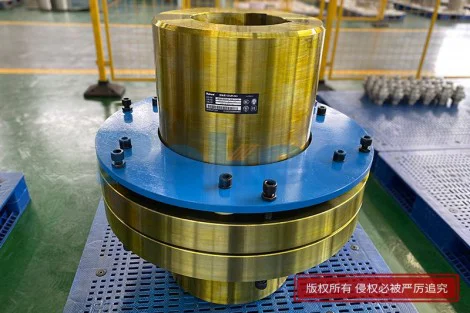
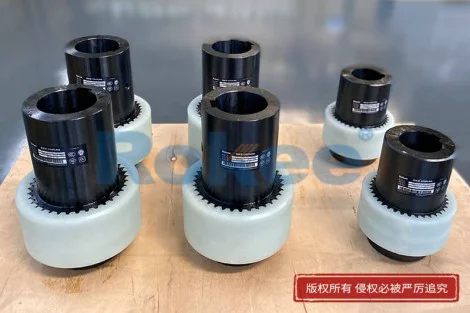
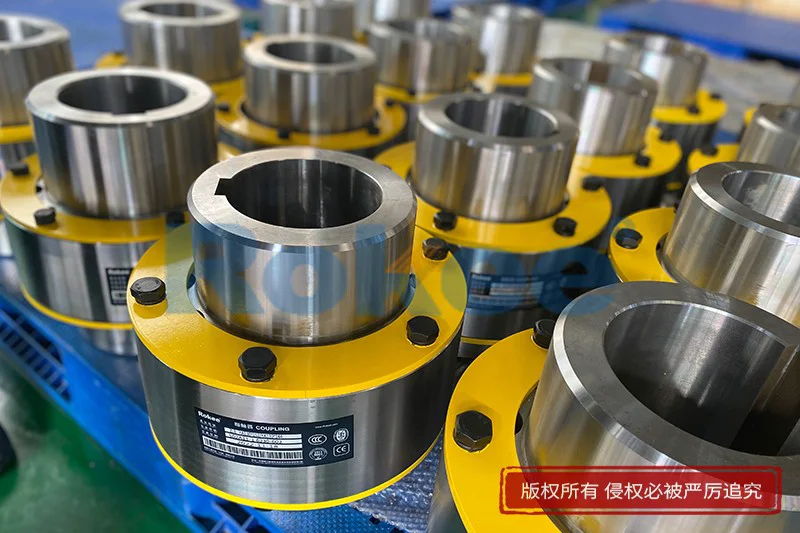
Flex Drive Coupling
Rokee is a manufacturer of flex drive coupling from china, we can provide non-standard custom flex drive coupling based on parameters or drawings supplied by customers, with export support available.

In the entire mechanical power transmission system, the connection between rotating shafts is one of the most fundamental and critical links, and the flex drive coupling stands out as an indispensable core component that balances rigid torque transmission and flexible mechanical buffering. Unlike traditional rigid connecting structures that pursue absolute shafting fixation, flex drive couplings introduce controllable elastic deformation and displacement compensation mechanisms into the power transmission process, enabling stable torque delivery while adapting to various subtle mechanical deviations and dynamic load changes during equipment operation. This unique working mechanism makes it widely applicable in various mechanical scenarios ranging from high-precision precision motion equipment to heavy-duty industrial transmission systems, becoming a key guarantee for the long-term stable operation of mechanical equipment.


The core working logic of a flex drive coupling revolves around compliant power transmission and dynamic error compensation. In any shaft connection scenario, absolute coaxiality between the driving shaft and the driven shaft is theoretically unattainable. Even with high-precision installation and rigorous debugging, subtle axial gaps, radial offsets, and angular deflections will inevitably occur due to machining tolerances, assembly errors, equipment aging, and thermal deformation during operation. Rigid coupling structures cannot adapt to these tiny deviations, which will cause additional mechanical stress to accumulate at the shaft connection parts during equipment operation. Over time, this cumulative stress will trigger a series of mechanical problems including increased shaft body wear, accelerated bearing fatigue, intensified system vibration, and reduced transmission accuracy, and in severe cases, it will directly lead to shaft deformation, component fracture, and sudden equipment shutdown. The flex drive coupling effectively solves this industry pain point through its flexible structural design. It relies on internal elastic components or flexible mechanical structures to produce mild, controllable deformation during torque transmission, which can offset three-dimensional misalignment deviations of the shaft system in axial, radial and angular directions, eliminate additional constraint stress caused by shaft misalignment, and ensure that the torque output by the power source can be stably and efficiently transmitted to the executing mechanism without mechanical loss and interference caused by shaft position deviation.
The structural design of modern flex drive couplings presents diversified differentiation characteristics, which are evolved and optimized according to different transmission torque ranges, motion accuracy requirements, and operating environment conditions. The mainstream structural forms include elastic element type, metal flexible body type and composite movable joint type, each with unique performance positioning and application scenarios. Elastic element flex drive couplings mainly rely on high-elasticity polymer materials to realize flexible transmission. The internal elastomeric core components can produce reversible elastic deformation under load, which not only compensates for shaft misalignment, but also has excellent vibration damping and shock absorption capabilities. This structure is relatively simple in processing and low in operation noise, and can effectively buffer instantaneous impact loads generated by equipment start-up, sudden stop and load mutation, avoiding rigid impact damage to the transmission system. Metal flexible body flex drive couplings mostly adopt integrated precision machining structures such as thin-walled bellows, multi-group disc pieces and grooved beam bodies. Made of high-strength alloy materials, they maintain high torsional stiffness while retaining micro-displacement flexibility. This design realizes zero-backlash torque transmission, extremely high motion repeatability and stable high-speed operation performance, which is especially suitable for precision transmission scenarios that require strict control of transmission error.
Composite movable joint flex drive couplings combine the structural advantages of rigid mechanical connection and flexible displacement adaptation, using mutually matched sliding or rotating movable structures to realize shaft deviation compensation. Such structures can bear large torque load and strong radial and angular deviation adaptability, and can maintain stable transmission performance under long-term heavy-duty operation. Regardless of the structural form, the core design concept of flex drive couplings is to build a flexible transition link in the rigid transmission chain, so that the mechanical system has a certain self-adaptive adjustment capability, realizing the organic unity of power transmission efficiency and mechanical system protection. Material selection is a key factor that determines the comprehensive performance of flex drive couplings. The flexible core components need to have excellent fatigue resistance, reversible deformation capability and environmental adaptability, while the rigid hub and connecting parts need to have high structural strength and wear resistance to ensure long-term stable operation under cyclic load. High-quality elastic polymer materials can maintain stable elasticity and damping performance in variable temperature environments, avoiding aging, hardening or softening failure caused by temperature changes; high-strength alloy materials used for metal flexible structures undergo precision heat treatment and surface processing, which effectively improves structural toughness, fatigue resistance and corrosion resistance, and avoids structural fracture and performance attenuation caused by long-term cyclic torsion and deformation.
In actual industrial operation scenarios, the functional advantages of flex drive couplings are fully reflected in multiple dimensions of equipment operation and maintenance. First of all, it significantly improves the operational stability of the mechanical system. During the high-speed operation of equipment, tiny shaft misalignments will be amplified into continuous vibration and noise in rigid transmission structures. The flexible structure of the coupling can absorb and dissipate vibration energy in the transmission process, suppress system resonance, reduce equipment operation noise and vibration amplitude, and create a stable operating environment for the entire mechanical system. Secondly, it greatly extends the service life of mechanical components. By eliminating additional stress concentration and rigid impact load, the coupling reduces the wear and fatigue loss of core components such as shafts, bearings and gears in the transmission system, avoids premature failure of precision parts due to abnormal load, and effectively reduces the frequency of component replacement and equipment failure shutdown. In addition, flex drive couplings have excellent dynamic load adaptability. In intermittent operation, variable load and frequent start-stop working conditions, it can buffer instantaneous torque impact, smooth transmission torque fluctuation, avoid power mutation impact on the power source and executing mechanism, and protect motors, reducers and other core power equipment from impact damage.
The application scope of flex drive couplings covers almost all mechanical transmission fields that require shaft connection and power transmission. In precision motion control equipment represented by automated processing equipment and servo transmission systems, high-precision metal flexible couplings are widely used. Their zero-backlash transmission characteristics and micro-deviation compensation capability ensure ultra-high positioning accuracy and motion repeatability of the equipment, meet the strict precision requirements of fine processing and automatic positioning, and effectively avoid processing errors and motion deviation caused by shaft system vibration and misalignment. In logistics transportation and general industrial transmission equipment such as conveyor systems, elastic element flex drive couplings are the preferred choice. Their good shock absorption performance and low-cost maintenance characteristics adapt to continuous and stable operation requirements of conventional industrial equipment, and can cope with minor installation deviations and load fluctuations in daily operation.
In heavy-duty mechanical equipment such as industrial transmission and engineering machinery, composite structural flex drive couplings with high load-bearing performance are adopted. They can withstand large torque transmission and severe dynamic load changes, adapt to harsh working conditions such as dust, vibration and variable load, and ensure the reliability of power transmission under long-term heavy-duty operation. In addition, in fluid power equipment such as pumps and fans, flex drive couplings can offset the shaft displacement caused by equipment vibration and thermal expansion, reduce the operating load of the equipment, improve the operational efficiency of fluid transmission, and reduce energy consumption caused by transmission resistance and mechanical friction loss.
From the perspective of equipment full-cycle operation and maintenance value, flex drive couplings play a vital role in reducing industrial operation costs and improving production efficiency. In the equipment installation and commissioning stage, its good misalignment tolerance reduces the precision requirements for shaft alignment, shortens the installation and debugging cycle, and reduces the technical difficulty and time cost of equipment assembly. In the daily operation stage, the stable transmission performance of the coupling ensures the continuous and efficient operation of the equipment, avoids production interruption caused by transmission system failure, and improves the overall production continuity and efficiency. In the equipment maintenance stage, the flexible protection mechanism greatly reduces the failure rate of high-value core components of the transmission system. The coupling itself, as a low-cost wearable accessory, can effectively bear mechanical deformation and impact loss, realizing the purpose of protecting high-precision and high-value equipment parts with low maintenance cost, and significantly reducing the overall equipment maintenance cost and downtime loss.
With the continuous upgrading of modern mechanical equipment towards high speed, high precision and high load, the performance requirements for flex drive couplings are also constantly improving. The current development trend of flex drive coupling technology focuses on the optimization of structural lightweight, high precision retention, extreme environmental adaptability and long-life fatigue resistance. Through integrated structural optimization design, the coupling achieves higher torsional stiffness and smaller motion error while maintaining flexible compensation capability; through new material application and surface modification technology, it improves the stability of mechanical performance in high and low temperature, humid and corrosive environments, and expands the adaptability of equipment in complex working conditions; through refined process manufacturing, it reduces structural fatigue loss in long-term cyclic operation and realizes longer service life and more stable long-term performance.
In conclusion, the flex drive coupling, as a basic flexible transmission component, undertakes the core functions of torque transmission, deviation compensation, vibration damping and impact buffering in the mechanical transmission system. It makes up for the inherent defects of rigid transmission structures, solves various mechanical problems caused by shaft misalignment and dynamic load fluctuation, and provides a reliable guarantee for the stable, efficient and long-term operation of mechanical equipment. Its diversified structural forms and adjustable performance characteristics enable it to accurately adapt to the differentiated needs of various industrial scenarios, covering precision micro-transmission to heavy-duty large-torque transmission fields. In the modern industrial system that pursues high efficiency, high stability and low maintenance cost, the application value of flex drive couplings is increasingly prominent, and it has become an indispensable key component to optimize the performance of mechanical transmission systems and improve the comprehensive operation benefit of equipment.
« Flex Drive Coupling » Update Date: 2026/7/17
Contact
If you require custom machined couplings, please contact Rokee via the contact information below for inquiries.
Email: https://www.gshmdpq.com
 WeChat